

Mourning in Tehran: A Nation Pauses to Remember Supreme Leader Khamenei
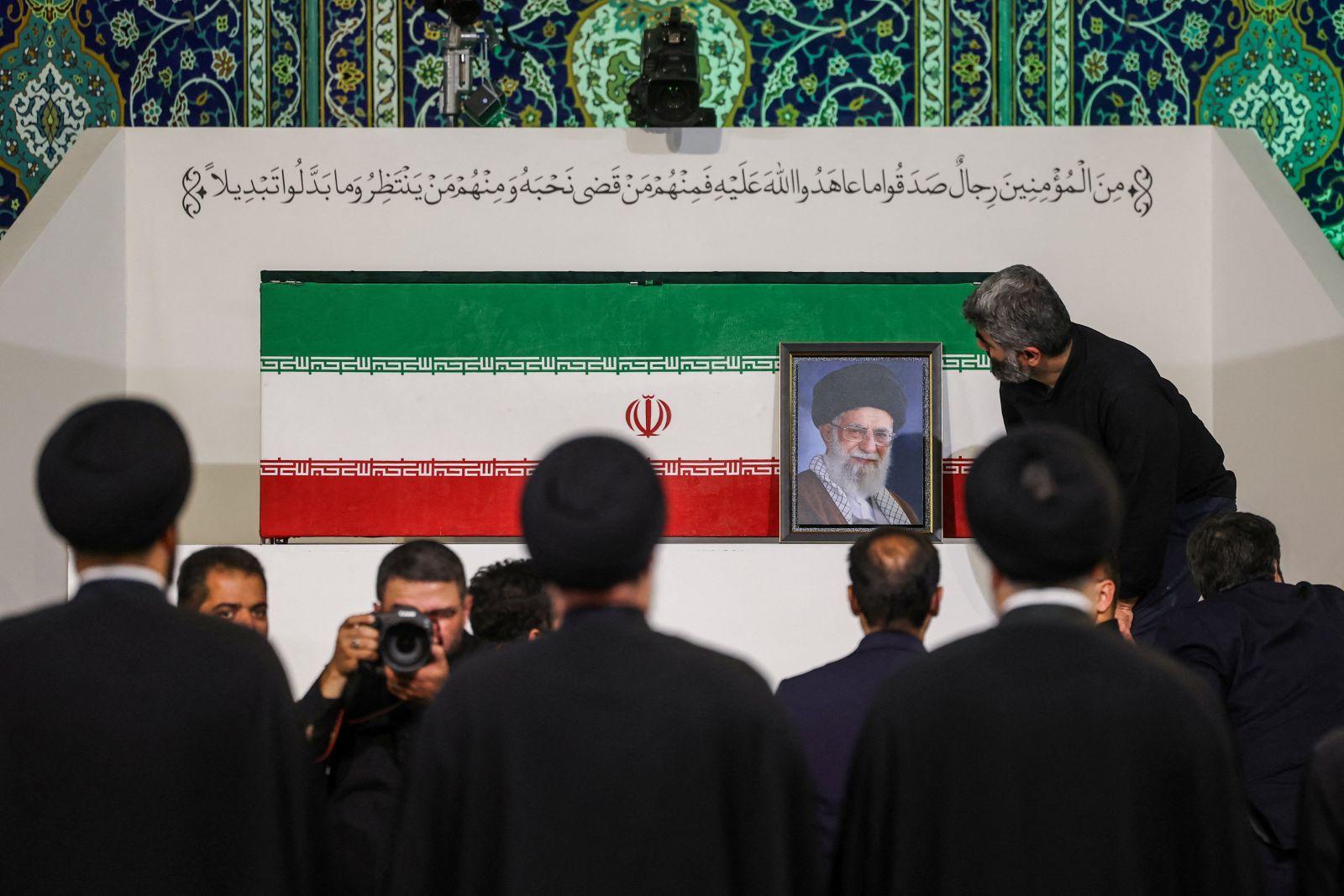
Tehran, Iran – On a somber Friday, the heart of Tehran beat heavily as the body of Iran’s slain Supreme Leader lay in state, surrounded by a vast hall echoing with emotion. Clerics, officials, and mourners from far and wide gathered to pay their respects following his 37 years of rule, a period defined by both devotion and conflict.
The atmosphere was thick with sorrow as the nation observed a week of funeral processions for Ayatollah Khamenei, who tragically lost his life in February during a devastating US and Israeli airstrike. This violent act ignited a four-month war, one that has transformed Iran’s landscape forever.
Khamenei’s funeral is not just an event; it’s a poignant symbol of loyalty to the theocratic ideals of the Islamic Republic. Over the course of the week, his remains are set to journey through key Shi’ite locations—Qom, Najaf, and Kerbala—before finally being laid to rest in Mashhad, near the revered shrine of Imam Reza.
A Heartfelt Farewell
As the coffin was unveiled the previous evening, emotions ran high. Waves of grief rippled through the crowd, with supporters swaying, chanting, and throwing flowers into the air. The mourners’ lament echoed in the hearts of many, transforming the atmosphere into one of collective mourning. On Friday, alongside family members who perished with him—his daughter, son-in-law, and even his tiny granddaughter—the coffin was laid in a grand prayer hall, dedicated to Ayatollah Khomeini, the leader who paved the way for Iran’s revolution.
This moment comes at a crucial juncture for the Islamic Republic. Although the clerical leaders, alongside the Islamic Revolutionary Guard Corps, have successfully navigated external threats, internally, the nation is grappling with immense challenges. The death of Khamenei highlights a leadership that is increasingly precarious, as many feel disconnected from the regime.
The People’s Struggles
Despite official proclamations of national unity, analysts emphasize that support for the clerical leadership has dwindled. The new Supreme Leader, Khamenei’s son, Mojtaba, remains absent, having sustained injuries during the attack that claimed his father’s life. Iran is caught in a web of crippling sanctions, a paralyzed economy, and mounting protests that have been met with brutal crackdowns, claiming the lives of thousands.
Yet, during this week of mourning, the government seeks to project a façade of strength and unity, mobilizing its citizens for this ceremonial moment. In Tehran, the streets were heavily guarded, with a visible presence of military and police, asserting control over this poignant public display.
A Symbolic Procession
As the coffins arrived amidst an ocean of outstretched hands, the solemnity of the moment was palpable. The prayer hall was adorned with black mourning flags and a black turban symbolizing a connection to the Prophet Mohammed—an emblem of revolutionary fervor and solidarity with Palestinians.
Among the honored guests were dignitaries from Russia and China, alongside Iraqi, Armenian, and Pakistani politicians. The presence of families from Lebanon’s Hezbollah, close allies of Iran, further demonstrated the depth of connections in this mournful gathering.
In Iran’s spiritual mosaic, Khamenei was seen not just as a political leader but as a divine representative of Shi’ite Islam. His assassination fuels a powerful narrative of martyrdom, a deeply ingrained aspect of Shi’ite tradition where grief transforms into calls for justice.
“Only by avenging his blood,” said 18-year-old student Mobina Razaaghi, “can we find solace.” Her words reflected the spirit of many who gathered, clutching posters of Khamenei with unwavering resolve.
Looking Ahead to Burial
Islamic tradition dictates that burials occur within a day, but the ongoing war postponed this solemn rite. Yet, in a bid to honor their leader, hotels offered discounts for mourners, schools and mosques prepared to shelter them, and public transport was redirected for the occasion.
The week’s events will culminate in a massive procession through central Tehran, transitioning to ceremonies in Qom and the significant shrine cities of Najaf and Kerbala. Finally, Khamenei will be laid to rest on Thursday in Mashhad, near the revered tomb of Imam Reza, where thousands will gather to commemorate his life and legacy.
In this time of grief, the hearts of Iranians remain intertwined, leaving an indelible mark on the nation’s collective memory as they grapple with the future without their Supreme Leader. The echoes of mourning will resonate for years to come.