


Tensions Escalate as Iran Launches Attacks Amid Fragile Peace Efforts
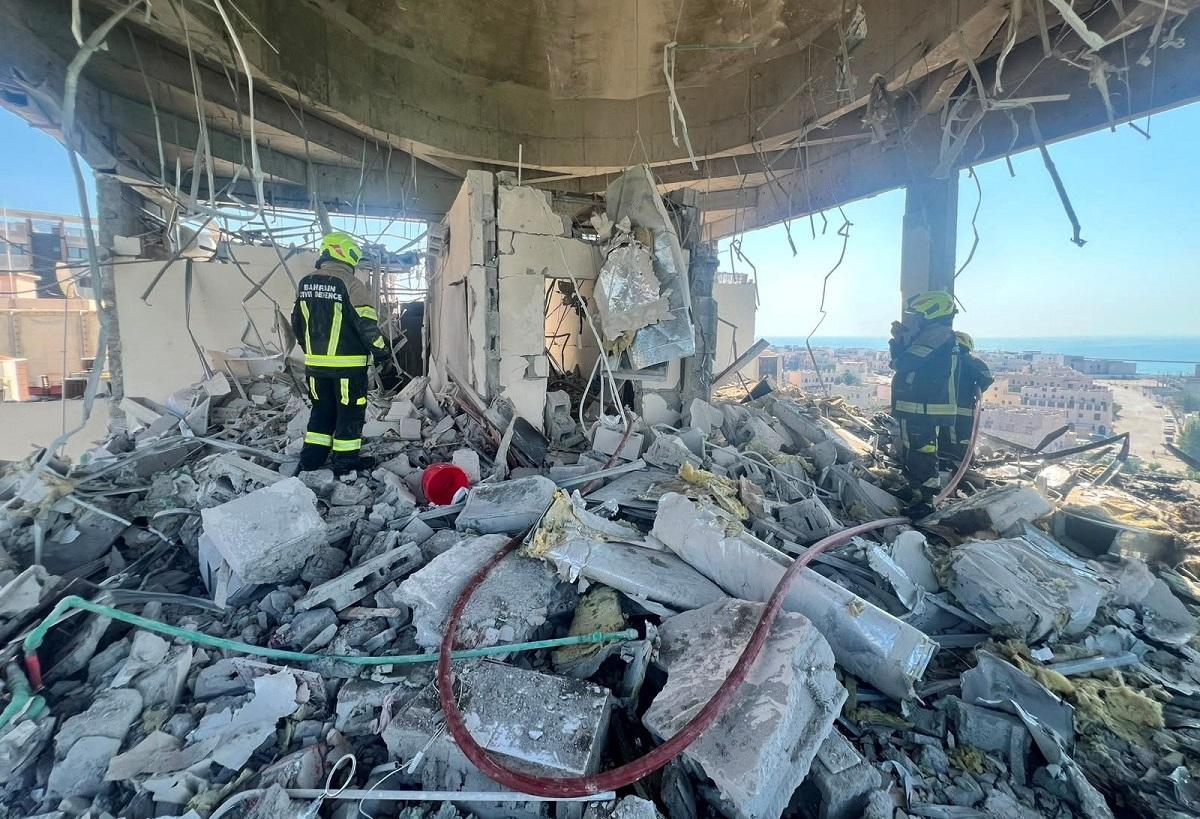
In a stunning turn of events early Sunday morning, Iran launched a barrage of missiles and drones targeting US military installations in Kuwait and Bahrain. This act of aggression came just hours after President Donald Trump issued a stern warning: if Iran did not adhere to the interim agreement aimed at quelling their ongoing conflict, the consequences would be dire.
“Iran will no longer exist!” Trump stated emphatically on social media. His declaration was fueled by recent skirmishes and rising hostilities, which have put the delicate peace process in jeopardy.
The backdrop of this escalating tension is a 14-point interim peace agreement intended to halt hostilities that had intensified since February 28. The ceasefire was designed to create a pathway for more substantial talks on critical issues, including Iran’s contentious nuclear program. However, mere moments after Trump’s alarming post, explosions echoed across Kuwait as missile defenses responded to the Iranian attacks.
Kuwaiti officials confirmed that their air defenses intercepted two ballistic missiles. Luckily, there were no casualties or significant damage reported among US forces abroad. Yet, the reality remains that tensions are boiling over—variations of alarms echoed in Bahrain, a reminder that peace hangs by a thread.
Adding another layer to this volatile situation, Israel reported it had struck Hezbollah militants in Lebanon just one day after reaching a new ceasefire agreement. These strikes were perceived as a necessary defense against militants allegedly backed by Iran. It raises the question: can any ceasefire hold in such chaotic circumstances?
Iran’s Islamic Revolutionary Guard Corps wasted no time in asserting that their military operations against US sites were a direct response to what they deemed violations of the ceasefire. Their statement hinted ominously at future assaults, proclaiming that “American bases in the region will experience hell in the coming days.”
Meanwhile, US Central Command announced retaliatory strikes aimed specifically at Iranian military capabilities. The fresh violence, including an earlier attack on a Panama-flagged tanker in the vital Strait of Hormuz, reflects Iran’s strategy of wielding influence over one of the world’s most crucial shipping routes.
The geopolitical stakes couldn’t be higher. The Strait of Hormuz is a lifeline for global oil supply, and disruptions here could send shockwaves through international markets. Despite the rioting of conflict, there was a glimmer of hope as shipping activities began to resume, hinting at a gradual return to normalcy for an industry left rattled.
In this complex web of conflict, Lebanon also found itself in the spotlight. Reports indicated that Israeli forces targeted and killed Hezbollah militants, emphasizing the ongoing unrest in the region. The recent ceasefire agreements appear to be but temporary solutions to a much deeper, unresolved crisis.
As we witness these events unfold, one can’t help but feel the weight of uncertainty. Peace appears achingly close yet frustratingly out of reach. The world holds its breath, grappling with the terrifying prospect of full-blown war, as global leaders navigate this precarious landscape.
With each passing moment, we are reminded of the urgent need for dialogue and diplomacy. Because in the heart of such darkness, it is ultimately understanding and connection that can guide us back to the light.