Venezuela on the Brink: A Call for Urgent Support Amidst Earthquake Devastation
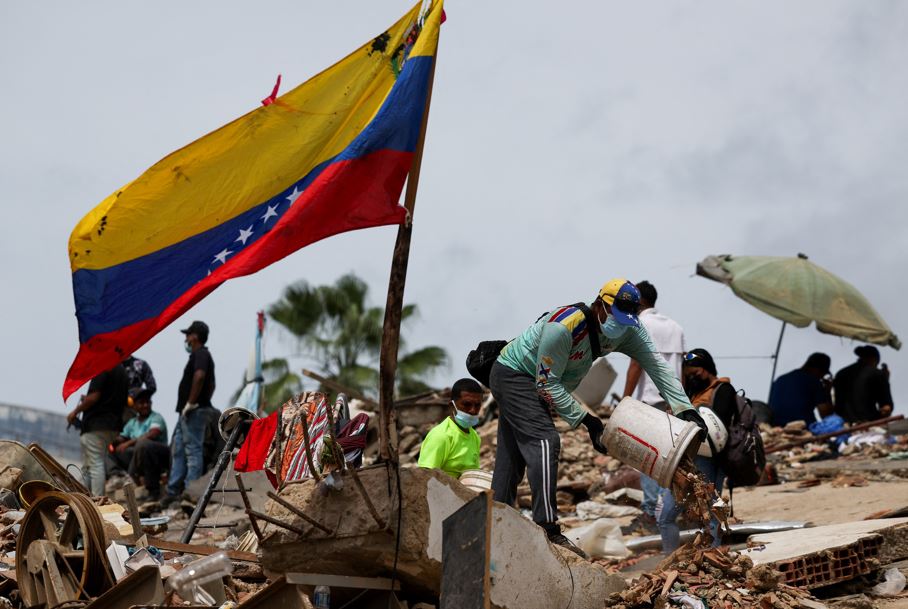
Geneva, Switzerland – In a heart-wrenching update from the World Health Organization (WHO), the gravity of the situation in Venezuela is becoming increasingly dire. After a series of deadly earthquakes rocked the nation, the local health services are overwhelmed, struggling under a mounting burden.
Christian Lindmeier, the WHO spokesman, painted a vivid picture at a press conference in Geneva. “Our health services are in turmoil right now,” he revealed. “Facilities are stretched beyond their limits.” With trauma cases surging, the emotional and physical toll is immense. The current official count stands at approximately 1,700 lives lost and around 5,000 injured. But, tragically, there’s been little word from the government on those who remain missing. Other estimates suggest that tens of thousands could be unaccounted for.
Adding to the complications, Lindmeier also highlighted the challenges in accurately registering casualties and tracking missing persons after the twin earthquakes hit with magnitudes of 7.5 and 7.2 on Wednesday.
“We’re facing a heightened risk of disease outbreaks,” he warned, mentioning vaccine-preventable diseases like measles and diphtheria, along with the potential for yellow fever and other vector- and water-borne illnesses, including malaria, dengue, chikungunya, and Zika. The low vaccination coverage before the earthquakes has intensified these fears.
The implications of this crisis have spread beyond health. Interim President Delcy Rodriguez reported that 38 hospitals were damaged due to the earthquakes, and as of Saturday, WHO data from 21 health facilities across Caracas, La Guaira, Miranda, and Falcon reflected staggering statistics. Three hospitals are in critical condition, six others have suffered structural damage or are only partially operational, and the rest are functioning but under extreme stress.
“We’re witnessing chaos in service delivery and patient care,” Lindmeier explained, noting overcrowded facilities and a growing backlog of surgical needs—especially in trauma, orthopedics, and neurosurgery. The breakdown of biosafety measures and the strain on healthcare staff only add to the anguish of patients and families.
A concerning fallout of this natural disaster is the breakdown of forensic and morgue services. Adequate casualty tracking has diminished, creating further uncertainty for families desperately seeking closure.
Compounding the suffering, the UN Refugee Agency (UNHCR) has sounded the alarm on rising community tensions in quake-affected areas due to limited access to aid. In an urgent plea for support, UNHCR has requested an estimated $14.85 million to deliver essential relief, core items, and temporary shelter to 30,000 people over the next six months.
Doctors Without Borders (MSF) is stepping in, planning to assist thousands left homeless. “As we transition from the intense search-and-rescue phase, the number of fatalities and the urgent needs of survivors are only climbing,” they stated. In its response, MSF is ramping up psychological support services, recognizing the overwhelming mental health challenges that accompany such disasters.
In these troubled times, as Venezuela faces overwhelming odds, the world watches. The heartache and resilience of the Venezuelan people call for our compassion and action. They need our solidarity now more than ever.