
Rising Unemployment: A Growing Concern for Filipinos
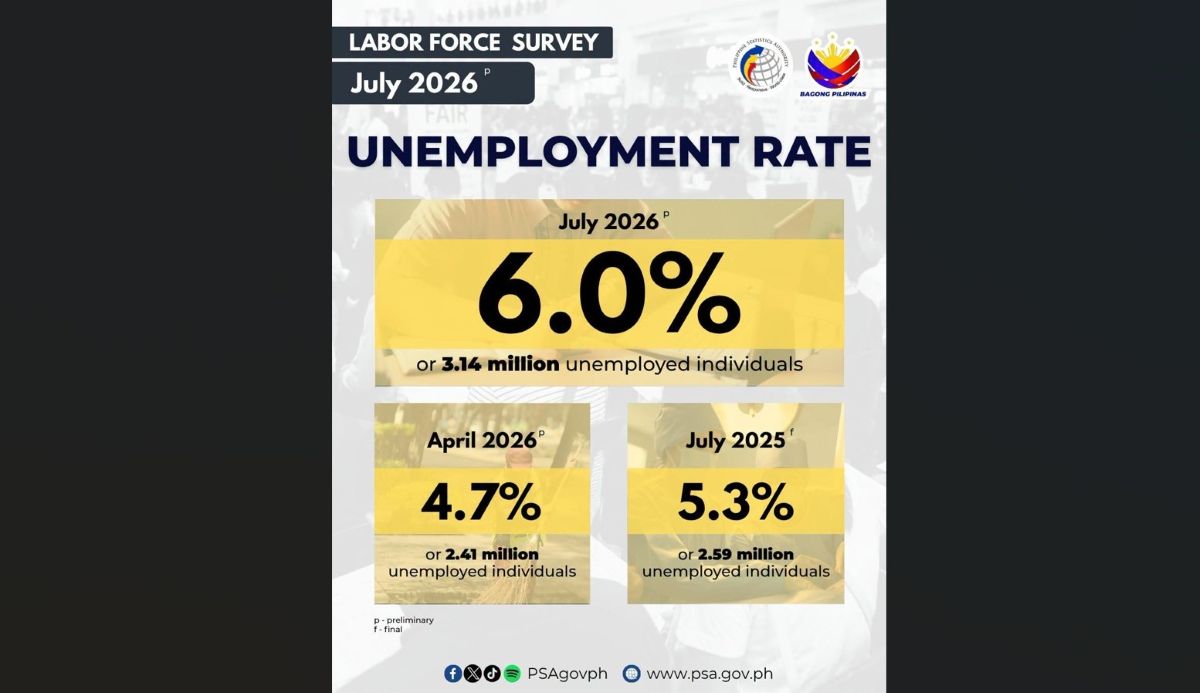
In July, the Philippines faced a significant setback as the number of jobless individuals swelled by over 500,000. This surge pushed the unemployment rate up to 6.0%, a stark increase from 4.9% just a month earlier, according to the latest data from the Philippine Statistics Authority (PSA).
A Closer Look at the Numbers
The Labor Force Survey for July revealed that there are now 3.14 million unemployed Filipinos. This figure is not only a shocking increase from last month’s 2.59 million but also the highest since December 2021, when the nation was grappling with a 6.6% unemployment rate amid lingering COVID-19 restrictions.
With the unemployment rate climbing, emotions run high. Families are worried, lives turned upside down.
Looking at Labor Participation
National Statistician Claire Dennis Mapa noted that labor force participation stood at 63.6% in July, which translates to 52.36 million Filipinos aged 15 and older seeking work. While this is an improvement over last year’s 60.7%, it’s still lower than June’s strong showing of 65.1%. The transition from school to the workforce is essential, yet not everyone is finding their footing.
“Unfortunately, not all were employed,” Mapa emphasized, a reminder that economic recovery is a bumpy road, especially in the National Capital Region (NCR), which saw the highest unemployment levels this month.
Employment Statistics Tell a Complicated Story
In July, there were approximately 49.21 million Filipinos with jobs, a decline from June’s 50.66 million but a rise from the 46.05 million employed last year. This brought the employment rate down to 94.0%, a noticeable drop from June’s 95.1% and last year’s 94.7%.
The manufacturing sector experienced the steepest decline, falling from 3.56 million employed citizens to 3.42 million. Hard-hit areas included food product manufacturing, printing services, and custom tailoring. Other sectors like information and communication, professional science and technical activities, and financial services also faced setbacks, indicating a broader struggle across various industries.
Regional Disparities
Interestingly, the Davao Region boasted the highest employment rate at 96.1%, while the NCR lagged with just 91.8%. It’s a clear picture of inequality—some regions flourish while others falter.
On average, employed Filipinos worked 40.6 hours in July, down from 42.0 hours a year ago. Alarmingly, about 59,000 individuals worked just one hour that month. This raises the question: How secure are these jobs?
Underemployment: Another Layer of Challenge
Approximately 6.33 million Filipinos expressed a desire for additional hours or a second job, resulting in an underemployment rate of 12.9%. This is a surge from the previous month’s 12.1%, yet lower than 14.8% from July two years ago. Of those underemployed, 56.7% worked less than 40 hours a week, a sign that people are eager to work more.
Emotional Core of the Issue
This situation touches the hearts of families nationwide. The uncertainty creates a ripple effect, making daily life difficult and dreams harder to achieve. The responses collected from nearly 126,000 individuals reveal a deep-seated concern. These aren’t just numbers; they are loved ones, parents, and future leaders struggling to find their way.
Conclusion
As we move forward, it’s crucial to address these challenges head-on. The data tells a story of struggle, but it can also inspire action. The path to economic recovery is not just about statistics; it’s about the resilience of the Filipino people. Together, with determination and support, we can pave the way for brighter days ahead.