

Navigating Hope Amidst the Ruins: Rescue Efforts in the Trishuli Valley
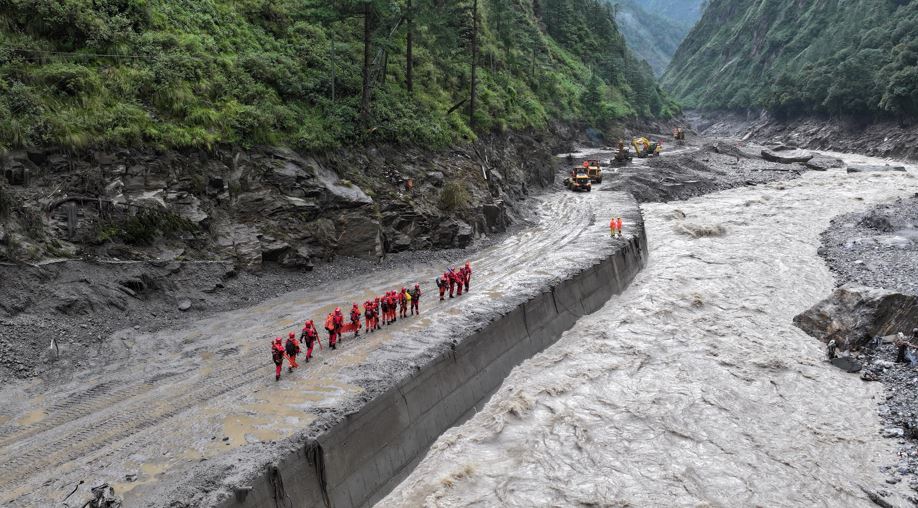
Kathmandu — An extraordinary team of experts has come together in a WhatsApp group, united by a single purpose: guiding rescue workers through the aftermath of a devastating flash flood that struck the Trishuli Valley in Nepal. More than a week has passed since a torrent of water, mud, and rock struck on August 26, and still, the search for survivors continues. Hope flickers in the hearts of many as rescue teams scour the ruins of hydropower plants, searching for anyone who may have sought refuge in the dark tunnels that once channeled life-giving water for energy.
Before the flood struck, engineers had established this vital communication network. Now, it stands as a lifeline, supporting rescue efforts alongside helicopters and heavy machinery. Authorities cling to the hope that some of the nearly 900 individuals reported missing from six hydropower plants—especially those working in or fleeing into the tunnels—may still be alive.
A Race Against Time
Finding those tunnels has proven a daunting task. The flash flood dumped a staggering 2.2 million tonnes of mud and debris throughout the valley, obscuring entrances that once connected to hydropower facilities. “Can you send me the Chilime layout drawings?” a government official pleaded in the WhatsApp group as rescue workers combed through what remained of the Chilime hydropower plant near the Chinese border. Within minutes, an engineer responded, sending vital information regarding the plant’s tunnels and powerhouse.
Even so, hope remains fragile. As of now, no one has been found alive in the tunnels of the 22 MW Chilime plant or its counterparts downstream. Yet, there are whispers of possible survivors. The Nepal Independent Power Producers’ Association indicated that at least eight people might still be trapped in the Chilime facility, while another 46 could be clinging to life at the Rasuwagadhi hydropower plant nearby.
The Reality of the Search
Speaking to the media, Nepal army spokesperson Raja Ram Basnet underscored the challenges faced by rescuers: “The flood has altered the terrain around the tunnels and changed their structure.” The situation is far from normal, with debris blocking paths and creating treacherous conditions. Images captured at Chilime this past Monday painted a grim picture of the scene, with one large tunnel entrance barely visible beneath the flood debris.
The recent disaster, sparked by a glacier collapse, claimed the lives of over 1,200 people. Thousands remain unaccounted for, including those who may be trapped inside buried tunnels. As the rescue work continues at the Chilime site, teams are also scouring five other hydroelectric facilities significantly impacted by the flood—a disaster that has stripped Nepal of nearly 10% of its energy generation capacity.
Hope Lingers
At the Rasuwagadhi plant, despite reaching a blocked tunnel just 250 meters in, rescue workers refuse to give up. “We are trying to reach inside again to look for people,” said Amshu Kiran Shahi, a board member of the Nepal Electricity Authority, believing that the trapped individuals might still have access to food and water in a nearby chamber.
The WhatsApp group has also facilitated communication with former employees who possess critical knowledge of the tunnel networks. Engineers have been brainstorming solutions and sharing construction blueprints that could aid in the search.
Rescue efforts have faced delays—one team at the Upper Trishuli 3A project took nearly six days to locate the tunnel entrance due to being buried beneath rubble. Since then, they have been working tirelessly to supply oxygen through pipes into any potential cavities within, praying for signs of life.
Lives Intertwined
Among the stories of survival, Jan Jiwan Thakur recounted a narrow escape when his colleague warned him moments before the flood hit. “We just ran toward the hillside,” he remembered. “After two to three minutes, when we looked down, everything was gone.”
Another survivor, Dhan Bahadur Tamang, described braving the darkness of a tunnel as the flood surged through, sweeping away pipes and equipment. With an intimate understanding of the tunnel system, he and a few others managed to find a way out, although not without witnessing the horrors surrounding them.
In the meantime, loved ones wait with bated breath. Rajesh Shrestha, whose 30-year-old son Rajish is an environmental engineer at Upper Trishuli 1, continues to hold onto hope. “Whenever I look outside, I imagine seeing him carrying a bag and coming home, just as he used to,” he shared with tear-filled eyes. “I am surviving on the hope that he will return.”
A Collective Effort
In the face of adversity, the resilience and determination of those involved in the rescue efforts paint a poignant picture of human spirit. As they sift through the ruins, their hearts beat in unison with the hope of reuniting families and finding those still lost within the darkness.
The journey ahead remains fraught with challenges, but even amid despair, the flickering flame of hope continues to burn bright in the Trishuli Valley.