Pope Leo’s Powerful Message to Spain: A Call for Compassion and Unity
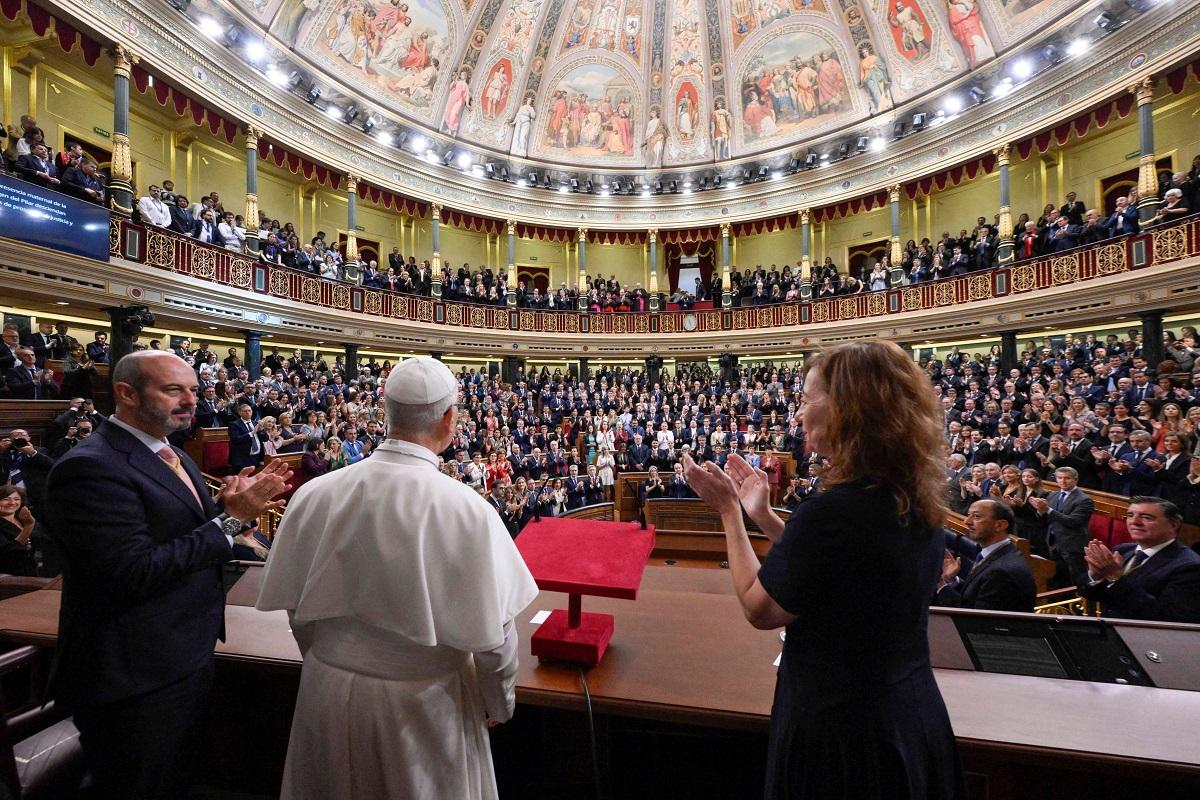
In a heartfelt speech delivered to Spain’s parliament on Monday, Pope Leo made a poignant appeal for compassion and solidarity in the face of a world spiraling into conflict and division. This wasn’t just any address—it was a powerful moment filled with emotion and urgency, as he called for an end to the wars tearing communities apart and highlighted the plight of migrants seeking refuge and hope.
As the pontiff stood before lawmakers, he reflected on the grim realities of our time. “The world is undergoing a profound spiritual and cultural crisis,” he said, vividly capturing the escalating violence, deepening polarization, and growing mistrust that define our current landscape. His words came against the backdrop of renewed attacks between Israel and Iran, a stark reminder of the fragility of peace. “Weapons can impose a temporary silence,” he cautioned, “but they can never build an authentic and lasting peace.”
Pope Leo’s passionate address, which was delivered in Spanish and met with a touching seven-minute standing ovation, marked a historic moment—the first address by a pope to Spain’s parliament, and a rare occasion for such direct engagement with national leaders. The week-long visit included poignant encounters with migrants and the homeless, as he urged leaders to bridge the divides within their electorates.
Citing the harsh reality of migration, the pope urged Spain and other nations to look beyond mere management of migrant flows. He passionately argued that addressing the root causes—war, poverty, and climate change—was essential. “The moral greatness of a nation is manifested above all in its capacity to accompany, protect, and love those lives that pass through the greatest fragility,” he urged, invoking empathy for those risking everything to reach safe shores. Tragically, over 3,000 souls lost their lives in 2025 alone attempting to cross treacherous waters to the Canary Islands.
In light of recent global events, the pope voiced deep concerns over rising European military spending, a development he found “troubling.” Echoing his relentless advocacy for peace, he argued that the surge in defense budgets—a response to pressures from leaders like former U.S. President Trump—represents a betrayal of diplomacy. He reminded the audience that true security is built on goodwill, not arsenals.
He also addressed the complex dynamics of Church and state, expressing a need for religious freedom in public life. “Faith cannot be relegated to silence as though it were irrelevant,” he asserted, defending the sanctity of confession even in light of ongoing discussions about clerical abuse.
His remarks on the sacredness of the confessional echoed the very real pain of abuse survivors. The pope challenged the bishops to listen to these voices and to offer meaningful reparations, recognizing the urgency of healing deep wounds within the Church.
Pope Leo’s visit, culminating in an encounter with migrants in the Canary Islands, shines a light on the human spirit’s resilience. His impassioned call for compassion, understanding, and active engagement offers a hopeful pathway forward—a reminder that, in a world clouded by division, love and unity still hold the power to transform lives and nations.
As he concluded his address, the dilemma was clear: in these turbulent times, we face a choice—continue down the path of isolation and conflict, or embrace a future defined by openness, understanding, and shared humanity. In a world aching for peace, let us not forget that every life matters, and together, we can build a more compassionate tomorrow.