

The Peso’s Plunge: Navigating Uncertain Waters
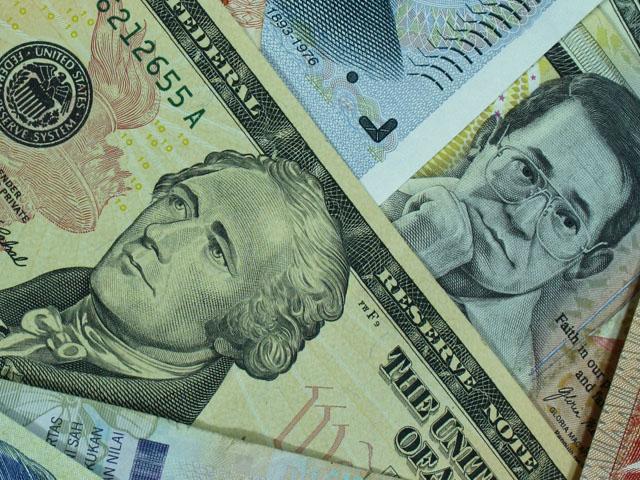
On Friday, the Philippine peso hit a distressing milestone, plummeting to a new record low. It marked the peso’s 31st dip this year alone, a staggering statistic that reflects ongoing economic challenges. As the clock struck closing time, the local currency settled at P63.615 to one U.S. dollar, slipping 9.5 centavos from the previous day. Just days earlier, the peso had already surpassed its previous record low of P63.52, a worrying trend that was felt deeply across the nation.
In an unsettling twist, during trading, the peso even touched P63.62 to the dollar. This downward spiral came amid rising global crude oil prices, which rocketed to their highest point in five months, pushing Brent crude to $114 per barrel. Speculation around potential U.S. military actions in Iran has only added to the uncertainty.
Rising Tides of Import Costs
Michael Ricafort, chief economist at Rizal Commercial Banking Corporation, highlighted the implications of soaring oil prices. “The sharp increase in global crude oil prices can lead to a heavier oil import bill for our country,” he explained. This surge not only exacerbates trade deficits but also threatens to stretch our current account and balance of payments wider.
With higher import costs, the demand for U.S. dollars is set to increase. This, in turn, could place even more strain on the peso, prompting domestic prices to rise. The recent inflation rate soared to 7.2% in September, matching April’s figures and marking the fastest pace since March 2023. This statistic reinforces concerns as it drifts well above the government’s target range of 2.0% to 4.0%.
John Paolo Rivera from the Philippine Institute for Development Studies echoed Ricafort’s concerns, emphasizing the persistent demand for dollars amidst ongoing global uncertainties. “We’re facing elevated oil prices and widening trade deficits. These factors are weighing heavily on investor sentiment,” he conveyed.
The Balance of Payments Deficit
The situation gets even gloomier when we look at the country’s balance of payments (BOP). By the end of September, the BOP reported a staggering $9.1 billion deficit, widening from $5.3 billion the previous year. This indicator monitors transactions with the world, and with a deficit, it means funds are leaving the country faster than they are coming in.
Central Bank’s Stance
In response to the peso’s depreciation, Bangko Sentral ng Pilipinas (BSP) Governor Eli Remolona Jr. remarked that the central bank would allow the market to dictate the exchange rate. Only large market swings would prompt intervention, he said. “We are concerned about the inflationary impact of the peso’s decline,” he admitted, but reassured that current conditions haven’t yet reached a critical threshold.
Just recently, the BSP raised interest rates by 50 basis points, adjusting its inflation forecast for 2027 up to 6.0%. While some believe that this hike could provide temporary support to the peso, Rivera noted that its impact might be limited by ongoing external pressures.
Future Outlook
Jonathan Ravelas, a senior adviser with Reyes Tacandong & Co., also shared concerns surrounding external factors. “Even with rate hikes, the stronger dollar dominates the narrative,” he noted. As long as inflation in the U.S. remains a concern alongside heightened tensions in the Middle East, the peso may continue to face significant pressure, likely trading near P63.50 to P63.75 to the dollar.
This turbulent week wasn’t just about currency values. The local stock market mirrored the uncertainty, with the main Philippine Stock Exchange index (PSEi) dropping 51.1 points, or 0.88%, to close at 5,728.63. Nearly all sectoral indices fell — with industrials down 1.51% and property down 1.88% — leaving investors with a palpable sense of concern.
As we ride this wave of economic uncertainty, the emotions run high. Families and businesses alike face increasing pressures from rising costs and a declining peso. In these testing times, staying informed and resilient is more crucial than ever.