


The Hidden Crisis: Ozone Pollution and Its Global Impact
PARIS, France – As the sun blazed down and wildfires raged, a chilling reality emerged: this year, one third of the world’s population faced dangerous levels of ozone pollution. According to a recent report by the European Union’s Copernicus Climate Atmosphere Monitoring Service (CAMS), the interplay between alarming heatwaves, catastrophic fires, and human activity has painted a stark picture of our planet’s air quality.
Imagine this: when intense heat and sunlight interact with emissions from wildfires, vehicles, and industry, it creates ground-level ozone. This invisible menace can wreak havoc on our lungs, triggering breathing difficulties, asthma attacks, and a slew of other health issues. It’s a silent crisis that affects millions, yet remains largely unnoticed.
The Ecology in Distress
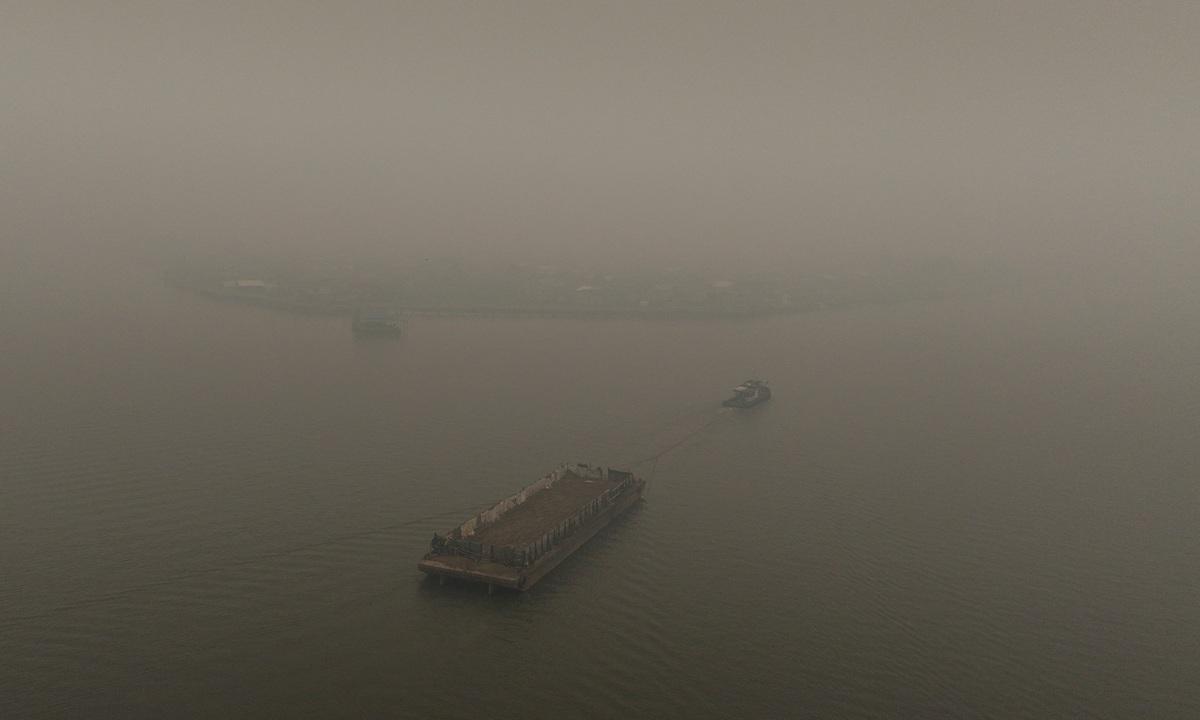
Record-breaking temperatures and wildfires have scorched regions across Europe and North America, pushing smoke across borders and impacting air quality far from the flames. Indonesia has also suffered devastating wildfires, while the warming El Niño weather pattern threatens to escalate fire activity in Southeast Asia later this year.
As CAMS director Laurence Rouil emphasized, “Air pollution does not stop at borders. It can travel thousands of kilometers, crossing continents and oceans.” This creates an unshakeable link between the air we breathe and the actions taken by others, binding us together in a shared struggle for clean air.
Grasping the Scale of the Issue
Between January and September of this year, a staggering 34% of the global population was exposed to what can only be described as “extremely poor” air quality—meaning ozone levels soared far above the World Health Organization’s guidelines. On average, the WHO recommends a maximum exposure of 100 micrograms of ozone per cubic meter over an eight-hour period. Yet, for many, these levels were alarmingly surpassed.
In stark contrast, only 5% of people enjoyed “good” ozone conditions. Asia was hit hardest, with 53% of its residents breathing air that was considered “extremely poor.” Cities like New Delhi, Dhaka, Chongqing, and Lahore stood out as examples of troubling air quality.
North America wasn’t exempt either: two-thirds of its population faced “poor” or “very poor” air quality. Even Europe, often seen as a leader in environmental regulation, is grappling with ozone pollution linked to 60,000 premature deaths each year. As Ian Marnane from the European Environment Agency noted, “Despite ambitious emissions reduction policies, ozone levels remain relatively unchanged.”
The Global Picture
Our world’s air pollution story intertwines with factors across continents. In Africa, smoke from forest fires, agricultural burning, and even cooking methods contribute to the dilemma. Eight percent of Africa’s population experienced “extremely poor” air quality this year, while 19% faced “very poor” conditions.
In South America, cities like São Paulo and Rio de Janeiro faced dangerously high ozone levels—but thankfully, 81% of the continent’s population enjoyed “good” or “fair” air conditions.
Yet, amid this distress, there is a glimmer of hope. Oceania, which includes Australia and New Zealand, reported that 66% of its population enjoyed “good” ozone levels, with only 34% living under “fair” conditions.
Looking Ahead
As we confront the overwhelming challenge of air pollution, we must remember that our actions today will shape the world of tomorrow. We’ve made strides in reducing harmful air pollutants, but ozone remains a resilient foe, exacerbated by the very climate changes we’ve set in motion.
It’s time for all of us—governments, industries, and individuals—to rally together, not just within our borders, but across the globe. The air we breathe is precious, and it’s up to us to protect it for future generations.