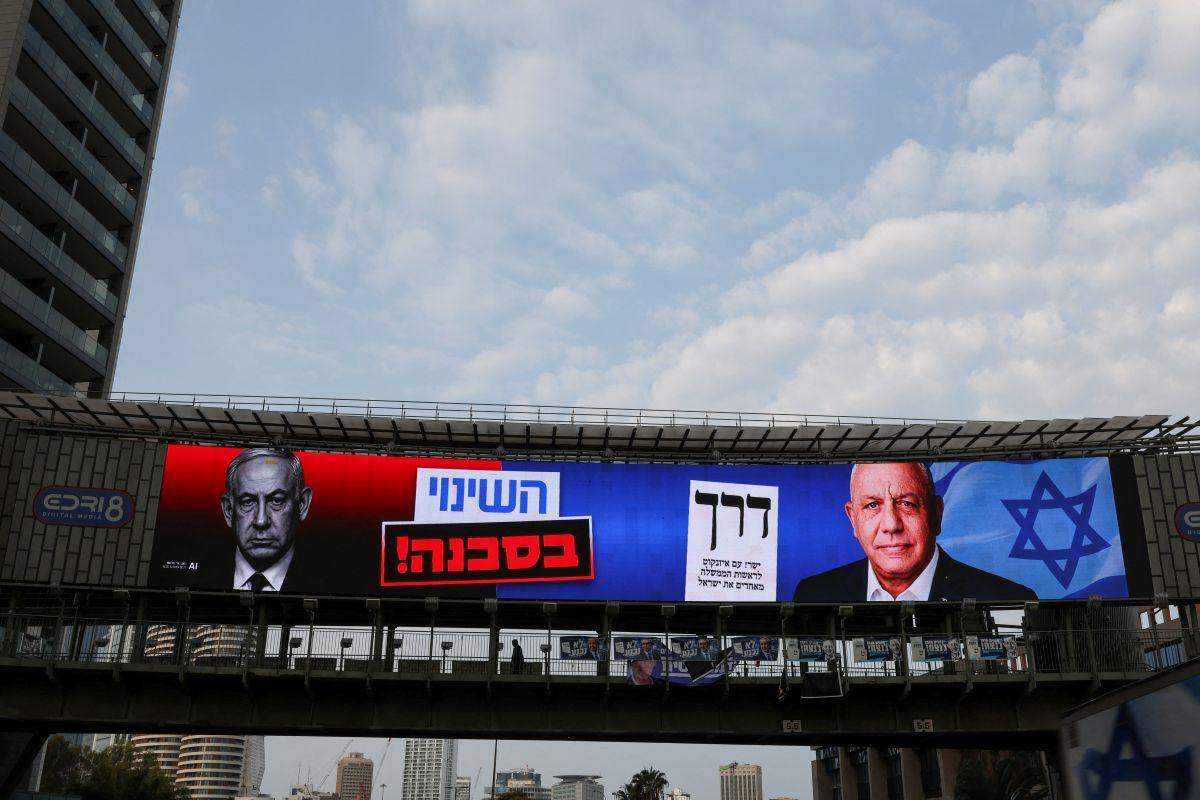
Election Day Showdown: Netanyahu Faces a Crucial Moment in Israel’s Political History
In Jerusalem, the air is thick with tension and anticipation as Prime Minister Benjamin Netanyahu braces for a pivotal election on Tuesday. Voters find themselves at a crossroads, weighing Netanyahu’s nearly two-decade tenure against the backdrop of harrowing events: the 2023 Hamas-led attacks, ongoing wars in Gaza and with Iran, and Israel’s growing international isolation.
Despite the tumultuous landscape, Netanyahu stands as a formidable figure. After 19 years in office, he’s weathered storms before, skillfully navigating the treacherous waters of Israeli politics. Yet, this time, the stakes feel higher. Opinion polls suggest a neck-and-neck race between Netanyahu’s Likud party and a competing alliance spearheaded by Gadi Eisenkot, a former military chief of staff known for his strong security views.
As dawn broke, polling stations opened at 7 a.m. (0500 GMT), drawing voters eager to make their voices heard. The polls will close at 10 p.m. (2000 GMT), and with each tick of the clock, the tension mounts.
Netanyahu has cast his campaign as a testament to his wartime leadership, rallying support through his alliance with US President Donald Trump. Just days before the election, he declared that Trump would act decisively to “finally” eliminate the threat from Iran, but only if Netanyahu remained in charge.
On the other side, Eisenkot hasn’t held back. He accused Netanyahu of wielding “fear, lies, and threats” as a political tool. “Trump will work in full cooperation with any leader chosen by the people,” he asserted confidently.
As the election unfolds, Netanyahu may find himself once again relying on far-right allies like Itamar Ben-Gvir and Bezalel Smotrich—leaders whose controversial stances have already raised eyebrows among Western nations. Interestingly enough, both figures have seen increasing support in recent polls, even amid international scrutiny.
The reality is that neither Netanyahu nor Eisenkot has a simple route to power. If no one can form a governing coalition in the Knesset, Israel’s 120-seat parliament, Netanyahu may linger on as a caretaker until new elections are scheduled next year.
For the 7.3 million eligible voters, including around 330,000 making their debut at the ballot box, this day is a historic moment. The aftermath of the shocking October 7 attacks, which saw 1,200 Israelis killed and 251 others taken hostage, looms heavily over the political landscape.
For many, this election represents a call for accountability. Mali Hajaj, an employee at the Education Ministry, echoed the sentiments of many when she said, “The most important thing is the establishment of a national inquiry because that’s where our healing will come from.”
Conversely, Lisa Tortor voiced a wish for Netanyahu to step down: “They can form a new government and do some of the repairing of the damage Bibi has done for Jews all over the world and for Israel.” The term “Bibi” carries a weight, a reminder of both Netanyahu’s long-lasting impact and the divisions his leadership has created.
Yet, hope remains among some voters. Eighteen-year-old Nof Gabay, a staunch Likud supporter, holds a different view. “Netanyahu managed the war in the best possible way,” he asserted.
In the wake of the Hamas attacks, Israel has unleashed significant military actions in Gaza, resulting in staggering numbers: health authorities in Gaza claim that as many as 74,000 people have died from Israeli strikes. At the same time, Israel has struck Iranian nuclear sites and confronted Hezbollah in Lebanon. Eisenkot argues that stopping Iran from acquiring nuclear capabilities is crucial, advocating for either military action or a diplomatic resolution.
The coalition landscape is murky at best. Both Netanyahu and Eisenkot oppose a two-state solution with Palestine but criticize the rise in settler violence against Palestinians. Disenchanted supporters of Likud are becoming increasingly vocal, even attempting to sway votes on the ground. Polls indicate that a high turnout from Israel’s Arab minority, who carry their unique cultural identity even while Israeli by citizenship, could influence the election’s outcome.
Though Eisenkot has ruled out partnering with Arab parties, analysts suggest they might still prop up a minority government led by him if it means ousting Netanyahu.
“Expect only a slight majority, either way. No landslide,” predicts Israeli political analyst Amotz Asa-El of the Shalom Hartman Institute.
As dusk approaches and the polls close, the heart of Israel beats with uncertainty. Will Netanyahu emerge victorious once again, or will the sands of change sweep through the nation? Regardless of the outcome, this election holds the potential to redefine Israel’s political landscape for years to come.