There’s a quiet shift happening at the International Criminal Court.
A turning point.
The ICC Presidency has officially formed the Trial Chamber that will hear the crimes against humanity case against former Philippine President Rodrigo Duterte—marking a major step toward a trial that has been years in the making.
In a detailed 50-page decision, the court confirmed what many have long anticipated: Duterte will stand trial over the deadly anti-drug campaign that defined his time as Davao City mayor… and later, as President of the Philippines.
Now, the spotlight turns to three people.
Three judges.
Three voices who will help shape the outcome of this historic case.
Meet the Judges Who Will Decide
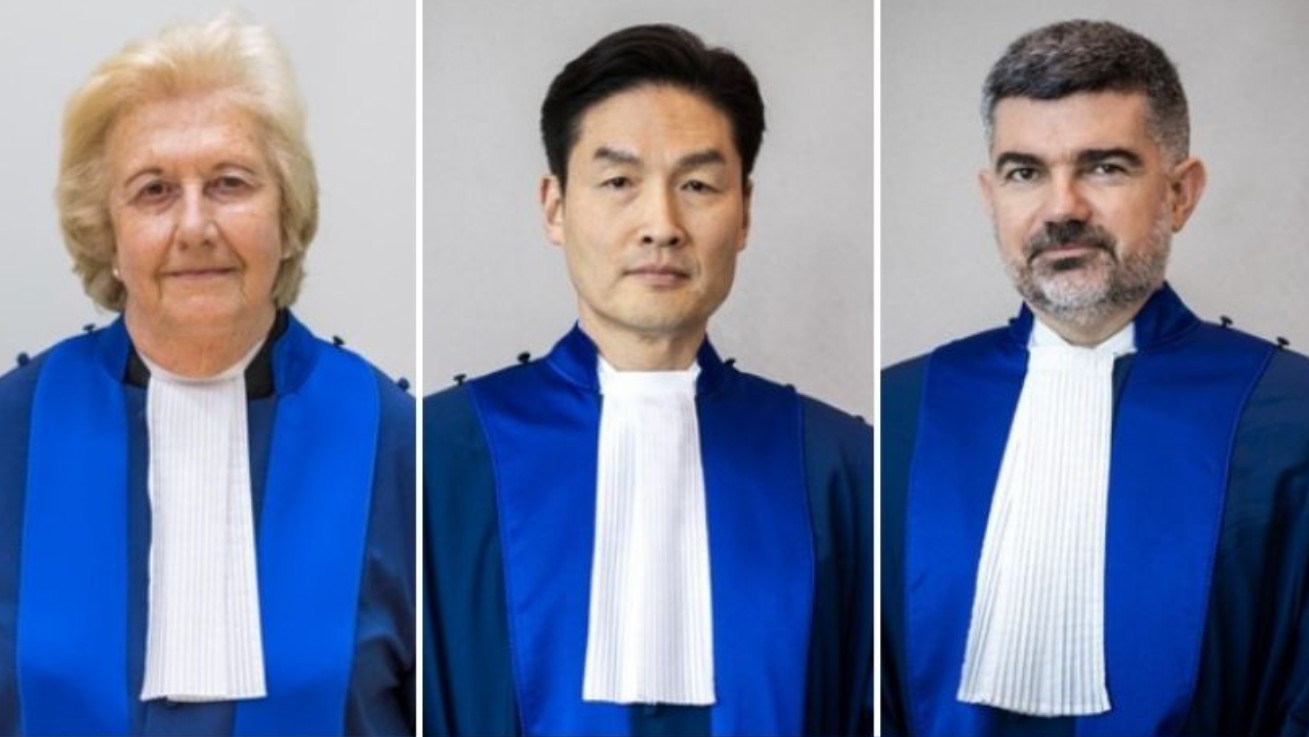
The ICC has appointed Joanna Korner, Keebong Paek, and Nicolas Guillou to preside over the trial. None of them were involved in the earlier pre-trial phase—ensuring a fresh, impartial look at the case.
And once they begin, everything moves forward.
They will set the timeline…
Review the evidence…
Rule on critical issues…
And ultimately, guide the court toward justice.
But who are they?
Joanna Korner: A Lifetime in the Courtroom
With more than 45 years in criminal law, Joanna Korner brings decades of experience—and gravity—to the bench.
A British judge trained at the prestigious Inns of Court School of Law, she has handled some of the most serious cases imaginable, from fraud to murder.
She’s been a prosecutor in international tribunals.
A judge in England’s Crown Court.
And a legal adviser in post-war Bosnia.
Her career spans continents—and conflict zones.
Now, she stands at the center of one of the most closely watched trials in recent history.
Keebong Paek: The Prosecutor Turned Global Legal Force
From South Korea, Keebong Paek built his career on precision, discipline, and years of prosecuting complex criminal cases.
For over two decades, he investigated crimes, led prosecutions, and helped shape legal systems.
He worked with the United Nations.
Helped draft laws tied to the ICC.
And advised on cross-border crime and international cooperation.
Now, he brings that global perspective into the courtroom.
Nicolas Guillou: The Bridge Between Nations and Justice
French judge Nicolas Guillou has spent his career navigating the delicate space where law meets diplomacy.
He started as an investigative judge in France…
Went on to work with international tribunals…
And even served as a liaison prosecutor with the U.S. Department of Justice.
He understands not just the law—but how justice moves across borders.
And in this case, that matters.
What Happens Next
The Trial Chamber will now begin preparing for what could be a long and emotionally charged process.
They’ll set the trial date.
Decide how evidence will be presented.
And rule on key legal questions—starting with a possible appeal from Duterte’s camp.
The defense has already signaled it will challenge the court’s decision.
If they proceed, timelines could shift.
But not for long.
“This is normally a short procedure,” said ICC counsel Paolina Massida.
Still, one thing is clear:
The trial is coming.
The Victims—And Their Long Wait for Justice
Behind the legal process are real people.
Lives lost.
Families broken.
Stories that demand to be heard.
A total of 539 victims have been authorized to take part in the proceedings.
For them, this isn’t just a case.
It’s a chance to finally be seen…
To be heard…
And maybe, to begin healing.
Massida emphasized how crucial their voices will be.
Because in the end, justice isn’t just about rulings.
It’s about truth.
“It’s a way of seeing justice done… and being able to turn the page,” she said.
After years of waiting, that moment may finally be within reach.
A Historic Trial Ahead
Duterte, arrested in March 2025, remains detained in The Hague and is expected to be physically present in court—as required by international law.
What lies ahead could be long.
Possibly a marathon of hearings.
With witnesses, evidence, and testimony unfolding over time.
But for many, the journey has already been long enough.
Now, the world watches.
And history… is about to be written.