Title: A Storm of Accountability: The Emotional Turmoil Surrounding Vice President Sara Duterte
In a dramatic twist in Philippine politics, Vice President Sara Duterte found herself at the center of a storm after an arrest warrant was issued against her for alleged grave threats. Amid growing tensions, she posed a chilling question that echoed through the nation: “Who will be held accountable if something happens to me?”
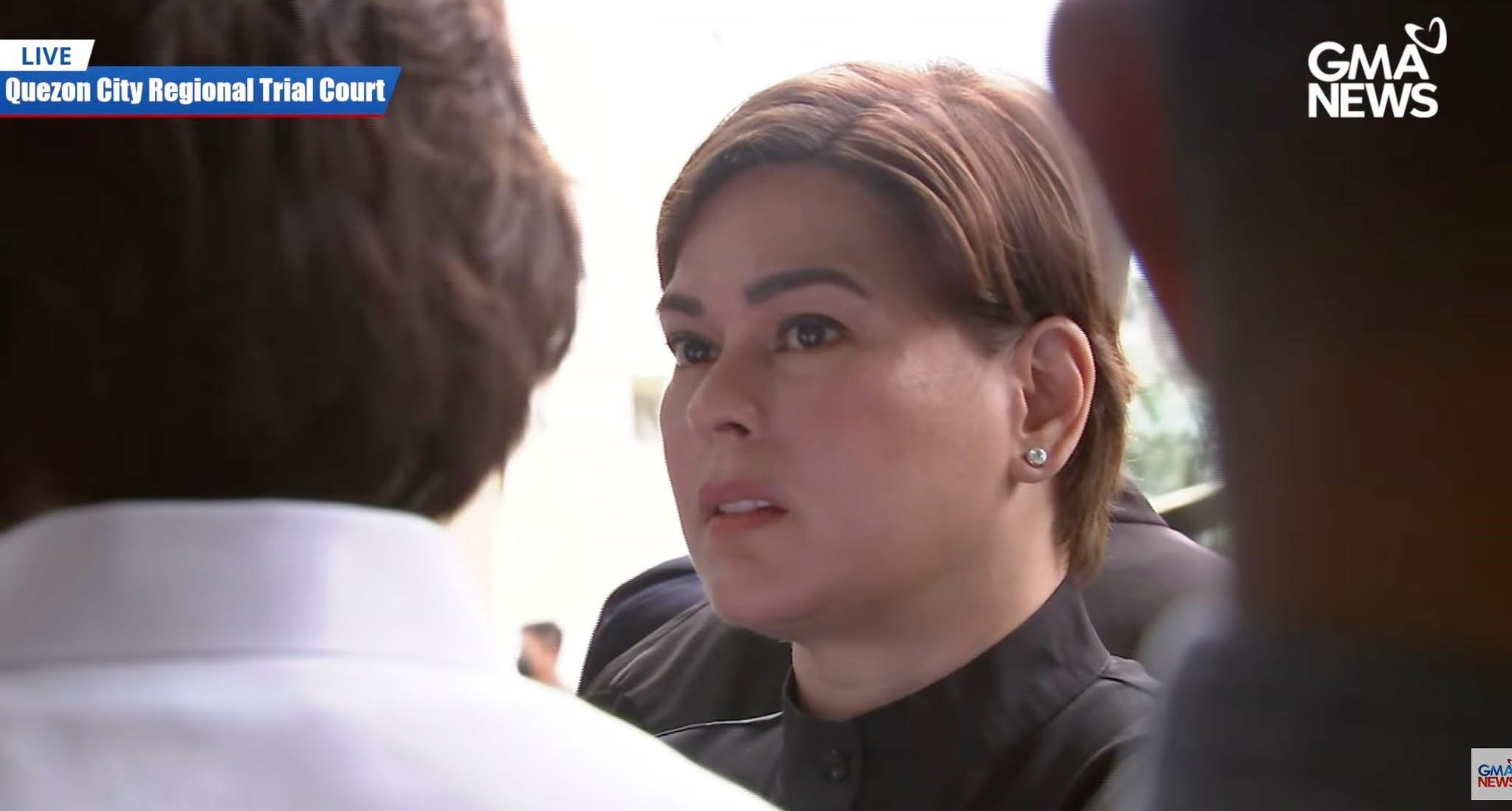
As she stood outside the Quezon City Hall of Justice, about to post bail, her voice trembled with emotion. “I do not feel safe at all. Sinong sasagot kapag namatay ako mamayang gabi?” she asked, laying bare a visceral fear that gripped her heart. The weight of such words hung heavy in the air, sparking a deep conversation about accountability and justice.
Bicol Saro party-list Representative Terry Ridon responded fiercely, asserting that Duterte must confront the allegations she faces. “You need to answer for the charges against you, Madam Vice President,” he stated firmly. Ridon’s call for transparency was not just a political jab; it was a demand for clarity amid a whirlwind of emotions. “Tama na po ang drama. Wala naman pong grave threats case ngayon kung hindi dahil sa mga pahayag na naging batayan ng kasong isinampa laban sa inyo,” he emphasized, urging her to face the legal process head-on.
The courtroom had become a stage for a larger narrative—one that was mired in political drama but deeply personal at its core. Meanwhile, ML Party-list Representative Leila de Lima, who endured years of political and legal battles herself, offered her perspective. A keen observer of accountability, she noted that the issuance of the arrest warrant indicates the court found substantial grounds to assess the evidence against Duterte. “VP Sara may not be used to being held accountable, but now she must answer the accusations against her in a criminal court,” she remarked. De Lima’s words rang with an urgency for justice that many felt echoed their own frustrations with the system. “Hindi na nga dapat tumagal ito, but at least, it’s finally happening,” she insisted, struck by the significance of the moment.
In the midst of this political storm, family ties also emerged as powerful factors. Duterte’s relatives rallied to her side, decrying the arrest warrant as a “clear act of political harassment.” Davao City 1st District Representative Paolo “Pulong” Duterte shared his solidarity on social media, declaring his own feelings of insecurity in the current climate. “I am with VP Inday. I am a Filipino, and I don’t feel safe,” he posted, highlighting a shared vulnerability that transcended political divisions.
His cousin, Davao City 2nd District Representative Omar Duterte, drew parallels to their family’s struggles during former President Rodrigo Duterte’s tenure. “To the Filipino people, I ask you with all sincerity: please wake up and see what the current administration is doing,” he urged, signaling a call to action amidst a brewing discontent.
As the events unfolded, one thing became clear: the conversation surrounding accountability in politics is far from over—and it’s one that resonates deeply within the hearts of many Filipinos. The fear, the calls for justice, and the emotional turmoil that accompanies such high-stakes situations leave an indelible mark on society, continuously challenging each one of us to reflect on the balance between power and responsibility.
In these uncertain times, as the dust settles and emotions run high, the nation watches closely, reminded that justice and accountability are not just political slogans; they are the echoes of lives intertwined in a narrative of hope, fear, and ultimately, the quest for truth.