
Preparing for “The Big One”: A Unified Response Plan for Metro Manila
In a world where natural disasters are a lingering threat, the Office of Civil Defense (OCD) is stepping up to ensure that we’re ready. On a bright Thursday morning, government agencies came together to unveil an essential strategy for responding to a powerful earthquake—one that many fear might strike Metro Manila and its neighboring areas. This initiative, known as the 2026 Harmonized National Contingency Plan (HNCP) for High-Intensity Earthquakes, aims to prepare us for what is often referred to simply as “The Big One.”
A Symbolic Launch
The launch took place at the OCD central office in Camp General Emilio Aguinaldo, Quezon City. With a powerful message behind it, government officials revealed the 2026 HNCP, framing it as a crucial guide for an organized response in the face of potential devastation. OCD Administrator Harold Cabreras emphasized the gravity of the situation, explaining, “We will assume that Greater Metro Manila is devastated, so initially, the government will be completely cut off.”
This might sound daunting, but there’s a sense of hope. Cabreras assured everyone that different regions are already assigned to assist in this crisis, highlighting the importance of community and cooperation. “We’ve identified the areas where our fellow countrymen should go,” he said, giving us a sense of direction amidst uncertainty.
A Collective Effort
The 2026 HNCP outlines the specific roles of various national government agencies, including the Department of Public Works and Highways and the Department of Transportation, as well as uniformed services like the Philippine Navy and the Coast Guard. Each agency has its own responsibilities, fostering an organized approach to crisis management.
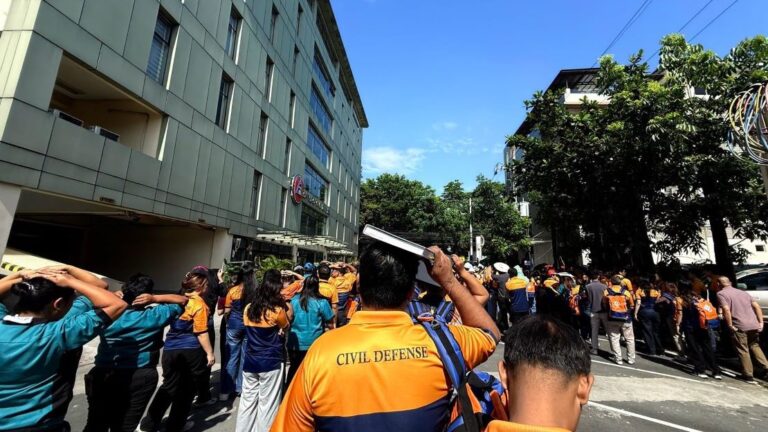
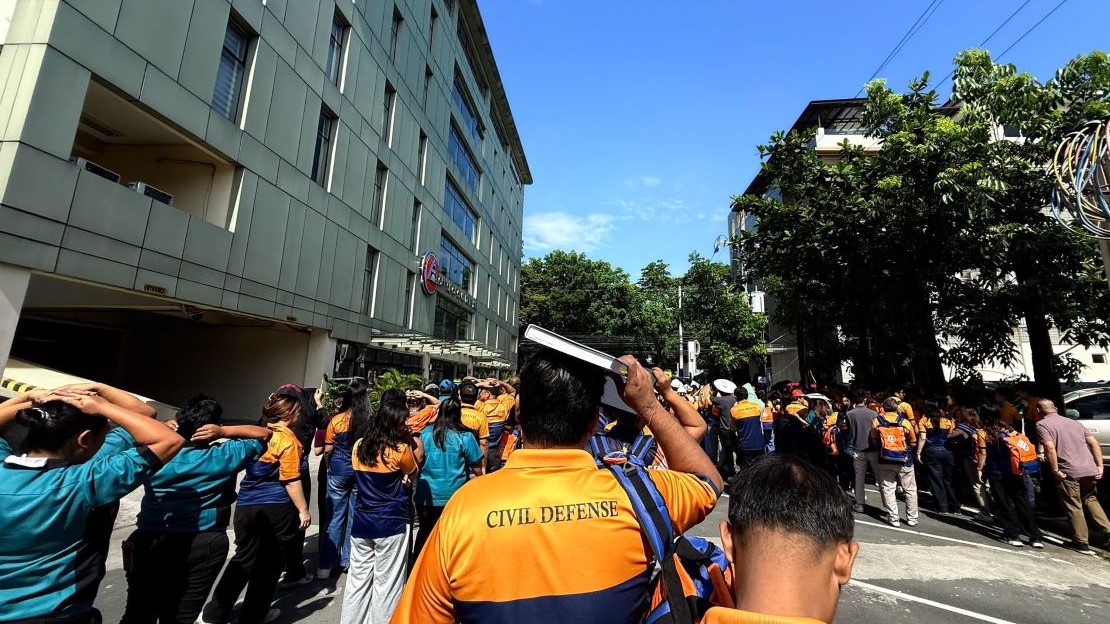
This launch wasn’t just a standalone event; it coincided with the Second Quarter National Simultaneous Earthquake Drill. Schools, local governments, and other institutions participated, simulating real-life scenarios, so we can all better prepare ourselves for the unexpected.
Understanding the Risks
With the Philippine Institute of Volcanology and Seismology (PHIVOLCS) warning that a magnitude-7.2 earthquake could result in catastrophic losses—potentially claiming over 50,000 lives and heavily damaging 12% of residential buildings—it’s crucial that we take these warnings seriously. Cabreras mentioned the lessons learned from a recent earthquake that shook Mindanao, reminding us of the urgency surrounding this issue.
“Everyone must understand the gravity of our situation,” Cabreras stressed. “Earthquakes are unpredictable. The West Valley Fault is due for a major quake.”
Time to Act
PHIVOLCS Director Teresito Bacolcol pointed out a critical takeaway from recent seismic events: we need to enhance public awareness and preparedness, particularly in coastal communities. “We saw individuals recording videos instead of evacuating when the ocean began to recede,” he noted, pointing to a crucial flaw in our response. Raising awareness is no longer optional; it’s a necessity.
In times of uncertainty, preparation is our best defense. The 2026 HNCP is more than just a plan—it’s a lifeline. It calls upon us to unite, to educate ourselves, and to be ready for whatever nature throws our way. Let’s take these lessons to heart and work together to ensure a safer tomorrow for our families and communities.