
Title: A Shift to Online Learning: 1.4 Million Indonesian Students Adapt Amidst Haze Crisis
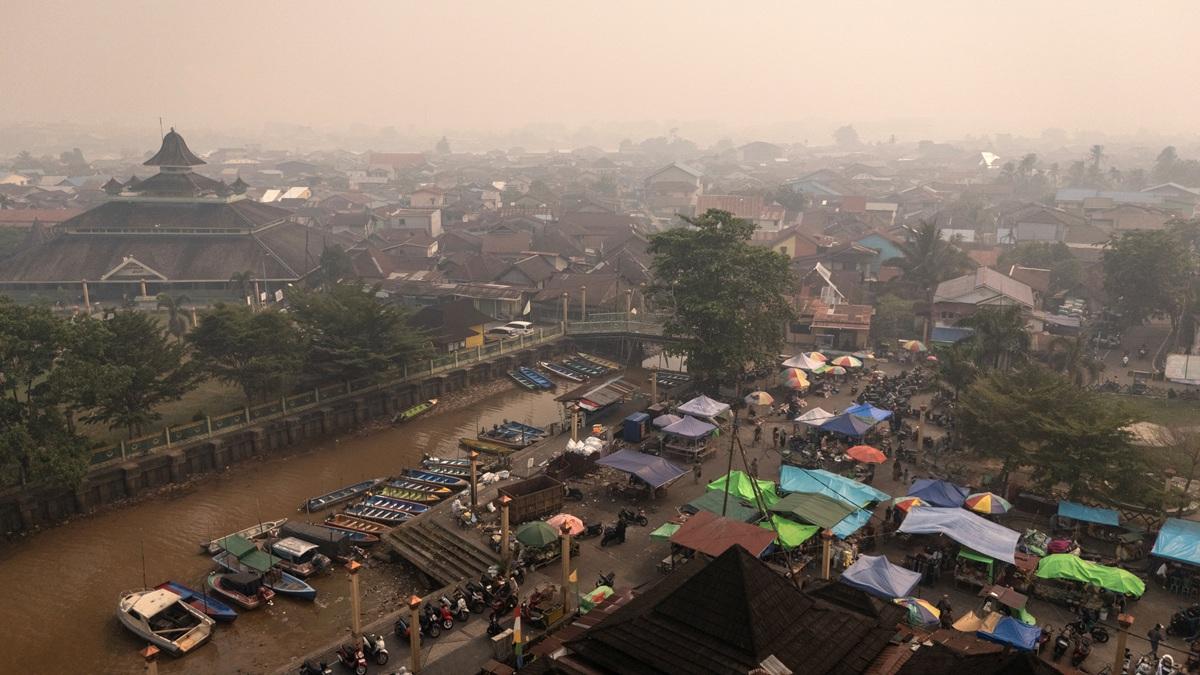
In Jakarta, a substantial challenge has emerged: around 1.4 million students across six Indonesian provinces are now adapting to online learning. This shift is a direct response to the harmful air quality caused by raging forest and land fires. As of September 2, an official from the Education Ministry reported that approximately 1.43 million students from 12,874 schools are currently studying remotely.
The provinces affected by this crisis include Riau, Jambi, and South Sumatra on the island of Sumatra, alongside West, Central, and South Kalimantan on Borneo. It’s a pressing situation that is making headlines and tugging at the heartstrings of many.
In West Kalimantan alone, about 1.1 million students are now learning from home. This region has sadly witnessed the most devastating wildfires so far this year. The remote learning period is set to last from August 31 to September 4, with plans for ongoing evaluations every three days to assess the air quality before making further decisions.
The decision to switch to online classes is based on the Air Pollution Standard Index (APSI). Whenever the index exceeds 200 in any given area, remote learning is implemented. Unfortunately, many parts of Kalimantan reported air pollution levels soaring above this threshold, with some areas exceeding 1,000—making breathing a serious concern.
For instance, Southeast Pontianak in West Kalimantan faced a staggering reading of 1,023. According to Indonesia’s air quality classification, any reading above 300 is considered hazardous. This paints a worrisome picture for students and educators alike.
In an effort to protect the students, school principals have been given the power to take immediate actions during these urgent situations. They’re empowered to make decisions on the ground instead of waiting for external approvals.
The reality is harsh. Recent data from the Forestry Ministry indicates that around 200,000 hectares of land were scorched by wildfires in the first seven months of the year alone—an alarming figure that nearly doubled just in July. Six priority provinces have faced the brunt of this devastation, highlighting a crisis that continues to unfold.
As the situation develops, the resilience of these students and educators shines through. They are adapting to these new learning methods, demonstrating their ability to persevere in the face of adversity. With ongoing evaluations and a hope for better air quality, the fight against the haze continues—both for the sake of education and the health of an entire generation.