A New Chapter in Cross-Strait Relations: Xi Jinping’s Vision for Taiwan
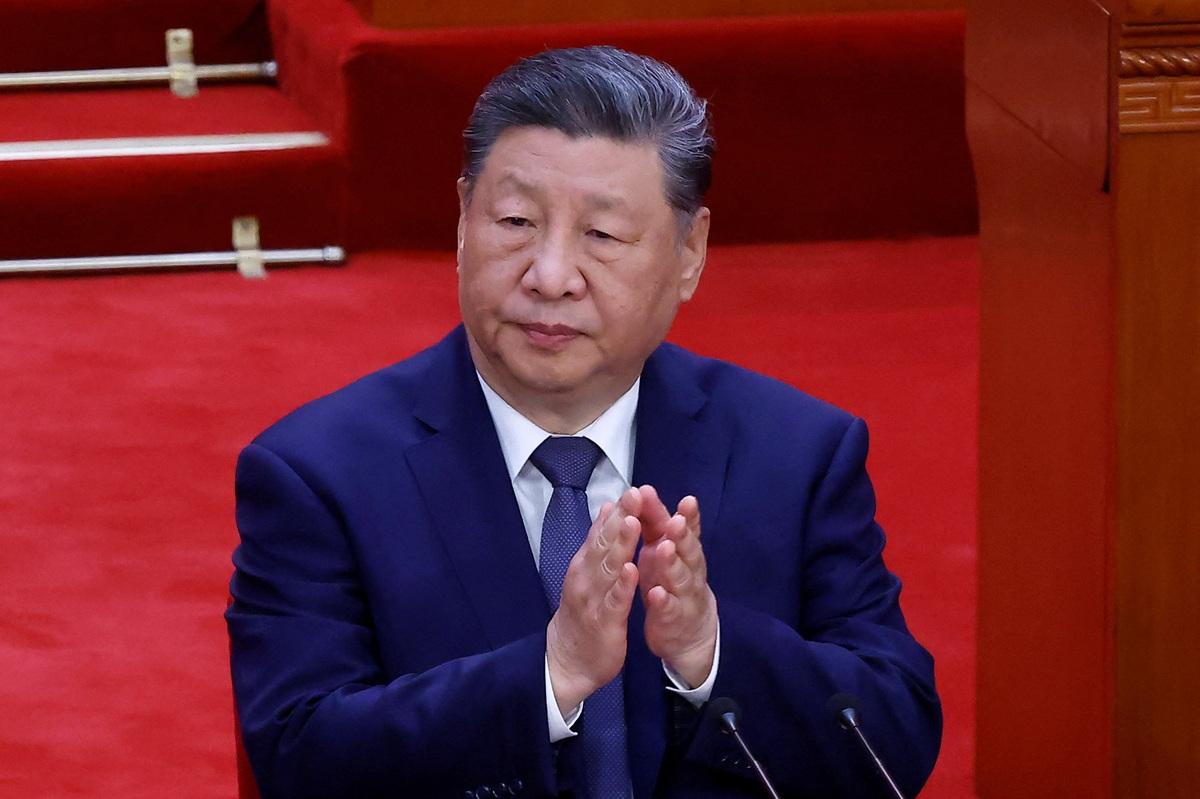
In a powerful address on Thursday, Chinese President Xi Jinping stood at the iconic Great Hall of the People in Beijing, proclaiming that “the tide of history cannot be stopped.” His words echoed through the hall as he called for peaceful “reunification” with Taiwan—a sentiment that was met with a swift and resolute rejection from Taipei.
For many, Taiwan represents a beacon of democracy and self-governance, and its people have firmly rejected China’s claim that the island belongs to them. Yet, in Xi’s eyes, the relationship between the two is one of utmost importance. He described the resolution of the Taiwan issue as the “unwavering historical mission” of the Communist Party. “The complete reunification of the motherland must be realized, and it will certainly be realized,” he stated with conviction.
Taiwan’s Strong Stand
Despite Xi’s peaceful overtures, Taiwan’s response was clear and uncompromising. The Mainland Affairs Council emphasized that neither the government nor the people of Taiwan would ever accept the “one country, two systems” model proposed by China—a model associated with a loss of autonomy under Communist Party rule. Spokesperson Liang Wen-chieh succinctly noted that Xi’s comments echoed familiar sentiments from the past, revealing a recurring tension that refuses to fade.
Xi took the stage on the 160th birthday of revolutionary figure Sun Yat-sen, a man whose legacy is revered in both China and Taiwan. Recognized as a hero who ended centuries of imperial rule, Sun’s ideals resonate deeply. Yet, while Xi portrayed him as a champion of national unity, Taiwan, too, honors Sun but embraces a different interpretation of his legacy.
A Looming Shadow
While Xi emphasized dialogue and peaceful reunification, his words couldn’t entirely mask the underlying tension. Just as he spoke, Chinese military aircraft surged around Taiwan, a reminder of the unresolved conflicts simmering below the surface. Taiwan’s defense ministry reported detecting 29 Chinese military aircraft engaged in a “joint combat readiness patrol,” indicating that while words may advocate peace, actions often tell a different story.
As the APEC summit approaches, where Xi is set to meet with U.S. President Donald Trump, the stakes in this ongoing saga continue to rise. Meanwhile, Taiwan’s focus is also drawn inward, as crucial local elections loom just weeks away.
The Complex Legacy of Sun Yat-sen
In the hearts of many in Taiwan, Sun Yat-sen remains the “father of the nation,” a symbol of their distinct identity. His principles, while historically significant, have grown distant in contemporary education. As Taiwan’s ruling Democratic Progressive Party emphasizes their separate identity from China, the ongoing tension over historical narratives and the rightful ownership of history continues to fuel divisions.
While Xi refers to Lai Ching-te, Taiwan’s president, as a “separatist,” Lai stands firm, asserting that only the people of Taiwan have the right to decide their future. This assertion reflects a deep-rooted belief in self-determination that resonates with many Taiwanese.
What Lies Ahead?
As history unfolds, the question of Taiwan’s future remains a poignant and pressing issue. Xi’s call for unity and peaceful reunification may sound reassuring, but it’s overshadowed by the realities of military posturing and political maneuvering.
In this complex dance of diplomacy and power, the world watches closely. The tides of history may indeed be turning, but whether they carry Taiwan toward a future of unity or continued separation remains to be seen.