

There was a pause…
A question hanging over the nation: How fast is “forthwith”?
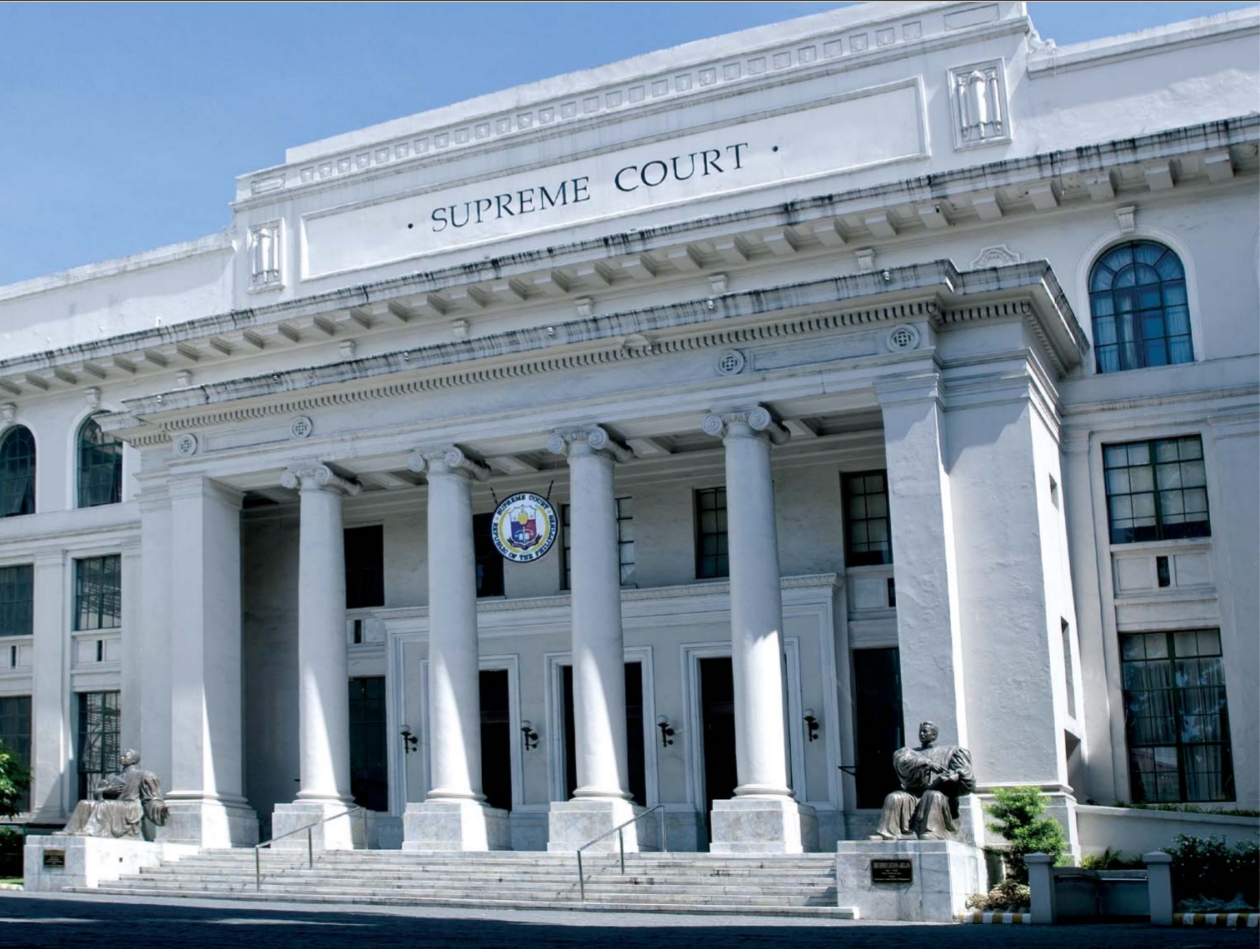
On Wednesday, the Supreme Court finally answered.
In a unanimous move—14-0-1—the High Court made it clear:
“Forthwith” does not mean immediately.
It means within a reasonable time.
And that distinction changes everything.
At the center of the issue was a petition filed by lawyer Catalino Aldea Generillo Jr. He had urged the Court to compel the Senate to instantly convene as an impeachment court and begin the trial of Vice President Sara Duterte.
But the Court wasn’t convinced.
Instead, it drew a firm line—one grounded not in urgency, but in balance.
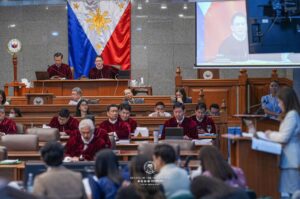
According to the decision, written by Associate Justice Rodil Zalameda, the Constitution does not impose a strict deadline on the Senate. While the House of Representatives must act within a set number of session days, the Senate is given space… room to prepare.
The phrase “shall forthwith proceed,” the Court explained, leaves timing to the Senate’s discretion.
And discretion, in this case, matters.
The ruling emphasized something simple, yet powerful:
“Forthwith” means acting within a reasonable time—
not rushed, not reckless… but not delayed either.
It acknowledges reality.
That every impeachment case carries its own weight, its own complexity.
And sometimes, preparation is not delay—
it’s responsibility.
Still, the Court issued a quiet warning.
The Senate cannot stall.
It cannot drag its feet.
Because at the heart of impeachment lies a principle that cannot be ignored:
public officials must always be accountable to the people.
By the time the Court ruled, events had already moved forward.
The Senate had begun preparations.
And more importantly, the earlier Articles of Impeachment against Duterte had already been nullified by previous Supreme Court decisions in July 2025 and January 2026.
In legal terms, the case had become moot.
There was nothing left to compel.
No trial left to begin.
The Court also addressed the method used by the petitioner.
A writ of mandamus—forcing a government body to act—was not the right tool.
Why?
Because the Senate is not subordinate to the Court.
It is a coequal branch.
Its actions, within its constitutional role, cannot simply be dictated—unless there is clear abuse of power.
Still, in the interest of fairness, the Court treated the petition as a different kind of challenge… and examined it anyway.
The conclusion remained the same.
No abuse. No violation.
For some, the decision brought relief.
Former Senate impeachment court spokesperson Atty. Regie Tongol called it a “victory for constitutional stability.”
His words carried a sense of vindication:
The process, he said, must not be weaponized.
It cannot be rushed by pressure… or shaped by misinterpretation.
There must be deliberation.
There must be reason.
And above all, there must be fairness.
But the story doesn’t end there.
In a dramatic turn, the House Committee on Justice—on the very same day—unanimously found probable cause to impeach Vice President Duterte again.
New complaints.
New accusations.
Among them:
- Alleged misuse of ₱612.5 million in confidential funds
- Threats against President Marcos Jr. and his family
- Unexplained wealth and possible constitutional violations
The weight of these claims now sets the stage… once more.
So the question returns.
Not if the Senate will act—
but when.
And now, the nation knows the answer won’t be measured in urgency alone…
but in reason, preparation, and accountability.
A careful pace.
But never a careless delay.