

Navigating Tensions: Rubio’s Diplomatic Mission to the UAE
Abu Dhabi — In the heart of the Middle East, a critical meeting unfolded this week as U.S. Secretary of State Marco Rubio sat down with key officials from the United Arab Emirates. This high-stakes dialogue aimed to soothe the concerns of Gulf allies who feel unease about a recent peace agreement with Iran—a deal some deem overly favorable to a nation that has aggressively targeted them in the past.
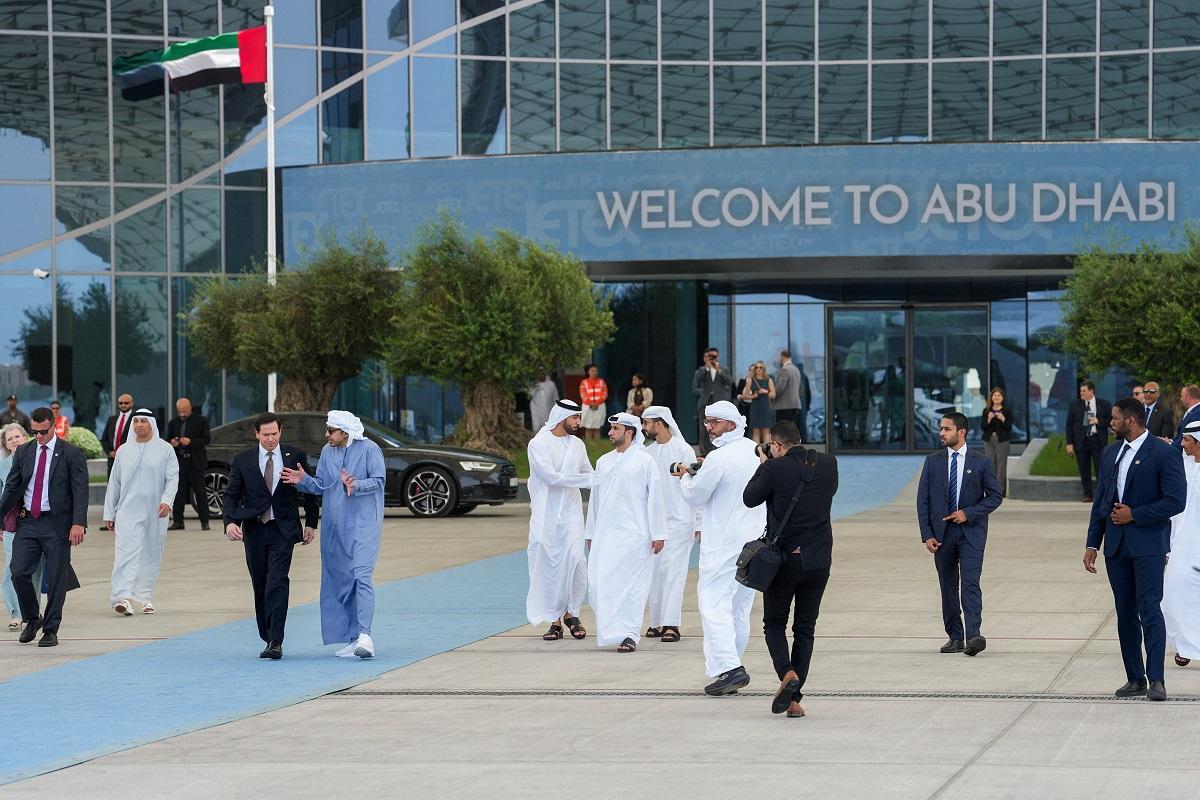
Just days ago, President Donald Trump signed a controversial agreement that proposes a staggering $300 billion fund to support Iran, alongside the waiver of certain sanctions. Arriving in Abu Dhabi late Tuesday, Rubio embarked on a three-day mission—a vital moment for diplomacy as he aims to end the four-month conflict involving U.S.-Israeli forces and Iran.
During a working lunch, Rubio met with UAE President Sheikh Mohammed bin Zayed Al Nahyan, along with other influential figures like National Security Advisor Sheikh Tahnoun bin Zayed Al Nahyan and Foreign Minister Sheikh Abdullah bin Zayed Al Nahyan. As smiles exchanged pleasantries, the underlying tension was palpable, and discussions soon turned serious.
When asked about addressing the concerns of Gulf allies regarding the Iran agreement, Rubio responded, “That most certainly will come up in these discussions.” It was a clear acknowledgment of the anxious atmosphere surrounding the deal—an atmosphere tinged with fear, distrust, and uncertainty.
Rubio’s presence is notable, as he has largely been absent from the Iran discussions recently, with Vice President JD Vance taking the lead on negotiations. The Secretary’s visit to the UAE and Kuwait—two nations hosting critical U.S. military bases that suffered from Iran’s missile attacks—underscored the challenges ahead.
The economic strains on the UAE are severe. The war has prompted many expatriates, vital to the nation’s non-oil economy, to flee from the vibrant financial hub that prides itself on stability amidst the chaos of the Middle East. Moreover, reports suggest that Iran has established secretive cells in neighboring Iraq, conducting numerous drone attacks against Gulf states, including both Kuwait and the UAE. This escalating threat heightens the urgency of Rubio’s mission.
With sharp scrutiny on his words, Rubio must navigate a complex landscape where he is tasked with defending a preliminary agreement that Trump staunchly supports while addressing legitimate fears harbored by Gulf leaders. Many within the Republican Party view Rubio and Vance as potential successors to Trump—a dynamic that adds layers to their diplomatic dance.
Last week, the U.S. and Gulf allies signed a 14-point memorandum of understanding, outlining broad agreements intended to end the conflict. This interim accord sets the stage for two months of intense negotiations to tackle the intricate details, including crucial concerns related to Iran’s nuclear ambitions. As the UN’s nuclear watchdog prepares for inspections in Iran, critical questions loom regarding Iran’s stockpile of highly enriched uranium—a contentious issue at the heart of the discussions.
Despite aspirations for peace, Gulf leaders felt blindsided by the accord’s terms. Their fears are not unfounded; there’s grave concern that the proposed $300 billion reconstruction fund might bolster Iran’s military capabilities. Alarmingly, crucial aspects like Tehran’s ballistic missile program remain unaddressed, particularly troubling for states that have already felt the sting of Iranian aggression.
As Rubio wraps up his visit, the stakes couldn’t be higher. In a region where trust is scarce and history weighs heavily, the path forward remains fraught with challenges. The fate of many lies in these delicate diplomatic exchanges—exchanges that, if successful, may not just reshape the Middle East but also redefine alliances for years to come.