


There’s a quiet story unfolding behind the numbers—one that affects businesses, travelers, freelancers, and everyday Filipinos alike.
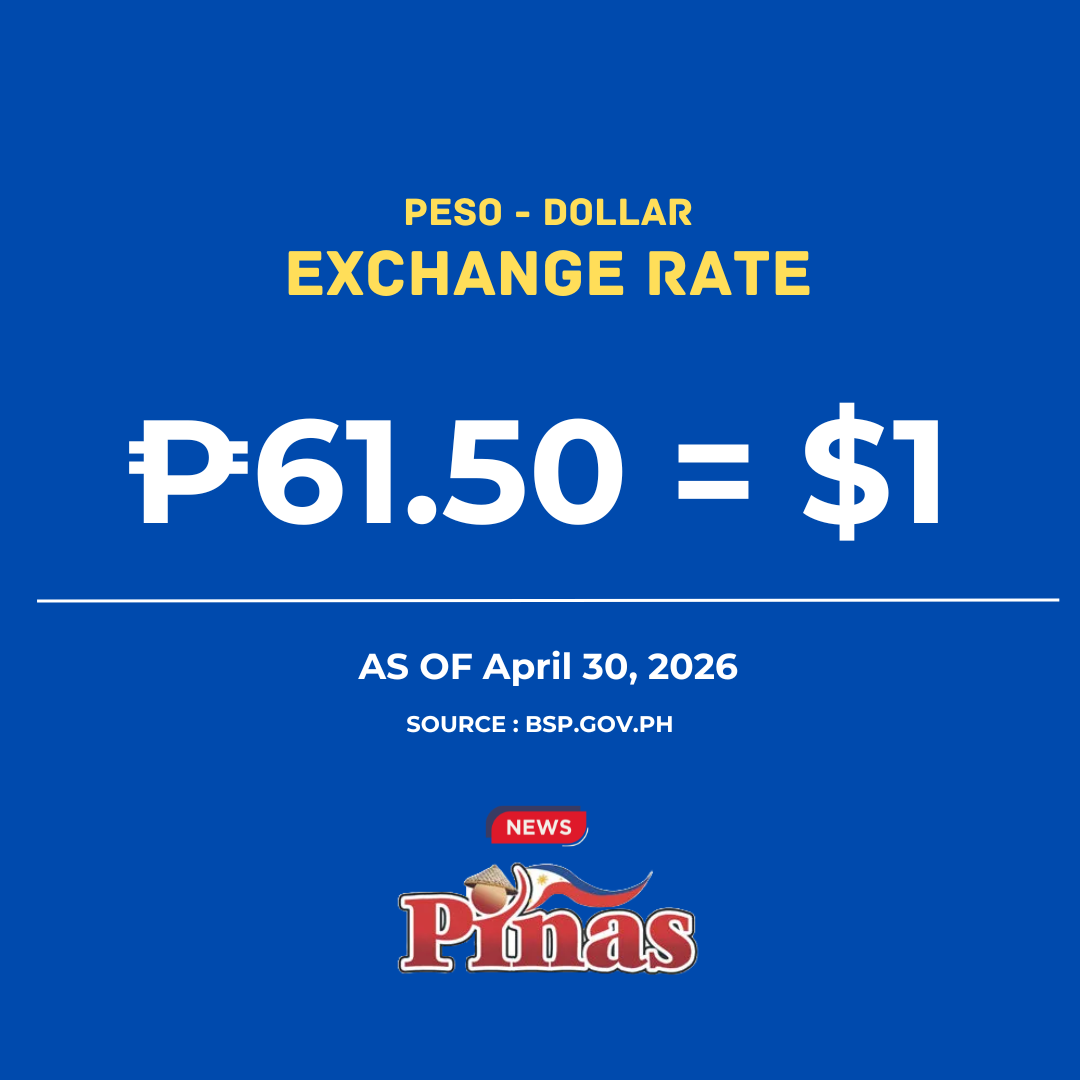
As of April 30, 2026, the Bangko Sentral ng Pilipinas (BSP) gives us a snapshot of where the Philippine Peso (PHP) stands against the world’s most powerful currencies.
And the picture?
It’s intense… a bit fragile… but also revealing.
The Big Picture: The Peso vs The U.S. Dollar
Let’s start with the heartbeat of global finance.
Right now:
- 1 US Dollar = ₱61.506
That number carries weight.
Just a few years ago, crossing the ₱60 mark felt like a warning sign. Today, we’re sitting above it—and holding.
It tells us one thing clearly:
👉 The dollar remains strong.
👉 The peso is under pressure.
But this isn’t just about weakness—it’s about global forces moving all at once.
Top 15 Currencies vs the Philippine Peso (PHP)
Here’s where things get interesting. Let’s break it down in a way that actually feels real.
1. United States – Dollar (USD)
- ₱61.51
- The global king. Everything follows its lead.
2. United Kingdom – Pound (GBP)
- ₱82.90
- Strong. Heavy. Expensive.
- If you’re earning in pesos and spending in pounds… you feel it.
3. European Union – Euro (EUR)
- ₱71.82
- Stable, but still towering over the peso.
4. Switzerland – Franc (CHF)
- ₱77.85
- A safe-haven currency. Investors run here when the world gets uncertain.
5. Bahrain – Dinar (BHD)
- ₱163.04
- Let that sink in.
- One dinar equals more than ₱160.
- This is one of the strongest currencies on Earth.
6. Canada – Dollar (CAD)
- ₱44.95
- Lower than USD, but still significantly stronger than PHP.
7. Singapore – Dollar (SGD)
- ₱48.02
- A regional powerhouse.
- Reflects Singapore’s strong economy and tight financial control.
8. Australia – Dollar (AUD)
- ₱43.75
- Moves with commodities like gold and minerals.
9. Brunei – Dollar (BND)
- ₱47.83
- Almost identical to Singapore’s value due to their currency agreement.
10. Hong Kong – Dollar (HKD)
- ₱7.85
- Pegged to the USD, so it follows closely behind.
11. Saudi Arabia – Riyal (SAR)
- ₱16.40
- Stable due to oil-backed economy.
12. United Arab Emirates – Dirham (AED)
- ₱16.75
- Strong, steady, and tied closely to the dollar.
13. China – Yuan (CNY)
- ₱8.99
- Controlled and strategic.
- China doesn’t let this currency move freely.
14. Japan – Yen (JPY)
- ₱0.38
- Looks weak on paper—but don’t be fooled.
- Japan’s economy is still massive.
15. South Korea – Won (KRW)
- ₱0.041
- Similar story to the yen—small unit value, strong economy behind it.
So… What’s Really Going On?
Pause for a second.
These numbers aren’t random.
They’re telling us a story about:
- Global inflation
- Interest rates rising worldwide
- Investors favoring the U.S. dollar
- Emerging markets (like the Philippines) feeling the squeeze
The peso isn’t collapsing…
but it is being tested.
What This Means for You
Let’s bring it closer to home.
If you’re:
- An OFW → Your remittances stretch further 💰
- A freelancer earning in USD → You’re winning right now
- An importer or traveler → Costs are rising
- A local business owner → Expect price pressure on goods
BSP Rates Snapshot
- Buying Rate: ₱61.30
- Selling Rate: ₱61.80
- Reference Rate: ₱61.55
- Market Closing (Apr 29): ₱61.567
Gold & Silver (Safe Haven Signals)
- Gold: $4,560.75
- Silver: $71.85
These are high—and that matters.
When gold rises, it usually means one thing:
👉 People are seeking safety.
Final Thought
This isn’t just about exchange rates.
It’s about where money is flowing…
where confidence is rising…
and where uncertainty still lives.
The peso is holding its ground—but the world around it is shifting fast.
And in times like these, awareness isn’t optional.
It’s power.