
A Journey to Empower: The Fourth Philippine Civilian Mission Sets Sail
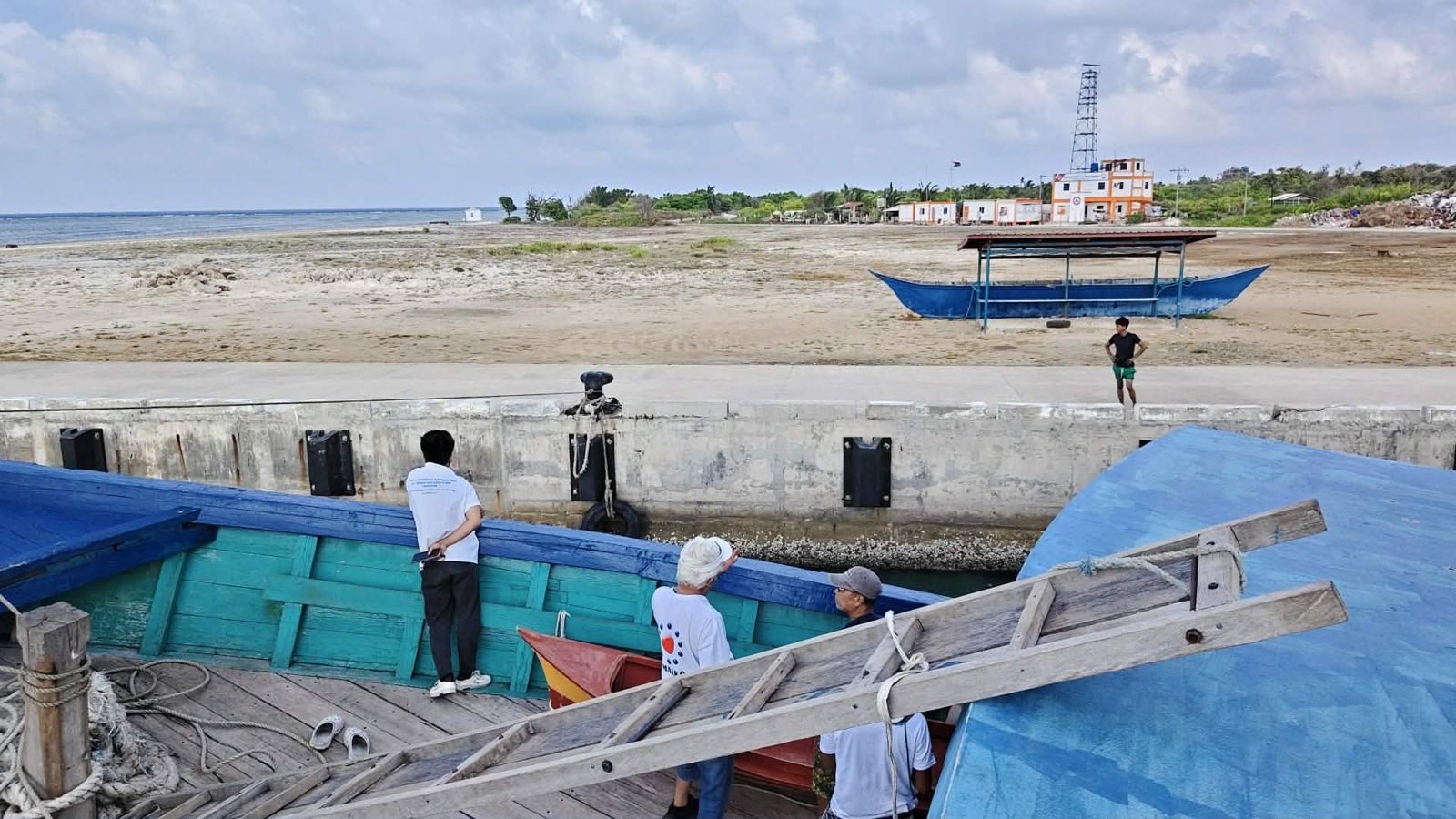
On a bright Friday afternoon, a small yet mighty advance party from the fourth Philippine civilian mission landed on Pag-asa Island in the West Philippine Sea (WPS). This heartwarming moment was shared by civil society coalition Atin Ito, who eagerly provided updates on the mission’s progress.
As the clock struck 3:50 p.m., the team, led by the determined ML Chowee, arrived ten minutes ahead of schedule. With smiles on their faces and hope in their hearts, they rolled up their sleeves to unload a precious cargo of food and fuel supplies—essential lifelines for the island’s residents.
Atin Ito’s spokesperson, Emman Hizon, shared the excitement: “The team has begun unloading food and fuel supplies intended for distribution to island residents.” These supplies aren’t just food and fuel—they’re a promise of support, a gesture of solidarity.
But the mission isn’t stopping there. The main vessel, MV Kapitan Felix Oca, carrying enthusiastic civilian volunteers and local as well as foreign media, is expected to dock on Saturday. The air buzzes with anticipation; this mission is about more than just supplies; it’s about connection, understanding, and making a difference.
However, the mission faced challenges along the way. Earlier that day, news surfaced of a Chinese Coast Guard vessel shadowing the civilian mission. Hizon shared a growing concern, describing how around 7:20 a.m., a Chinese vessel, marked with the bow number 3103, was closely monitoring their progress, just 3.2 nautical miles away from the team.
Waves of tension rolled in when members of the advance team reported disruptions in their drone operations, believed to be jammed by Chinese interference. Adding to the uncertainty, they spotted another vessel with bow number 525, suspected to belong to the People’s Liberation Army Navy. The stakes are high, but the spirit among the team remains unbroken.
This mission set sail on Thursday from Pier 15 at the Manila South Harbor, led by the inspiring mission commander, Rafaela David. She articulated the mission’s purpose beautifully: “This initiative aims to shine a light on crucial issues in the WPS ahead of the upcoming ASEAN Summit.”
Above all, this mission carries a powerful message for ASEAN leaders: the West Philippine Sea is not just a body of water—it is an integral part of our nation, a sanctuary of peace, solidarity, and resilience.
With the mission scheduled from April 30 to May 5, the team aims to deliver supplies, conduct vital medical outreach, and engage in community activities. One particularly uplifting event is the planned jet ski flag ride, envisioned as a peaceful assertion of the country’s sovereign rights. It’s moments like these that affirm the bond between the people and their homeland.
Yet, the backdrop is anything but tranquil. The ongoing tensions in the South China Sea stem from China’s sweeping claims over nearly the entire region, a critical artery for over $3 trillion in annual trade. The Philippines, alongside Vietnam, Indonesia, Malaysia, and Brunei, stands firm in defending its territorial rights.
In a courageous move, the Philippine government has renamed parts of the South China Sea as the West Philippine Sea to strengthen its claim. This area includes vital waters on the western side of the archipelago, such as the Luzon Sea and the Kalayaan Island Group.
A historic ruling from the Permanent Court of Arbitration in The Hague in 2016 sided with the Philippines, declaring that China’s claims have “no legal basis.” Yet, despite this legal victory, China has dismissed the ruling, leaving the situation fraught with uncertainty.
As this mission unfolds, it embodies hope, determination, and community spirit. With every supply delivered and every handshake exchanged, the message is crystal clear: the West Philippine Sea is more than disputed waters. It is home, a treasure to protect, and a testament to the resilience of its people. Together, they sail on, undeterred and unwavering, towards a brighter tomorrow.