
The Peso’s Rocky Ride: A Glimpse at the Currency’s Turbulent Day
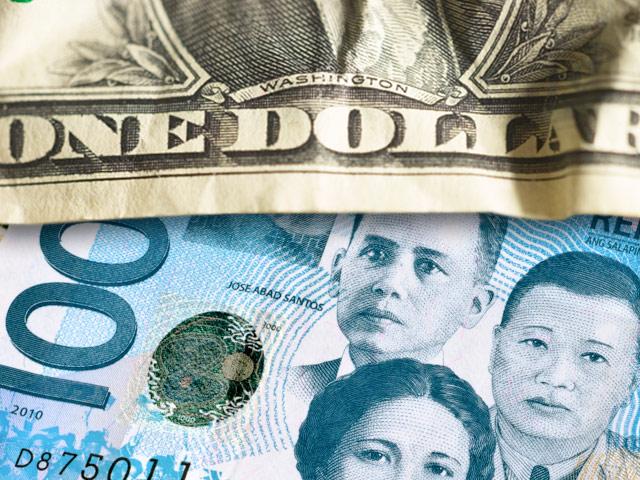
On a Monday that felt both hopeful and heavy, the Philippine peso edged slightly stronger against the US dollar. Picture this: the currency closed at 62.586 to one dollar, a mere 0.4 centavos up from last Friday’s 62.59. But beneath this surface improvement lay the weight of global conflicts and rising oil prices, casting a long shadow over the local exchange.
The day opened with the peso at 62.62 to the dollar, but it soon faced challenges, sinking to a low of 62.775 during intraday trading. It was a turbulent scene, as whispers of international tensions grew louder. “Rising global oil prices, sparked by renewed clashes between the U.S. and Iran, are fueling inflation fears and dragging the peso down,” noted Angelo Taningco, chief economist at Security Bank. His words hung in the air, reflecting a reality that many are grappling with.
The weekend had brought troubling news. Iran promised to respond “more painfully” after the U.S. Central Command reported strikes on Iranian tankers in response to missile launches from Iran’s Islamic Revolutionary Guard Corps. The world felt more fragile, and this fragility was mirrored in the currency markets.
Jonathan Ravelas, a senior adviser at Reyes Tacandong & Co., shared insights that rang true. “While many Southeast Asian currencies face pressure from a robust U.S. dollar, the peso is struggling more than most. Our heavy reliance on imported fuel, food, and capital goods creates a persistent trade deficit that adds to this challenge.” His voice was a reminder that a weak peso isn’t just a number; it’s a reflection of deeper economic vulnerabilities.
Ravelas also predicted the peso will likely trade in the range of 62.6 to 62.9 to the dollar in the coming days. With each tick of the exchange rate, the uncertainty loomed larger.
As the local stock market reflected these concerns, the Philippine Stock Exchange index (PSEi) dropped by 6.92 points, or 0.11%, settling at 6,083.68. In contrast, the broader All Shares index saw a slight uptick, gaining 1.51 points to reach 3,378.95. Luis Limlingan, head of sales at Regina Capital Development Corp., noted that investors were noticeably cautious. “The local index closed lower as tensions between Iran and the U.S. continue to cloud market sentiment,” he explained.
With more than 699.784 million shares changing hands, investors were in a state of retreat. The numbers reflected a reality with 98 decliners overshadowing 92 advancers, while 70 stocks lingered unchanged. There was an undercurrent of anxiety, as currency fluctuations, geopolitical tensions, and unpredictable commodities kept investors on the sidelines.
In this complex landscape, the peso stands not just as a currency but as a symbol of resilience and caution. It tells a story of a nation navigating turbulent waters, adapting and braving the storm while hoping for brighter days ahead.