Miracles in Everyday Life: A Journey of Faith in the Philippines
Miracles unfold around us every single day—through the gentle rise of the sun, the breath we take, and the smallest acts of kindness. For the Catholic faithful, however, miracles can also embody powerful moments of divine intervention, reigniting their faith in extraordinary ways.
In Catholicism, miracles are seen as signs of God’s immense power, designed to strengthen faith and draw people closer to Him. During sacred journeys home, rituals like Visita Iglesia, and moments of prayer and reflection, many believers find themselves drawn to certain places in the Philippines, where miracles are said to have transpired.
While not all of these accounts have been officially authenticated by the Church, the tales of hope, faith, and answered prayers continue to attract devotees from all walks of life. According to Hansson Labisig, a Theology instructor at the University of Santo Tomas Institute of Religion, “While not all reported miracles are officially authenticated, the devotion inspires and continues to lead people toward prayer, conversion, and deeper trust in God.”
Rather than solely focusing on verifying every miracle, Labisig highlights the importance of recognizing the spiritual value of these sites. They stand as living testimonies to the faith and resilience of the Filipino people—a connection to God that inspires hope against all odds.
The Simala Shrine: A Beacon of Faith
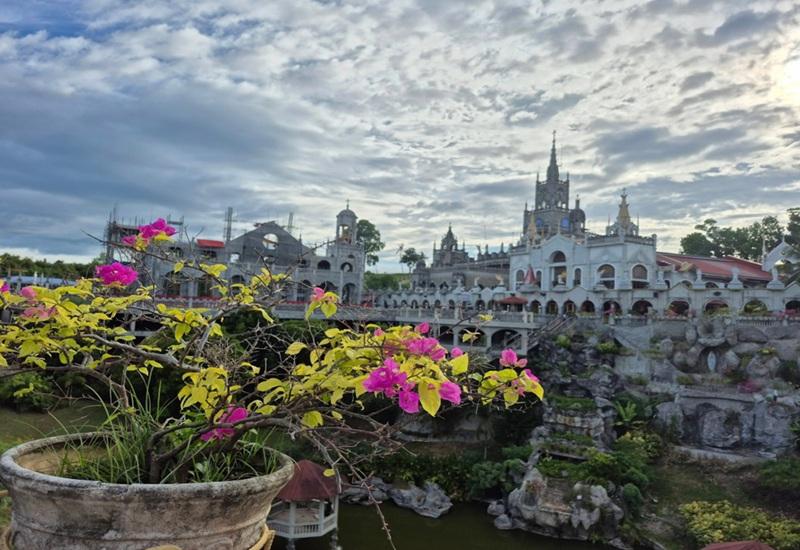
Take, for instance, the renowned Simala Shrine in Cebu, a Roman Catholic pilgrimage site that houses the revered image of Our Lady of Lindogon. Devotees hold this image dear, believing in its miraculous nature. A notable moment that captured the hearts of many occurred in September 2020, when some witnesses reported that the Marian image wept tear-like streaks of red.
The incident stirred deep emotions among those present, prompting some to kneel in prayer, trembling with a blend of awe and disbelief. Police Staff Sergeant Ronnie Cui, who witnessed the phenomenon firsthand, interpreted it as a divine message amid the challenges posed by the COVID-19 pandemic. “It felt like a sign,” he said, expressing the hope that the moment instilled in all who saw it.
Although there have been similar reports of miraculous phenomena in previous years, it is essential to approach these accounts with both faith and caution. Fr. Joseph Tan, spokesperson for the Archdiocese of Cebu, emphasized that as of now, these incidents have not been formally declared miraculous. He explained, “We caution them not to call it a miracle because there is no proof. There must be a thorough investigation before any declaration.”
The Careful Examination of Miracles
In understanding the Church’s approach to verifying miracles, Labisig explains that it is done with “caution, discipline, and a deep sense of responsibility.” Before anything is declared miraculous, a systematic procedure is followed. The Church adheres to strict guidelines from the Dicastery for the Doctrine of the Faith, which includes forming a commission of experts to scrutinize claims thoroughly.
This process isn’t hurried. It seeks to evaluate every facet of the alleged miracle, ensuring that individuals remain grounded in their faith while navigating the complexities of such extraordinary claims. After a rigorous investigation, the bishop, in collaboration with the Dicastery, will publicly announce the findings. This may range from an acknowledgment of devotion without confirmation of supernatural origin to a definitive declaration that the phenomenon is not of divine origin.
When it comes to miraculous healings, particularly those associated with the canonization of saints, this detailed approach is even more significant. The local bishop forms a team of medical and theological experts to inspect the reported miracle. They gather records, conduct interviews, and confirm the validity of the healing—ensuring that it was immediate, complete, and without any natural explanation.
The Church’s meticulous evaluation aims not only to discern the truth but also to inspire deeper prayer and acts of charity among the faithful. “The process is designed to guide the faithful towards a more profound relationship with God,” said Labisig.
A Delicate Balance
When examining claims of miracles, the Catholic Church strikes a delicate balance. It does not dismiss personal experiences of healing or divine encounters blindly; instead, it embraces them with careful discernment. This thoughtful investigation aims to ensure that any acknowledged event fosters a stronger relationship with God—invigorating faith, prayer, and spiritual devotion.
As Labisig eloquently puts it, “The Church does not simply reject or accept experiences; she seeks to guide the faithful towards a deeper connection with God.”
In the light of these narratives, it’s clear that miracles—whether officially recognized or not—continue to inspire hope and faith among countless individuals. In every sunrise, in every act of kindness, and in every heartfelt prayer, we are reminded that miracles truly can happen every day.