

Unrest in France: A Nation in Turmoil
PARIS – The streets of France erupted into chaos on Saturday, as protests against soaring living costs and dwindling public services spiraled out of control. This marked one of the most violent days the country has seen in decades.
As hundreds of thousands marched peacefully across numerous cities, a violent minority took advantage of the situation. These fringe groups targeted public buildings, looted luxury boutiques, ransacked supermarkets, and clashed violently with police.
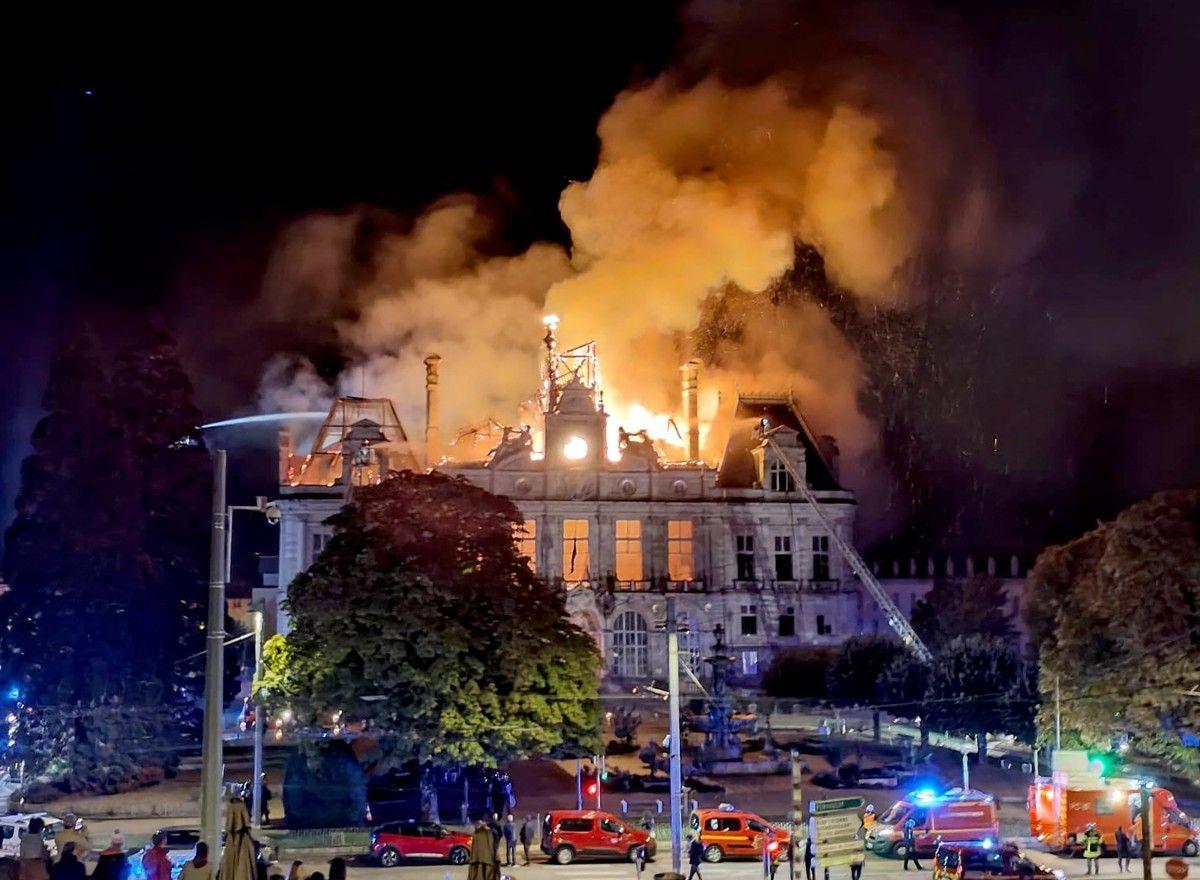
In Limoges, city hall was engulfed in flames. Meanwhile, in Marseille, protesters dressed in black stormed city hall, defacing it with anarchic graffiti. In Lyon, the city’s tourist office was set ablaze, a symbol of the unrest gripping the nation.
French Prime Minister Sebastien Lecornu took a strong stance, vowing that the government would not be “intimidated” by the chaos. He attributed the violence to the “ultra-left” and criminals, just months ahead of a vital presidential election. “To those who want to use violence as a ‘warm-up’ for the election, I say we will not back down,” he declared in a post on X.
With around 1,200 arrests reported, Lecornu described a staggering 550,000 participants in the protests, although the CGT union estimated the number to be closer to 800,000. President Emmanuel Macron echoed Lecornu’s sentiments, pledging to prosecute those who instigated the violence. “We will unite against the sowers of chaos,” he wrote, emphasizing the importance of peaceful protest.
The wave of protests wasn’t confined to France. In Belgium, Portugal, and Italy, demonstrators took to the streets, frustrated by rising living costs. In Albania, protesters rallied against government corruption and inadequate education. Many peaceful marchers felt that the violence was the work of troublemakers, eager to cause havoc and clash with law enforcement.
Lola, a passionate 19-year-old protester in Paris, voiced the struggle many are feeling: “We are protesting because the cost of living is too harsh, because the price of fuel is too high… Because students are being hurt just for asking for more teachers and better conditions.”
—
Tear Gas, Fire, and Desperation
By midday, protests began to intensify. In certain areas of Paris, police responded to unruly crowds with tear gas, retreating from throngs of mostly young demonstrators dressed in black, donning masks and goggles to shield against the fumes. Rioters attempted to breach the Galeries Lafayette department store, vandalized banks, and raided luxury boutiques. The day was marked by flames as cars and other objects were set ablaze across the streets.
As the unrest unfolded in France, protests inspired by these events spread to Brussels, where hundreds of young people clashed with authorities. In Albania, police resorted to using rubber bullets to quell protests demanding the resignation of Prime Minister Edi Rama. Over in Portugal, tens of thousands marched in Lisbon, protesting against soaring housing costs that have doubled since 2017.
In Italy, a march in Milan against rising living costs turned chaotic as police used tear gas to disperse crowds. In Bologna, water cannons were deployed in another volatile protest.
—
A Country at a Crossroads
The unrest began last month in the working-class suburbs of Paris, driven by anger over teacher shortages and conditions at schools. It quickly evolved into a larger movement addressing issues of inequality and public spending. On Saturday, many protestors donned high-visibility vests, a nod to the Yellow Vest movement that once swept across France.
Despite the scale of the protests, Macron is facing a fractured political landscape. France’s struggle to reduce public debt has left many investors uneasy, leading to rising government borrowing costs—the highest seen in over 20 years.
The police response to the unrest has drawn criticism, especially after reports of injuries, including a teenager who tragically lost a hand after attempting to pick up a stun grenade. More than 150 police officers were reported injured, though details on protester injuries remained vague.
The UNSA police union voiced deep concern, stating that officers were being pelted with stones and trapped in ambushes. “Our colleagues are being used as punching bags,” they lamented, warning that the situation can’t continue indefinitely.
—
As France grapples with its challenges, the echoes of discontent fill the air. It’s a nation at a crossroads, torn between the need for change and the quest for peaceful expression. The coming weeks will reveal the true heart of this beautiful but troubled country.