


A Stark Reality: Denaturalization Efforts Unfold in the U.S.
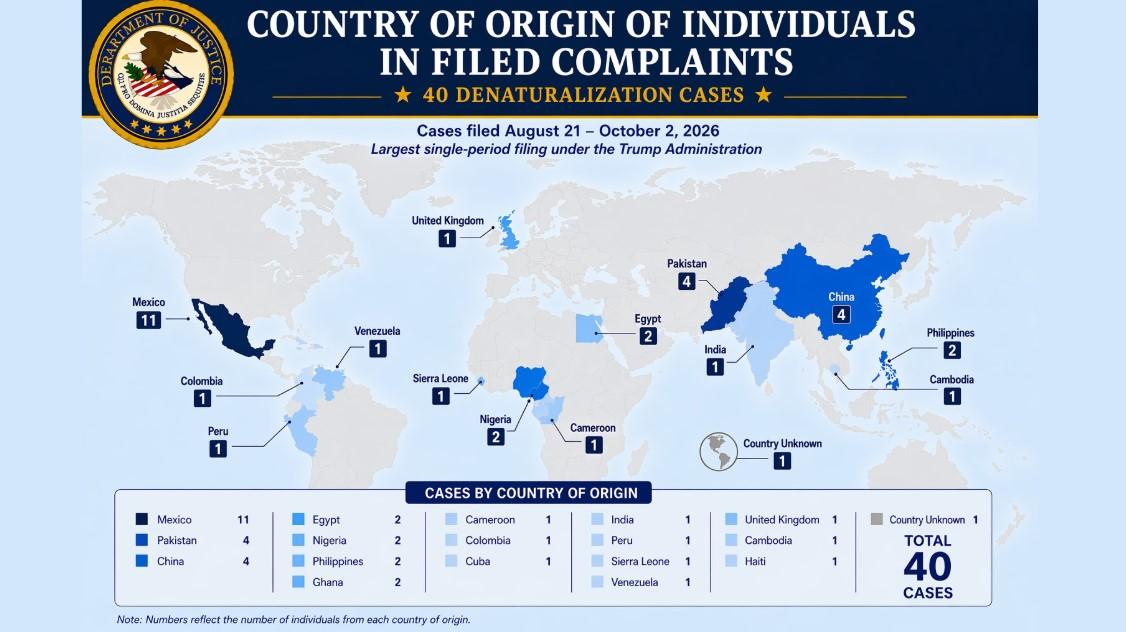
New York — In a startling move, the U.S. Justice Department has announced that two Filipino-Americans are among 40 individuals facing the potential revocation of their American citizenship. This decisive action marks what officials describe as the largest denaturalization campaign under President Donald Trump’s administration.
On October 5, the Justice Department shared that denaturalization cases had been filed in various district courts across the country, targeting individuals accused of serious offenses. These allegations range from acting as an agent for a foreign government to appalling crimes like voluntary manslaughter and aggravated sexual assault against individuals with special needs.
The gravity of these charges is immense. In a country where citizenship represents hope, safety, and a fresh start, the department’s stance is clear: Those who exploit this privilege must face the consequences.
The complaints against these 40 individuals were filed between late August and early October of 2026, establishing a troubling record for the Trump administration—a record that hits close to home for many communities.
Among those facing this serious scrutiny is a 47-year-old man from the Philippines. A complaint lodged in the Central District of California accuses him of failing to reveal a dark past—specifically, that he committed sexual abuse against a child. The evidence was compelling; a jury found him guilty of two counts of lewd acts upon a child under 14, a violation that led to an eight-year prison sentence. The heartbreaking reality is that he was able to attain U.S. citizenship in September 2005 by concealing these grave offenses during his naturalization process.
Yet, he is not alone. Compounding the emotional weight of this situation is the case of a 68-year-old Filipino man, whose journey toward U.S. citizenship was marred by deception. This individual allegedly entered into a fraudulent marriage purely to gain lawful permanent resident status, and then further lied to immigration officials to become a citizen.
The Justice Department’s list of those facing denaturalization paints a broader picture, too. Of the 40 individuals, 11 hail from Mexico, with others from countries such as Pakistan, China, Egypt, and Nigeria, among others. Each story adds a new layer to the tale of dreams turned sour—a reminder that for every individual who seeks a better life, there are those who tarnish that dream through deceit.
U.S. Attorney General Todd Blanche described this operation as “the largest denaturalization effort in modern history.” With determination, he stated that these individuals had concealed vital information from the government. The message resonated strongly: The path to U.S. citizenship is sacred and will not be tarnished by dishonesty.
Assistant Attorney General Brett A. Shumate echoed this sentiment, emphasizing, “Every single one of these individuals lied their way into U.S. citizenship.” His words linger as a stark reminder that integrity and trust must be upheld in the naturalization process.
As this story continues to unfold, it serves as a poignant reflection of the complexities surrounding immigration, citizenship, and the profound impact of one’s choices. For many, the American dream remains a beacon of hope; for others, it becomes a haunting reminder of betrayal.
In this ongoing effort, the Justice Department reaffirms its commitment to upholding the values that underpin American citizenship and reminding us all of the trust that must never be broken.