
MANILA — October 1, 2025.
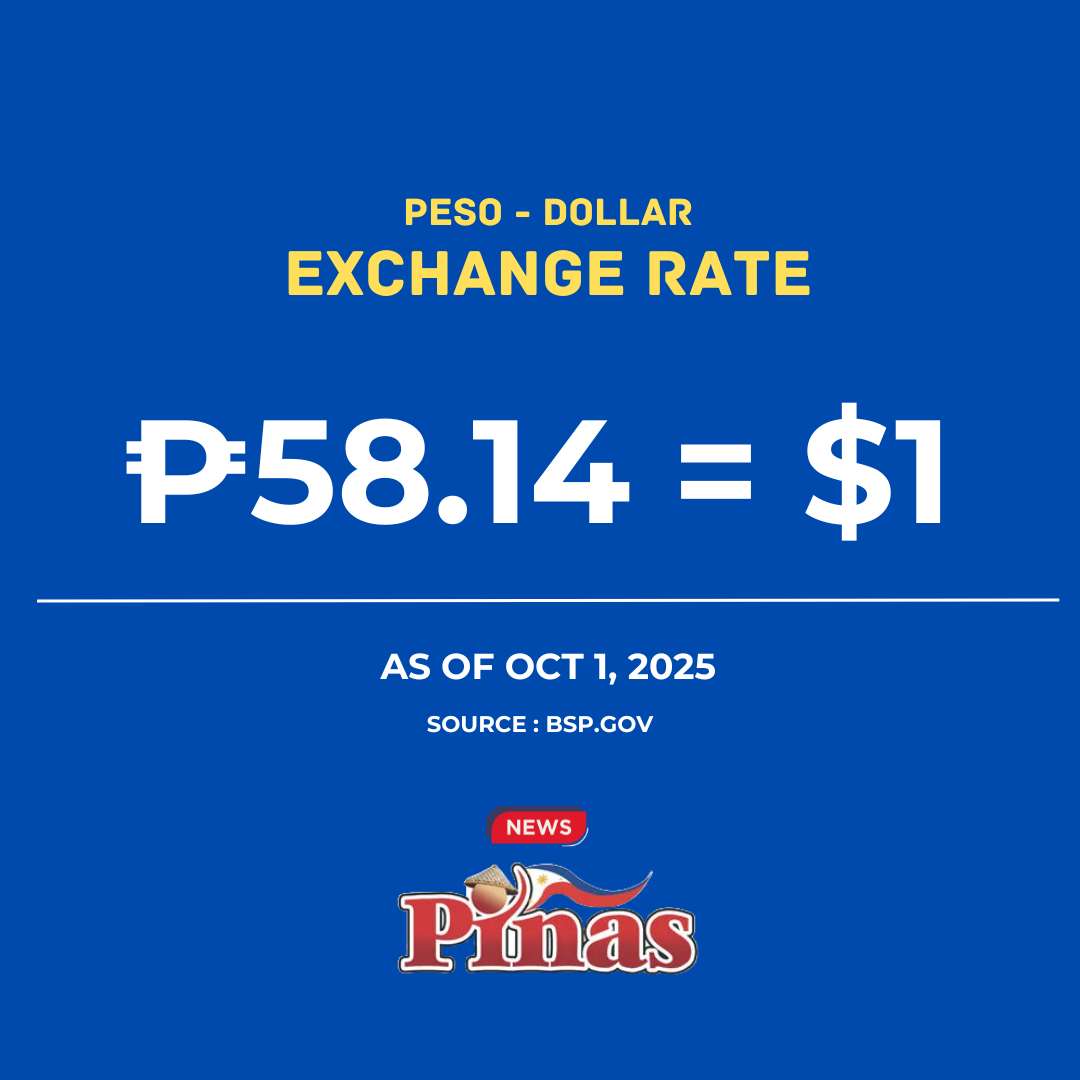
The peso opened October trading steady at ₱58.20 per US dollar, according to the latest reference exchange rate from the Bangko Sentral ng Pilipinas (BSP).
While the peso managed to hold its ground, the movements of the world’s top currencies reveal how global markets remain volatile — and how Filipinos, from OFWs to importers, are directly affected.
Let’s break down the top 15 currencies and what’s happening:
1. US Dollar (USD) – ₱58.15
The benchmark currency remains strong, hovering close to its recent highs. For OFWs in America, every dollar still goes a long way, but for importers, the strong greenback means pricier goods.
2. Japanese Yen (JPY) – ₱0.39
The yen continues to weaken, staying below half a peso. Travelers heading to Japan will find their peso stretching further, but it’s a challenge for Japanese exporters.
3. British Pound (GBP) – ₱78.21
The pound is firm, making the UK one of the costliest destinations for Filipinos. Still, OFWs in London and beyond benefit from stronger remittance value.
4. Hong Kong Dollar (HKD) – ₱7.47
A staple for many OFWs, the Hong Kong dollar remains steady. Not too high, not too low — remittances stay stable.
5. Swiss Franc (CHF) – ₱73.13
Known as a “safe haven,” the Swiss franc remains solid. Investors often run to this currency during global uncertainty.
6. Canadian Dollar (CAD) – ₱41.77
The loonie is showing stability, still above the ₱40 mark. Filipino communities in Toronto and Vancouver gain decent peso value from remittances.
7. Singapore Dollar (SGD) – ₱45.11
The SGD stays strong, making it one of Asia’s most powerful currencies. Filipino workers in Singapore enjoy higher peso conversions.
8. Australian Dollar (AUD) – ₱38.43
Slightly weaker than its neighbor Singapore, but still holding well. Pinoys in Sydney and Melbourne continue to see solid remittance value.
9. Bahraini Dinar (BHD) – ₱154.20
Still one of the strongest currencies in the world. A single dinar equals more than ₱150 — a huge boost for OFWs in Bahrain.
10. Kuwaiti Dinar (KWD) – N/A
Data not available in this bulletin, but historically, the Kuwaiti dinar has been the highest-valued currency worldwide — often above ₱180.
11. Saudi Riyal (SAR) – ₱15.50
A lifeline for millions of OFWs. The riyal remains strong, keeping Saudi Arabia one of the most reliable sources of remittances.
12. Brunei Dollar (BND) – ₱44.93
Just like Singapore’s dollar, the Brunei dollar maintains strength, trading almost at the same level.
13. Indonesian Rupiah (IDR) – ₱0.0035
One of the weakest currencies globally. It takes thousands of rupiah to equal a single peso, showing just how different regional economies are.
14. Thai Baht (THB) – ₱1.79
The baht continues to be stable. It remains a strong currency in Southeast Asia, important for trade and tourism.
15. UAE Dirham (AED) – ₱15.83
The dirham stays strong, close to the Saudi riyal. With Dubai and Abu Dhabi hosting massive OFW communities, this exchange rate brings consistent remittance power.
The Bigger Picture
-
Peso vs. Dollar: ₱58.20 is the BSP’s reference today — still within its recent trading band.
-
Euro (EUR): At ₱68.25, the euro remains one of the pricier currencies.
-
Gold and Silver: Precious metals are also soaring — gold at $3,863.75 per ounce, silver at $46.70 — signaling investor demand for safe assets.
Why This Matters
Every rise or fall in these currencies touches Filipino lives — from the cost of imported oil and food, to the peso value OFWs bring home.
As October begins, the peso may be stable, but the world’s currencies remind us: global shifts can change our wallets overnight.