

WASHINGTON, D.C. — The familiar calm around the White House was broken this week — not by politics, but by the thunder of heavy machinery.
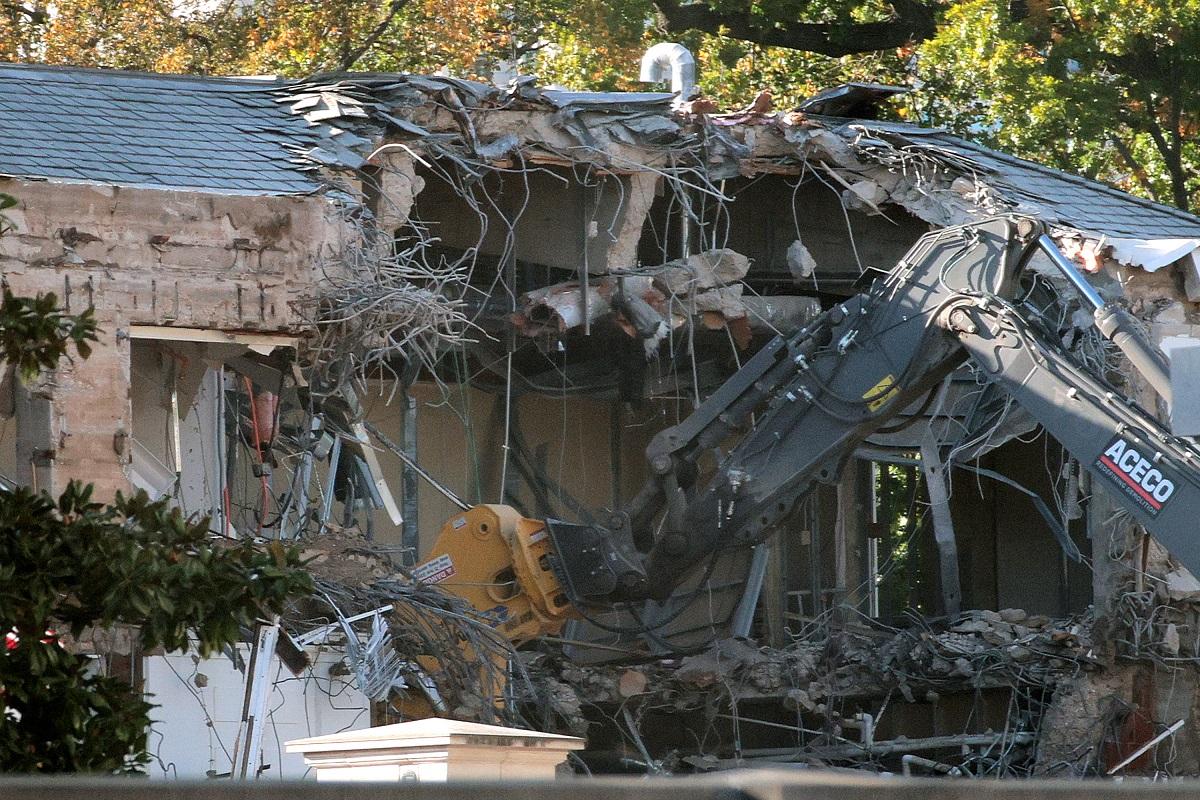
The East Wing, one of America’s most historic structures, is now under demolition to make way for former President Donald Trump’s $250-million ballroom project — even before official plans were submitted for review.
The White House confirmed on Tuesday that it would soon submit the ballroom’s construction plans to the National Capital Planning Commission (NCPC), which oversees federal projects in Washington. But for many critics, the explanation came too late.
Photos of crumbling White House walls flooded social media, sparking outrage among historians, preservationists, and ordinary Americans who believed the East Wing would remain untouched.
“Construction plans have not yet been submitted to the NCPC but will be soon,” a White House official told Reuters, clarifying that the commission “has no jurisdiction over demolition work.”
That technicality did little to calm the backlash.
Critics Sound the Alarm
The National Trust for Historic Preservation quickly called on the administration to pause the demolition until the review process was completed. In a letter, it warned that Trump’s proposed 90,000-square-foot ballroom could “overwhelm the White House itself,” which currently measures just 55,000 square feet.
Bryan Green, a former NCPC commissioner under President Joe Biden, said it was wrong to separate the demolition from the ballroom construction.
“Demolition really cannot be separated from the new construction that follows,” Green said. “You don’t want the image of a wrecking ball hitting the president’s house by surprise.”
He noted that Trump’s previous projects on White House grounds — like the tennis pavilion built during his first term — went through proper review.
Trump Shrugs Off the Criticism
Standing in the Rose Garden as the sound of jackhammers echoed nearby, Trump appeared unfazed.
“You probably hear the beautiful sound of construction,” he told a group of Republican lawmakers. “That’s music to my ears. I love that sound. When I hear that sound, it reminds me of money.”
The ballroom, Trump said, would be privately funded by him and select donors — avoiding taxpayer money but raising conflict-of-interest questions.
The former real estate mogul has already made several design changes to the White House since taking office, including updates to the Oval Office, Rose Garden, and other parts of the presidential complex.
Public Shock and Political Reactions
Tourists walking near the South Lawn stopped in disbelief as the East Wing’s roof came crashing down.
“It’s a total waste of money and shows a lack of respect for history,” said Catheryn Koss, 52, from California. “I thought they said they were going to preserve it.”
Even Hillary Clinton weighed in, posting on X (formerly Twitter):
“It’s not his house. It’s your house. And he’s destroying it.”
Historic Building, Limited Oversight
While the National Historic Preservation Act of 1966 typically requires reviews for changes to historic landmarks, the White House, the US Capitol, and the Supreme Court are exempt.
That legal loophole allows the project to proceed — even as heritage experts urge more transparency.
“It would have been nice to see some of that process, even if not required by law,” said Priya Jain, chair of the Society of Architectural Historians’ conservation committee.
Security concerns have also tightened. The US Treasury Department, located next to the White House, has ordered its employees not to share photos of the construction, citing potential exposure of sensitive details and underground structures.
Notably, the East Wing sits atop the Presidential Emergency Operations Center, the secure bunker meant for use in times of national crisis. It remains unclear how the demolition is affecting that facility.
A Grand Vision or a Costly Mistake?
For Trump, the ballroom represents a legacy project — a personal stamp on the White House he once called home. For others, it’s a reckless transformation of America’s most sacred residence.
The clash between preservation and power is unfolding in real time — as the walls of history themselves come tumbling down.