
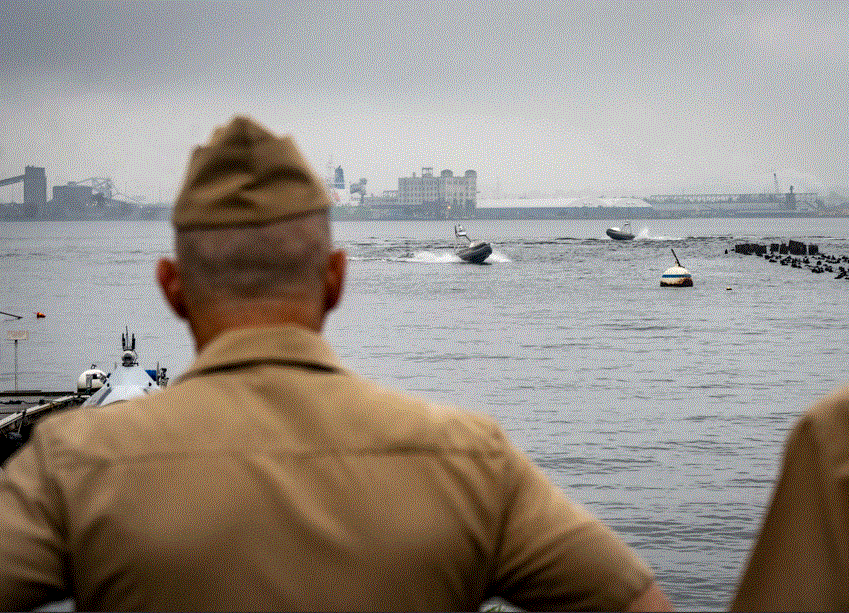
Last month, off the coast of California, the U.S. Navy was testing its new high-tech drone boats—vessels that can move and fight without humans onboard. The test was supposed to show off America’s military strength. But instead, it turned into a scene of unexpected chaos.
During the exercise, one drone boat suddenly stalled because of a software glitch. While officials scrambled to figure out what went wrong, another drone boat crashed right into it! The second boat slammed into the side, flew over the deck, and splashed back into the water. The shocking crash, caught on video, quickly spread among insiders.
The two vessels involved were built by rival defense companies, Saronic and BlackSea Technologies—making the accident even more dramatic.
This wasn’t the only failure. Just weeks earlier, another test ended badly when a drone boat suddenly sped up while being towed. The support boat pulling it capsized, throwing its captain into the sea. Thankfully, he was rescued and wasn’t hurt, but the incident shook Navy officials.
Experts said the problems came from a mix of software errors and human mistakes. Communication between the drone systems and their control software didn’t always work as planned—raising big concerns about reliability.
The Navy and the companies involved—Saronic and BlackSea—refused to comment. But the videos of the crash were verified, leaving little doubt about what happened.
Why the Navy Wants Drones So Badly
The U.S. military has been inspired by how Ukraine used cheap sea drones against Russia’s Black Sea Fleet. These small, speedboat-like drones—costing about $250,000 each—were packed with explosives and successfully took out Russian warships.
The U.S., however, is chasing something bigger: fully autonomous drone fleets that can move, attack, and defend without any humans controlling them. But these are far more expensive, costing millions per boat.
Pentagon leaders believe these drone swarms are critical if the U.S. has to face China in a conflict over Taiwan. But the recent crashes highlight how risky and complicated this goal really is.
Navy Drama Behind the Scenes
It’s not just the boats crashing—the Navy’s entire drone boat program is under fire.
-
The unit in charge of unmanned vessels, called PEO USC, recently had its top admiral, Rear Admiral Kevin Smith, fired after an internal complaint.
-
A top Pentagon official, Steven Feinberg’s chief of staff, even criticized the program on LinkedIn, saying it looked like a waste and duplicated other efforts.
-
Now, the unit is under review and could be restructured—or even shut down.
On top of that, a $20 million contract with L3Harris, a company that supplies the drone control software, was put on hold after the accidents. This has not been publicly explained, adding more drama to the program.
Billions at Stake
Despite the setbacks, the Pentagon is pushing hard. In 2023, it launched the $1 billion Replicator program to build thousands of air and sea drones quickly. The Navy already invested $160 million in BlackSea, which now produces dozens of Global Autonomous Reconnaissance Craft each month.
Saronic, another major player, was recently valued at $4 billion and makes the “Corsair” drone boat. But it hasn’t secured a big Navy deal yet.
Navy leaders insist drones will be vital for the future: extending fleet power, watching the seas, and fighting smarter.
But experts warn the Navy is moving too fast. For decades, it has been used to building massive warships over many years. Now it’s being told to rush into the future with risky, untested tech.
T.X. Hammes, a defense expert, summed it up:
“The Navy is in uncharted waters. They’re trying to change decades of tradition overnight—and that’s never easy.”