
NEW YORK — The world watched in shock as Nicolás Maduro, Venezuela’s long-time strongman, stepped into a US courtroom on Monday — no longer in power, no longer untouchable.
Just days earlier, few could have imagined this moment.
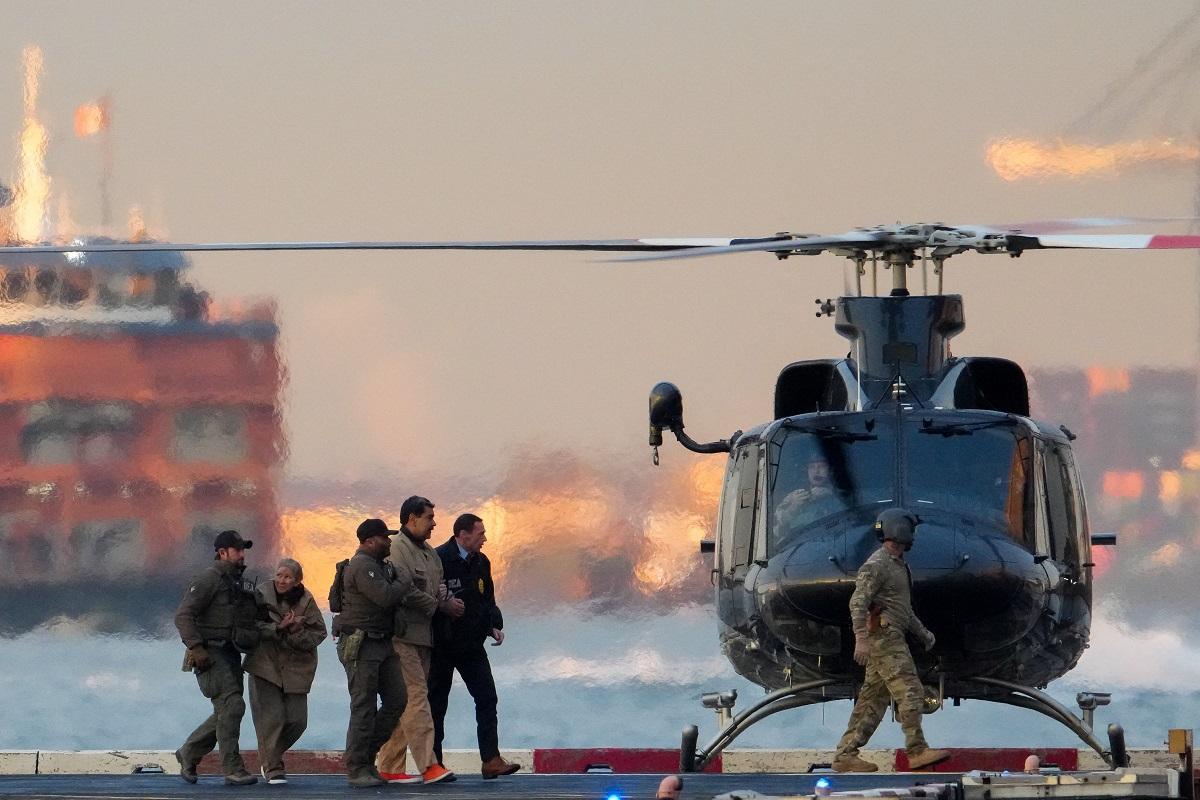
Over the weekend, US Special Forces launched a dramatic operation in Caracas. Helicopters cut through the night sky. Armed troops broke through layers of security. And at the door of a safe room, Maduro was captured — along with his wife, Cilia Flores.
By Monday morning, the couple was under heavy guard, flown from a Brooklyn detention center to a Manhattan federal court, where Maduro faced drug trafficking charges that have followed him for years.
The accusations are severe.
US prosecutors say Maduro oversaw a vast cocaine trafficking network, working with some of the world’s most violent groups — Mexico’s Sinaloa and Zetas cartels, Colombia’s FARC rebels, and Venezuela’s Tren de Aragua gang.
Maduro, now 63, has always denied it all.
He insists the charges are nothing more than a cover for what he calls America’s true goal — Venezuela’s oil.
And oil is never far from this story.
Power shifts, tones change
Even with Maduro gone, his 13-year-old political movement still controls much of Venezuela. At first, officials cried foul — calling the capture a “kidnapping” and a colonial grab for oil.
Then the tone softened.
Venezuela’s acting president, Delcy Rodríguez, struck a different note on Sunday.
She spoke not of defiance — but of dialogue.
“We invite the US government to work together,” she said.
“Our peoples deserve peace, not war.”
Rodríguez is no stranger to hardline politics. Once praised by Maduro as a “tigress,” she is also known as a pragmatist — connected to business circles and willing to bend when survival demands it.
Behind her words lies a harsh reality.
Venezuela holds the world’s largest oil reserves — over 300 billion barrels — yet years of mismanagement, sanctions, and decay have crippled production. What once powered the nation now barely keeps it afloat.
President Donald Trump has been blunt.
Cooperate on oil and drugs — or face more action.
A global storm erupts
Maduro’s arrest sent shockwaves far beyond Venezuela.
At the United Nations, diplomats prepared to debate whether the US had crossed a line by seizing a foreign leader on another country’s soil.
Russia, China, Cuba, and leftist allies condemned the raid. Cuba claimed dozens of its military and intelligence personnel were killed during the operation.
US allies were more cautious — calling for dialogue, law, and restraint.
Switzerland froze assets tied to Maduro and his circle.
Markets reacted fast. Venezuelan bonds jumped. Oil prices edged higher. Defense stocks climbed as investors braced for new global tensions.
Behind bars, alone
Maduro now faces life inside New York’s Metropolitan Detention Center — a prison infamous for harsh conditions. He is expected to spend 23 hours a day in his cell, far from the halls of power he once ruled.
It’s a stunning fall for a former bus driver turned president — handpicked by Hugo Chávez and once feared across the region.
Trump has framed the capture as justice — for drugs, for migrants, for decades-old oil disputes.
“We’re taking back what they stole,” Trump said.
“We’re in charge.”
A nation holds its breath
Inside Venezuela, there is no celebration.
The streets are quieter. Families are stocking up on food and medicine. The military remains loyal to Maduro’s allies — at least for now.
People are waiting.
Watching.
Wondering what comes next.
For the opposition, hope is mixed with fear. For the world, the questions are bigger than one man in a courtroom.
Has a line been crossed?
Or has a new era begun?
One thing is certain:
Venezuela — and global politics — will not be the same after this.