


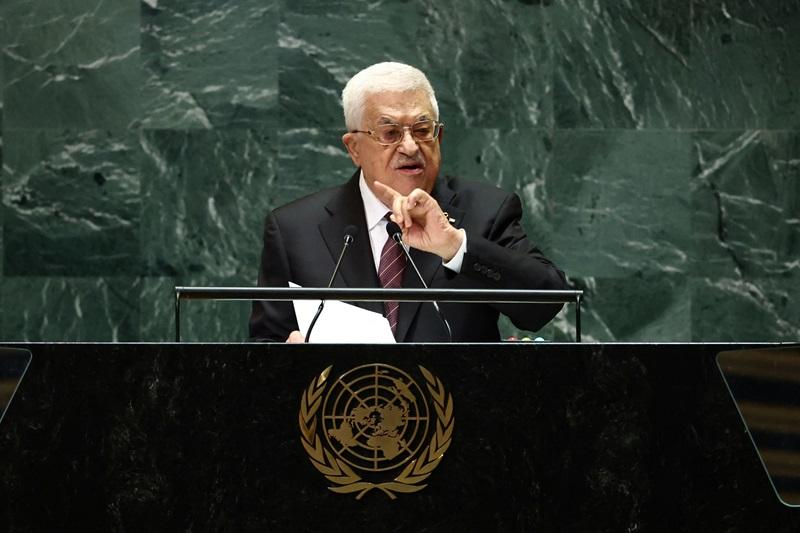
In a move that shocked many, the United States announced on Friday that it will block Palestinian Authority President Mahmoud Abbas from traveling to New York next month for the United Nations General Assembly, where several key US allies are preparing to recognize Palestine as an independent state.
The decision means Abbas, along with about 80 other Palestinian officials linked to the Palestine Liberation Organization (PLO) and the Palestinian Authority (PA), will be denied visas to the US. This comes just as Abbas had planned to join not only the UN’s annual high-level gathering but also a major summit hosted by France and Saudi Arabia, where Britain, France, Australia, and Canada have pledged to back Palestinian statehood.
Abbas’ office expressed astonishment, calling the move a violation of the 1947 UN “headquarters agreement”, which generally obliges the US to allow foreign diplomats entry for UN business. Still, Washington maintains it can deny visas for security, extremism, or foreign policy reasons.
A State Department official defended the decision, accusing the PA and PLO of failing to repudiate extremism while pushing for what it described as “unilateral recognition” of a Palestinian state. Palestinian leaders quickly rejected those allegations, insisting that decades of US-led peace talks have only prolonged the Israeli occupation without delivering freedom or statehood.
The department added: “It is in our national security interests to hold the PLO and PA accountable for not complying with their commitments, and for undermining the prospects for peace.”
Despite the restrictions, Palestinian diplomats already permanently assigned to the UN in New York will not be affected.
This isn’t the first time the US has barred Palestinian leaders. In 1988, Washington refused a visa to then-PLO leader Yasser Arafat, forcing the UN General Assembly to convene in Geneva instead of New York so he could address the world.
The controversy comes as frustrations mount globally over Israel’s ongoing war in Gaza, which has left tens of thousands dead and pushed civilians into famine-like conditions. Anger has also grown over the expansion of Israeli settlements in the West Bank, widely viewed as the core of a future Palestinian state.
So far, at least 147 of the 193 UN member states recognize Palestine as a state. The Palestinians currently hold observer status at the UN—similar to the Vatican—but have long sought full membership, envisioning an independent state in the West Bank, Gaza, and East Jerusalem.
Israel’s Foreign Minister Gideon Saar praised the US decision, while Washington insisted that any recognition of Palestine must come only through direct talks with Israel.
For now, the standoff highlights a deepening divide: while the US and Israel tighten restrictions, even their closest allies are signaling it may be time to give Palestine the recognition it has sought for decades.