
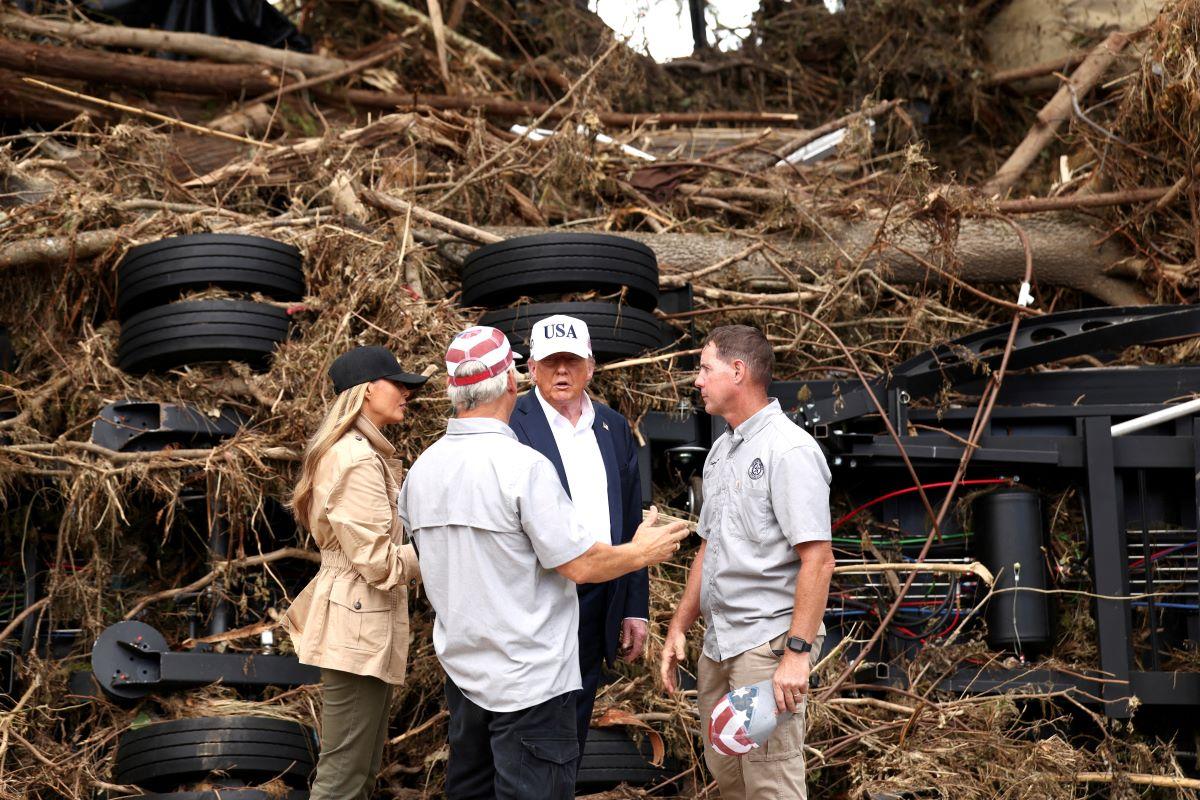
KERRVILLE, TEXAS — A big and dangerous flood hit Kerrville, Texas, and nearby areas on July 4, which is also Independence Day in the U.S. The flood was so powerful and sudden that it took the lives of at least 120 people, including many children who were staying at a summer camp.
This was one of the worst disasters to happen during President Donald Trump’s time in office.
🚁 President Trump Visits the Flood Zone
On Friday, President Trump went to Kerr County, the area that was hit the hardest. He toured the damaged places, then sat down for a meeting with local leaders and rescue workers.
He said that the people in charge, like Texas Governor Greg Abbott and Homeland Security Secretary Kristi Noem, did an “incredible job” in responding to the disaster.
😠 Some Say the Government Should’ve Done More
Even though President Trump praised the response, some families and critics are not happy. They believe the government could have done more to warn people before the floods happened.
When a reporter mentioned that families were upset about late warnings, Trump got very angry.
“Only a very evil person would ask a question like that,” he said.
❓Could This Have Been Prevented?
Some experts are worried that spending cuts made by the government — especially to weather and emergency agencies like FEMA (Federal Emergency Management Agency) and the National Weather Service (NWS) — may have made things worse. These cuts caused staff shortages and removed some tools used to warn people about incoming danger.
Trump’s team says the cuts did not affect the warnings for this flood. But the president has not clearly answered questions about his plan to shrink FEMA or give more responsibility to states instead of the federal government.
“I’ll tell you some other time,” he said when asked about FEMA earlier in the week.
📢 No Early Warning System in Kerr County
Sadly, Kerr County didn’t have an early-warning system (like sirens or alerts) to tell people to get to safety. Officials had wanted one but couldn’t get the money from the state to build it.
“It’s been fine since the water hit 8 feet,” said Lawrence Walker, a local man who’s lived there for 30 years. But he still believes more money should have been spent on preparing for disasters.
Now, Texas lawmakers are planning a special meeting to figure out what went wrong and to decide how much emergency money to give for repairs and support.
Governor Abbott has brushed off blame, saying, “That’s the word choice of losers.”
🚨 Search Teams Still Looking for Missing People
Search crews are still out in “flash flood alley”, the nickname for this part of Texas that gets dangerous floods. They are slowly searching through the mud and broken buildings along the Guadalupe River.
The flood was caused by heavy rain that dropped more than a foot of water in less than an hour. The river suddenly grew from just 1 foot to 34 feet high. That giant wall of water swept away homes, trees, and cars.
So far, 160 people are still missing, though some may have just not checked in yet. Sadly, many who died were campers at Camp Mystic, an all-girls Christian summer camp that has been around for nearly 100 years.
🧍What Do Locals Think?
Some residents feel the response was okay.
“It’s unavoidable,” said Jon Moreno, a 71-year-old man whose home was safe because it was on high ground. He says people keep building homes near the river, even though it’s risky.
But not everyone agrees. At a gas station, someone painted a message blaming Trump’s “Big Beautiful Bill” (his new law that cuts spending and taxes) for removing emergency funds. That bill was signed into law on the same day the flood hit Texas.
💔 Final Thoughts
This disaster shows how dangerous flash floods can be—and how important it is for leaders to plan ahead. People are now asking:
-
Could more lives have been saved with better warnings?
-
Should more money have been spent on emergency tools?
What’s clear is that many families are grieving, many others are still searching for missing loved ones, and the people of Texas are trying to rebuild their lives after one of the deadliest floods in recent U.S. history.