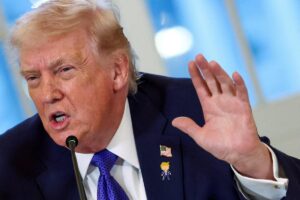
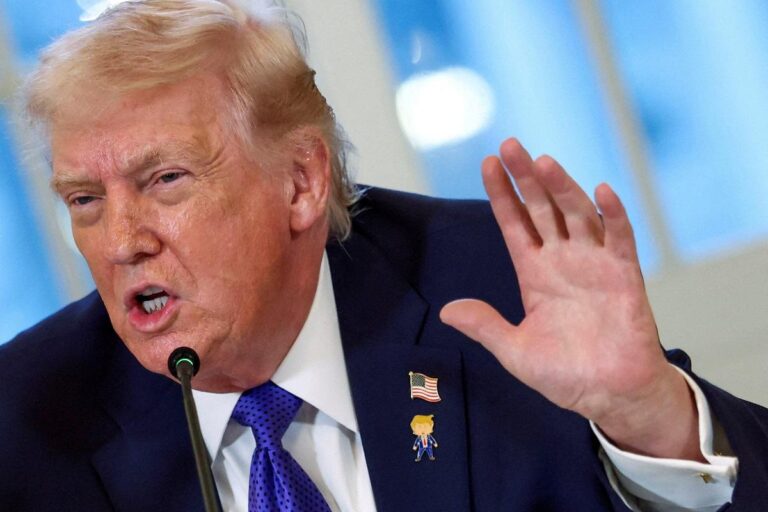
Windsor, England – With royal pageantry on full display, Donald Trump began his second state visit to Britain on Wednesday. It was a day of dazzling ceremony, heavy security, billion-dollar deals—and sharp protests.
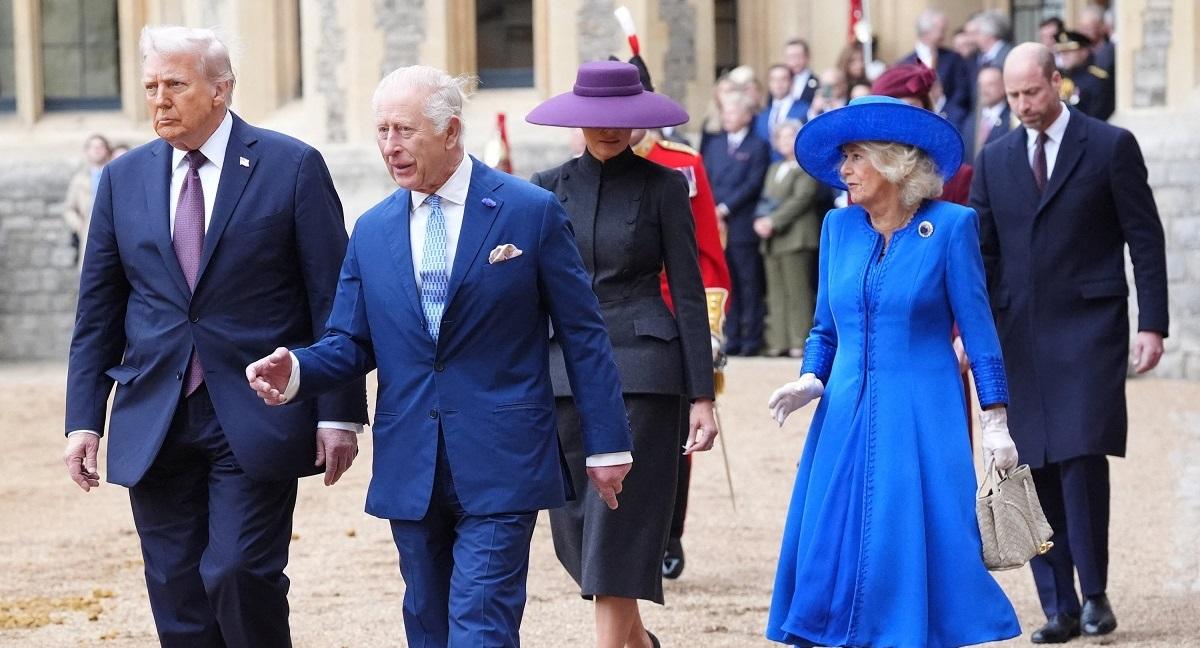
The US president and First Lady Melania Trump arrived at Windsor Castle, the world’s oldest and largest occupied castle and a royal home for nearly 1,000 years. Waiting for them at the gates were King Charles, Queen Camilla, Prince William, and Kate, Princess of Wales. Together, they joined a carriage procession through the castle grounds, cheered on by some and opposed by others.
Britain promised nothing short of history: the largest ceremonial welcome for a state visit in living memory. A military flypast, scarlet-uniformed guards, and an opulent banquet awaited the Trumps—part of an extraordinary reception for the first elected politician ever invited twice by the British monarchy for a state visit.
“I love Britain. It’s a very special place,” Trump told reporters upon arrival.
Politics Beneath the Pageantry
But beyond the glamour, politics loomed large. Prime Minister Keir Starmer hopes the visit will strengthen the so-called “special relationship” between the US and the UK. Talks are expected to cover trade tariffs, fresh investments, and pressing global issues like Ukraine and Israel.
The stakes are high: tech giants including Microsoft, Nvidia, Google, and OpenAI have already pledged £31 billion ($42 billion) for UK projects in AI, quantum computing, and nuclear energy. Starmer is also hoping to fine-tune trade deals, particularly around steel, whisky, and salmon.
Still, challenges remain. Trump is unpopular with much of the British public, and Starmer himself is facing sliding poll numbers and economic difficulties. For him, the royal welcome is a gamble—hoping Britain’s crown can charm the self-professed “royal fan” whose mother was born in Scotland.
Shadows of Protest and Controversy
Even with 1,600 officers deployed, controversy broke through the security net. Protesters projected images of Trump and Jeffrey Epstein onto Windsor Castle’s walls the night before his arrival, leading to arrests. In London, thousands were expected to rally against his visit under the “Stop Trump Coalition.”
Reactions among ordinary Britons were divided. Some condemned the invitation, while others saw it as smart politics. “We’re looking to make the best of a bad situation,” said lawyer Kirstie Robertshaw, 54.
A Royal Stage Like No Other
The day was filled with moments designed to impress. Trump inspected rows of British soldiers in scarlet uniforms and bearskin hats, chatted with the king, and was shown historic items from the Royal Collection linked to America. He also laid a wreath at the tomb of Queen Elizabeth II, who hosted him in 2019 during his first state visit.
Later, the skies roared with F-35 jets from both the UK and US—symbols of shared defense ties—before the grand state banquet where both Trump and King Charles were set to give speeches.
For Charles, the visit is personal as well as political. Unlike Trump, the king has spent decades advocating for environmental causes and interfaith unity. Yet, the occasion places him at the center of global attention once again—perhaps the most important moment of his reign since his coronation.
“If it goes well, this could be the most consequential event of his reign,” noted historian Anthony Seldon.
The following day, the spotlight shifts from castles to diplomacy, as Trump and Starmer are set to meet at Chequers, the prime minister’s countryside retreat, where geopolitics will take center stage.