
The Bangko Sentral ng Pilipinas (BSP) just released its latest Foreign Exchange Rate Bulletin, giving us a snapshot of how the world’s strongest currencies perform against the Philippine Peso as of October 29, 2025.
And this time, the numbers paint a story — one of shifting global strengths, economic recoveries, and the peso’s quiet resilience amid it all.
Let’s break it down in a way that makes sense.
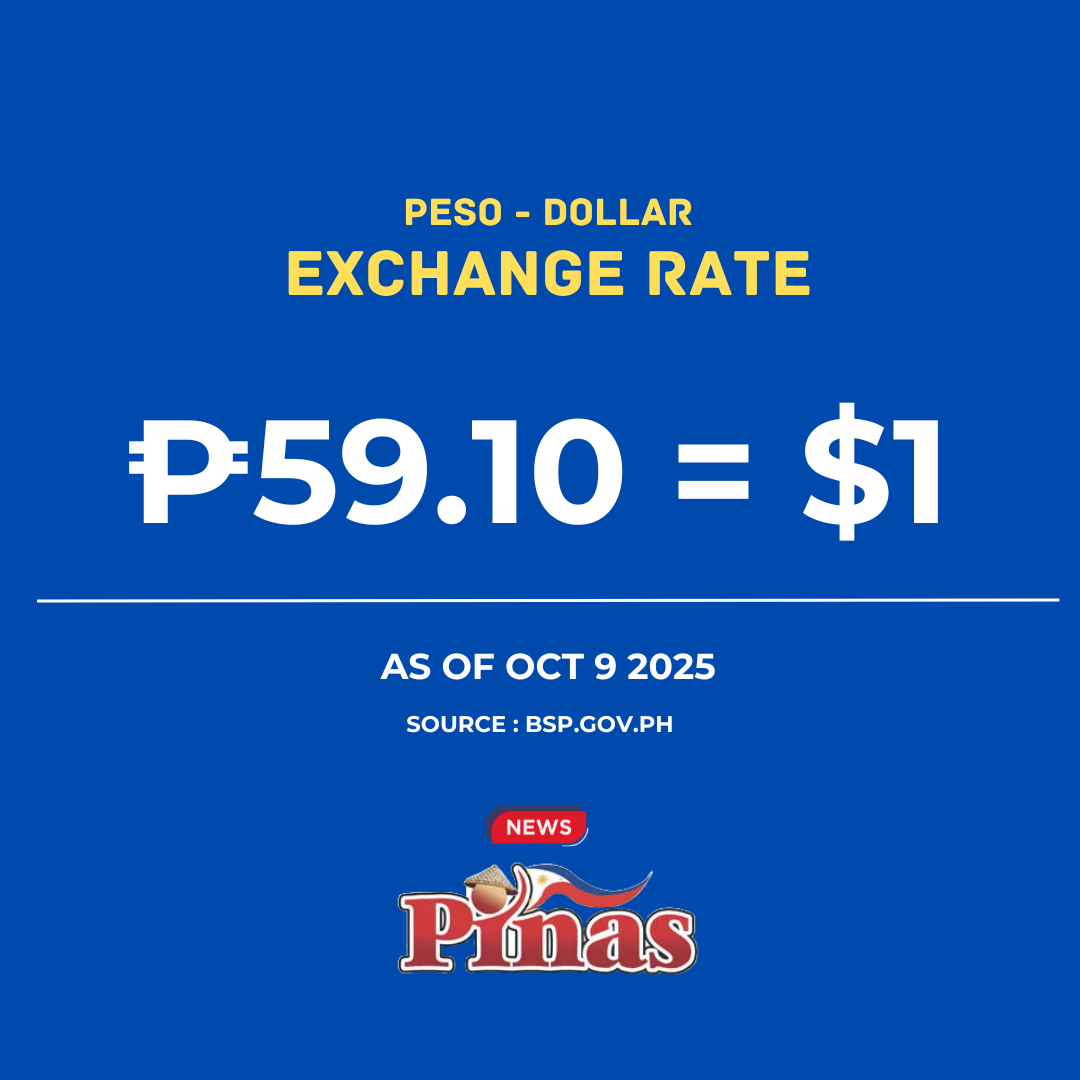
🇺🇸 1. United States Dollar (USD) – ₱59.10
The US dollar remains the king of currencies.
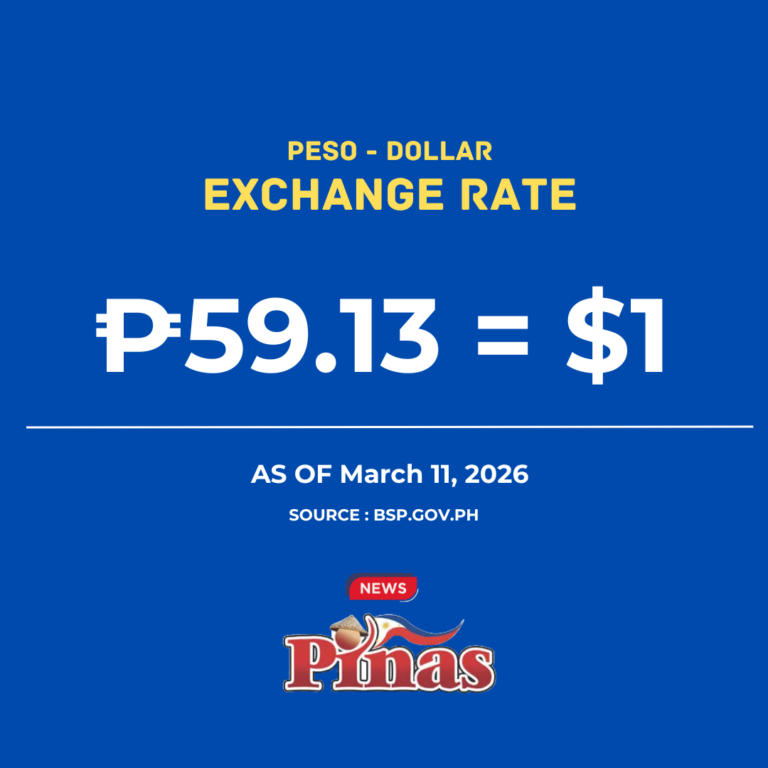
Every dollar equals ₱59.10, holding firm despite global uncertainties. This rate reflects stability in the American economy — and for many investors, it’s still the ultimate safe haven.
🇯🇵 2. Japanese Yen (JPY) – ₱0.39
The yen continues to struggle.
At ₱0.3886 per yen, Japan’s low-interest policies and sluggish growth are keeping its currency weak against both the dollar and the peso. Travelers heading to Japan will find their pesos going a bit further this time.
🇬🇧 3. British Pound (GBP) – ₱78.49
Strong, steady, and expensive.
The British pound remains one of the priciest major currencies, trading at ₱78.49. Despite economic challenges in the UK, the pound’s long-standing reputation for stability keeps it high on the list.
🇭🇰 4. Hong Kong Dollar (HKD) – ₱7.60
At ₱7.60, the Hong Kong dollar holds tightly to its peg with the US dollar, keeping it predictable and reliable — a reflection of the territory’s financial discipline despite regional pressures.
🇨🇭 5. Swiss Franc (CHF) – ₱74.50
The Swiss franc — the world’s “safe currency” — stands tall at ₱74.50. Known for its strength and stability, it continues to attract investors in times of uncertainty.
🇨🇦 6. Canadian Dollar (CAD) – ₱42.38
Canada’s currency sits comfortably at ₱42.38, backed by strong commodity exports and a resilient economy. The loonie (as it’s called) reflects steady North American growth.
🇸🇬 7. Singapore Dollar (SGD) – ₱45.69
The Singapore dollar remains one of Asia’s strongest currencies, trading at ₱45.69. Its stability mirrors the country’s reputation as a global financial powerhouse.
🇦🇺 8. Australian Dollar (AUD) – ₱38.90
At ₱38.90, the Aussie dollar shows moderate strength, reflecting Australia’s solid trade and resource-driven economy. It’s often seen as a “risk-on” currency that rises when global confidence grows.
🇧🇭 9. Bahraini Dinar (BHD) – ₱156.79
One of the world’s most valuable currencies, the Bahraini dinar trades at a staggering ₱156.79 per unit. Fueled by oil wealth and tight monetary control, it outpaces even the US dollar.
🇰🇼 10. Kuwaiti Dinar (KWD) – Data Unavailable
The Kuwaiti dinar is traditionally the strongest currency in the world, but data for this update is unavailable. Normally, it’s even higher than the Bahraini dinar — often exceeding ₱190 per unit.
🇸🇦 11. Saudi Riyal (SAR) – ₱15.76
For millions of Overseas Filipino Workers (OFWs), this rate matters deeply.
The Saudi riyal stands at ₱15.76, a reminder of the strength of the Middle East’s oil-backed economy — and the value of remittances sent home.
🇧🇳 12. Brunei Dollar (BND) – ₱45.52
Almost identical to Singapore’s rate, the Brunei dollar equals ₱45.52, thanks to its 1:1 peg with the Singapore dollar. A reflection of shared economic confidence between the two nations.
🇮🇩 13. Indonesian Rupiah (IDR) – ₱0.0035
At first glance, this seems tiny — and it is.
Each Indonesian rupiah is worth less than a centavo. But don’t be fooled: Indonesia’s trillion-dollar economy is strong, its currency simply comes in large denominations.
🇹🇭 14. Thai Baht (THB) – ₱1.83
The Thai baht trades at ₱1.83, showing steady performance amid regional challenges. It’s a popular travel and trade currency, balancing competitiveness with stability.
🇦🇪 15. UAE Dirham (AED) – ₱16.09
For Filipinos in Dubai and Abu Dhabi, this number hits home.
The dirham trades at ₱16.09, making every remittance more meaningful. The UAE’s strong economy and dollar peg keep its currency dependable and globally respected.
💰 Peso’s Overall Standing
The Philippine Peso remains relatively stable, trading around ₱59.10 to $1, with the BSP reference rate at ₱59.15.
This suggests a steady performance — not too weak to raise alarms, but competitive enough to support exports and remittances.
Gold is trading at $3,965.90, and silver at $47.15, signaling strong global demand for safe-haven assets.
🧭 The Bigger Picture
Currency movements tell stories — of confidence, trade, and global power shifts.
As the US and Europe battle inflation, and Asia drives growth through innovation and trade, the Philippine peso sits in the middle — stable, adaptive, and quietly holding its ground.
In a world where money never sleeps, this latest BSP update reminds us:
Every number reflects a nation’s heartbeat — and the peso’s pulse remains strong.