


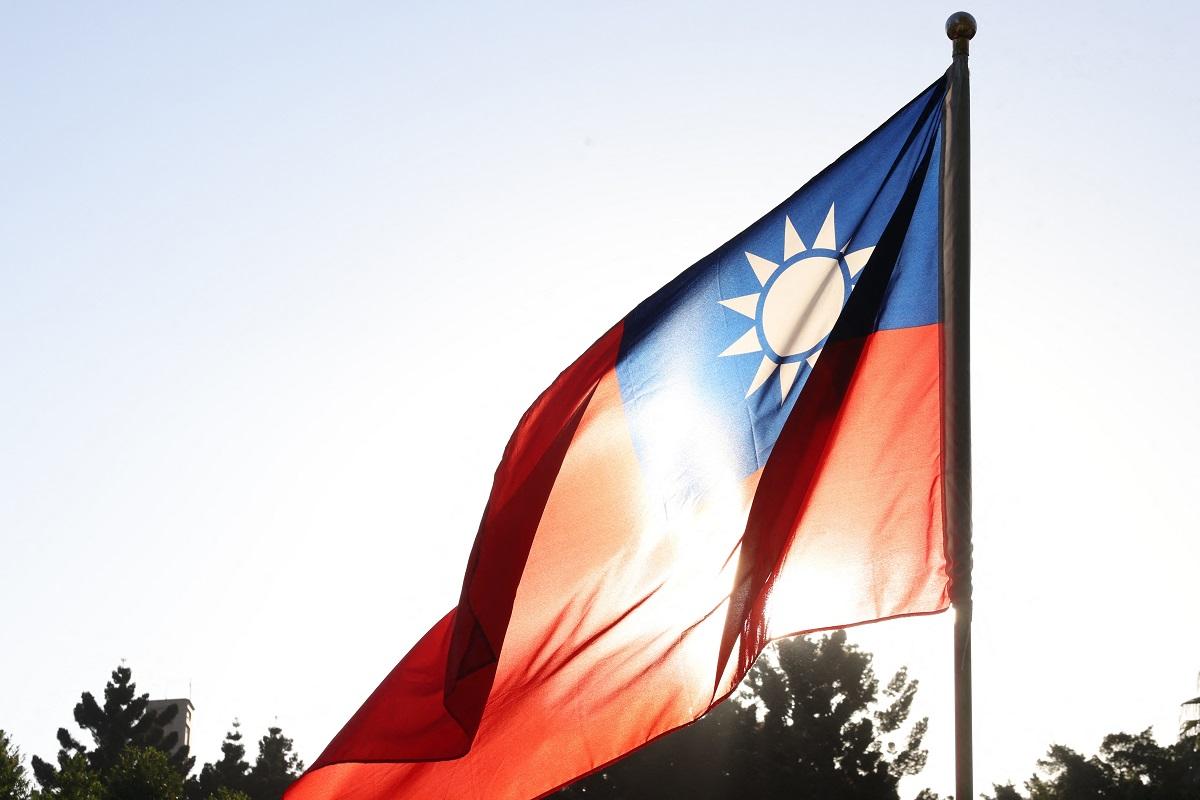
Taiwan’s Chip Smuggling Scandal: A Threat to National Security
In a dramatic turn of events, prosecutors in Taiwan have unveiled a shocking case involving the indictment of ten individuals for allegedly using forged documents to obtain restricted U.S. chips. These chips, some produced in the Philippines, were reportedly intended for export to China, raising grave concerns about their potential use in military weapons.
Building Tensions
According to the indictment obtained by AFP, the end users of these chips are clearly linked to China’s military industry, which has been known to manufacture advanced weaponry. The high-stakes nature of this situation is underscored by the assertion that such actions threaten Taiwan’s national security. After all, China sees democratic Taiwan as part of its territory, with rising tensions and threats of force looming in the backdrop.
Profiles in Deceit
Leading this unsettling operation is Chen Chien-hsiung, a figure connected to multiple tech companies. Together with his co-defendants, he is accused of being fully aware that selling American high-tech goods requires strict compliance with U.S. export control laws. The irony is palpable: while Taiwan thrives on its technological innovation, a few individuals are accused of circumventing the law for personal gain.
Since 2017, Chen and his associates allegedly conspired to masquerade as representatives of Taiwan’s National Chung-Shan Institute of Science and Technology (NCSIST) and related companies. This deception allowed them to purchase controlled chips from reputable U.S. firms such as Analog Devices and Texas Instruments.
The Art of Deception
To evade detection, they reportedly repackaged these chips, originating from the Philippines, South Korea, and Singapore, and mislabelled them as innocuous, locally-made products. This kind of ingenuity is alarming, revealing a sophisticated understanding of both technology and legal loopholes. However, it also highlights the deep moral decay that can arise when the lure of profit overshadows ethical considerations.
The implications of these actions stretch far beyond the courtroom. The chips, capable of being used in crucial military applications like radar receivers and electronic jamming devices, could very well end up fueling China’s military agenda. Perhaps most chilling is the indictment’s suggestion that these semiconductors could ultimately serve research units in China involved in missile and military radar development.
Consequences on the Horizon
In late September, prosecutors escalated their efforts by charging the ten defendants with serious offenses, including fraud and document forgery. For Chen, they are seeking a 10-year prison sentence, while others could face terms ranging from one to eight years. With over NT$300 million (approximately US$9.4 million) in illicit profits at stake, the financial incentive for this scheme was enormous.
As the dust settles on this troubling case, it’s a stark reminder of the lengths to which some will go in pursuit of wealth, even at the expense of national security. Taiwan’s technological prowess is under threat, and the consequences of this smuggling scandal could have far-reaching effects.
In these critical times, as Taiwan contends with external pressures and the realities of international conflict, the hope is that justice will prevail and that such betrayals will be met with the seriousness they deserve. The world is watching as Taiwan tries to navigate these stormy waters, balancing innovation, security, and ethics in an increasingly complex global landscape.