

In the middle of rising global tensions, there’s a small piece of good news for the Philippines — but it comes with a hard truth.
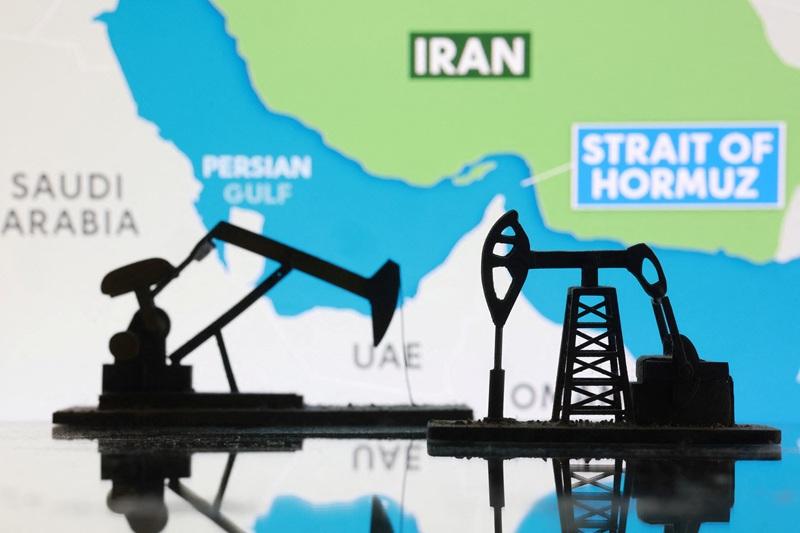
Iran has agreed to allow Philippine-bound energy supplies to safely pass through the Strait of Hormuz — one of the world’s most critical oil routes. It’s a move that brings a sense of security… but not immediate relief.
Department of Energy Secretary Sharon Garin made this clear on Saturday.
Yes, the country now has what she calls “safe and preferential access.”
Yes, this reduces the risk of supply disruptions.
Yes, it helps protect Filipino seafarers navigating dangerous waters.
But no — this won’t bring fuel prices down anytime soon.
“This is risk management,” Garin emphasized.
“And in times like these, reducing risk is already a meaningful win.”
It’s a quiet victory in a tense global situation — especially with the ongoing US-Israeli conflict involving Iran. For Filipino crews at sea and shipments crossing volatile waters, safety is no small thing.
Still, Garin urged the public to stay grounded.
“This development will not immediately bring down fuel prices,” she said.
“And it doesn’t solve our long-term energy challenges.”
In other words, the problem runs deeper.
A Lifeline in Dangerous Waters
The Strait of Hormuz carries about 20% of the world’s oil and liquefied natural gas. Any disruption there can send shockwaves across global markets — and straight into local fuel prices.
The Philippines secured this safe passage after a direct conversation between Foreign Affairs Secretary Ma. Theresa Lazaro and Iran’s Foreign Minister.
Iran gave its assurance: Philippine vessels, energy cargo, and Filipino seafarers will pass safely, without delays.
It’s a significant diplomatic step.
But even Garin admits — it’s far from perfect.
“This is not a perfect solution,” she said.
“It does not eliminate all risks.”
The Reality at the Pump
While safety improves at sea… prices on land are telling a different story.
In fact, fuel costs may rise sharply next week.
Diesel prices could jump by ₱17 to ₱19 per liter — pushing regular diesel close to ₱165, and premium diesel beyond ₱170.
Gasoline isn’t spared either. Prices may increase by ₱3 to ₱5 per liter, bringing some variants to as high as ₱120.
And this isn’t new.
This week alone marked the 13th fuel price adjustment this year, with total increases now reaching:
- ₱48.20 per liter for gasoline
- ₱90.05 per liter for diesel
- ₱78.10 per liter for kerosene
The numbers are staggering. And for many Filipinos, they’re deeply felt.
A Step Forward… But Not the Finish Line
The safe passage through Hormuz is a win — no doubt about that.
It protects lives.
It secures supply lines.
It reduces uncertainty in a fragile global landscape.
But it doesn’t fix everything.
For now, the country stands in a familiar place — balancing small victories against bigger challenges.
And as the world watches tensions unfold… Filipinos continue to brace for what comes next at the pump.