


Jerusalem — Tensions continue to rise in the Middle East as Israel’s Foreign Minister Gideon Saar warned that international moves to recognize Palestinian statehood are a “mistake” that could trigger unspecified unilateral actions from Israel.
The warning comes amid reports that Israel is preparing to annex parts of the occupied West Bank, a move that would further inflame an already fragile situation.
Global Push for Recognition
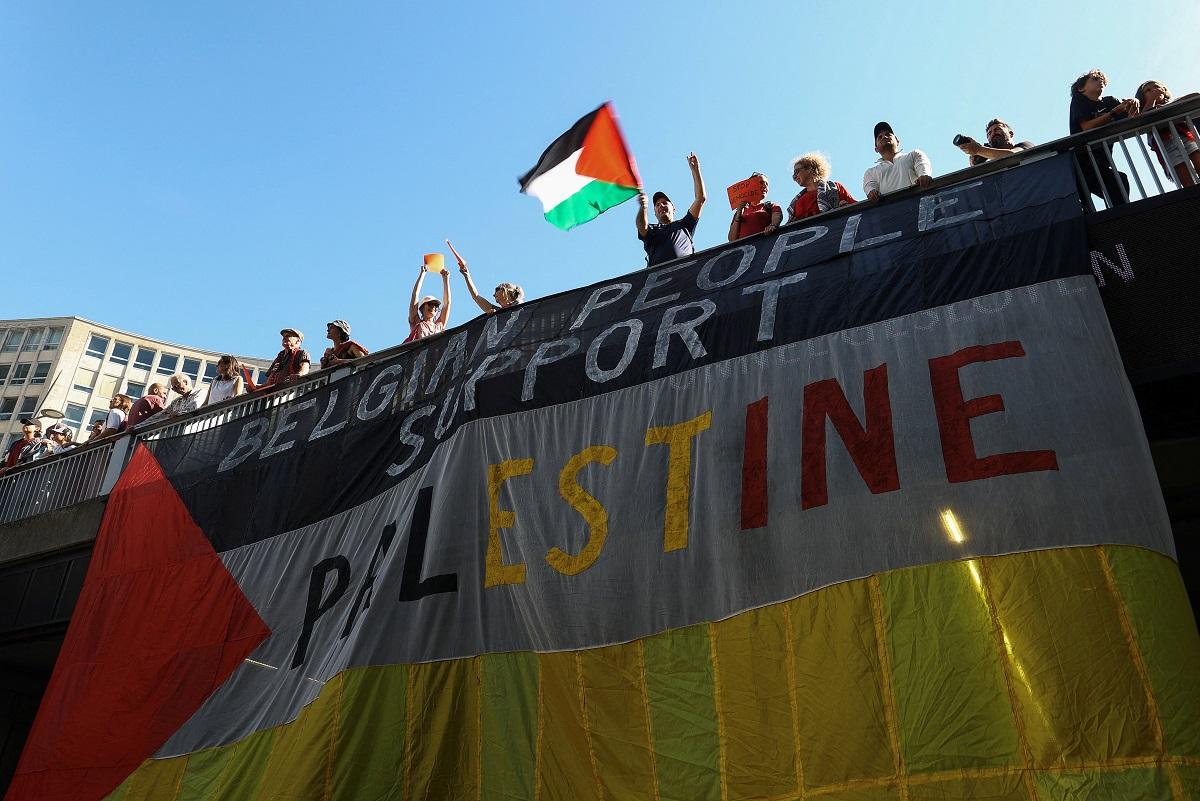
Several countries—including Canada, France, and Britain—are expected to pledge recognition of a Palestinian state during the upcoming UN General Assembly.
Israel’s relations with France have grown especially tense since President Emmanuel Macron announced Paris’s plan to push for a two-state solution, co-chairing a July conference with Saudi Arabia.
Meanwhile, Britain has said it would recognize Palestine if Israel fails to agree to a truce in the ongoing Gaza war, which was sparked by Hamas’s October 2023 attack.
Israel’s Stern Warning
Speaking at a press conference alongside Danish Foreign Minister Lars Lokke Rasmussen, Saar did not mince words:
“Recognition will destabilize the region. It will make it harder to get to peace. It will push Israel also to have unilateral decisions.”
He went further, calling France and the UK’s actions a “tremendous mistake.”
Denmark, however, clarified it has no such plans. Rasmussen stressed that recognition should come only under strict conditions: a disarmed Palestinian state, full transparency, democracy, and formal recognition of Israel.
Strong Reactions from Allies
The United States also opposed the push. U.S. Ambassador to Israel Mike Huckabee described unilateral recognition as “disastrous,” warning it violates the Oslo Accords, which were meant to pave the way toward a future Palestinian state.
West Bank Annexation Looms
While Saar did not specify Israel’s next moves, his remarks came just days after the government approved new settlement projects in the West Bank, occupied since 1967.
A major development, known as E1, lies east of Jerusalem. If completed, it could almost split the West Bank in two—a move critics say would effectively bury the idea of a Palestinian state.
Far-right Finance Minister Bezalel Smotrich, a vocal supporter of annexation, declared that Israel should move forward to eliminate the possibility of dividing “our tiny land.”
Currently, the West Bank is home to nearly three million Palestinians and around 500,000 Israeli settlers, whose communities are widely deemed illegal under international law.
Regional Opposition
From across the border, Jordan’s King Abdullah II issued a strong statement rejecting any annexation attempts or forced displacement of Palestinians. He also warned against any future Gaza plans that would separate the territory from the West Bank.
Israel has already annexed East Jerusalem and the Golan Heights, both taken during the 1967 Arab-Israeli war. Yet most of the international community refuses to recognize Israel’s sovereignty over these areas.
Growing Uncertainty
As the war in Gaza drags on, violence has also escalated in the West Bank—marked by settler attacks and Israeli military raids.
With countries preparing to recognize Palestine, and Israel signaling possible unilateral actions, the region faces a dangerous crossroads: a fragile peace slipping further away, and a conflict that could spiral into something even bigger.