
Strengthening Global Ties: The Quad’s Commitment to Economic Security
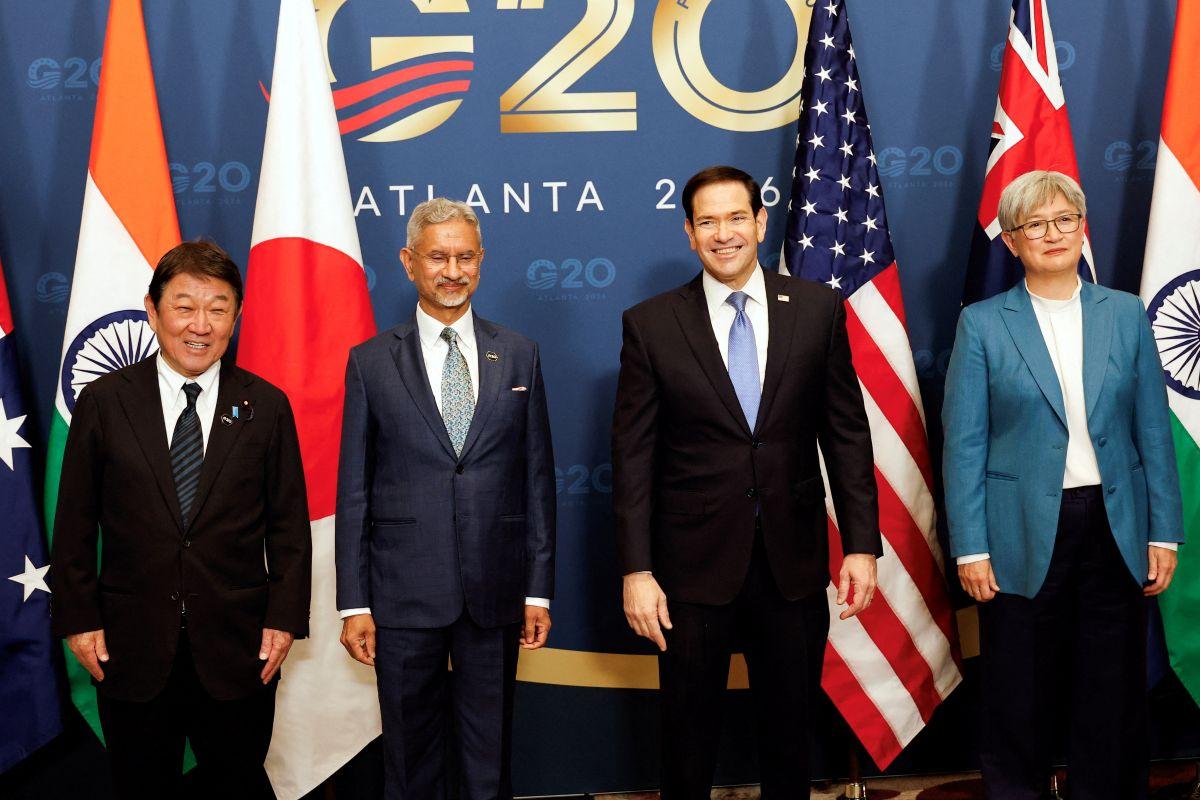
In a pivotal meeting held in Atlanta this Saturday, foreign ministers from the United States, Australia, India, and Japan came together under the “Quad” banner, emphasizing the urgent need for dependable global supply chains. Their collective voices echoed a serious concern: the growing threat of “economic coercion,” a phenomenon fueled by restrictive export practices that disrupt market stability.
While the ministers expressed their anxieties, notably regarding China’s influence in critical mineral exports, they chose not to explicitly name the country. Yet, Japan’s frustration was palpable, especially as it has recently criticized Beijing for its tight control over essential mineral resources.
Their gathering took place just before U.S. Secretary of State Marco Rubio hosted a broader session of the G20 nations—of which China is a prominent member. The atmosphere was charged with anticipation, as the Quad ministers reiterated their commitment to a free and open Indo-Pacific. They underscored that economic security is crucial for maintaining global stability and prosperity.
In their joint statement, they articulated deep concerns over “arbitrary export restrictions” and unregulated market practices. These issues, they warned, lead to overcapacity and threaten critical global supply chains. Their words carried weight and urgency, a reminder of how interconnected our world truly is.
The ministers went further, stressing the critical importance of protecting navigational rights in vital waterways like the Strait of Hormuz and the Red Sea. These regions are lifelines for international trade—ensuring smooth passage protects both economies and lives.
In a promising move, the group announced over $85 million in support for trusted artificial intelligence technologies across the Indo-Pacific. They also committed to a new initiative aimed at pinpointing vulnerabilities in semiconductor supply chains before they spiral into larger crises. These measures signal a proactive approach to safeguarding economic interests in an unpredictable global landscape.
This meeting marked the third time this year that the Quad foreign ministers convened, with plans set in motion for U.S. President Donald Trump to attend his first formal leaders’ meeting next month in Manila. The excitement was palpable, yet Rubio remained clear: the Quad is not an anti-China coalition. Instead, he spotlighted behaviors and practices that stem from one nation, emphasizing the group’s collaborative spirit.
Rubio shared insights on the Quad’s recent ventures, including a $20 million project aimed at enhancing digital infrastructure in Palau. It’s a step in a broader strategy to pool resources for humanitarian efforts and respond swiftly to national disasters.
Moreover, plans are underway to establish a business forum, providing companies across these four nations a platform to discover new collaborative opportunities. This is more than just diplomacy; it’s about fostering real connections and shared prosperity.
As the Quad ministers departed the Atlanta meeting, the air was filled with a renewed sense of purpose. Their dedication to enhancing economic stability and mutual support in the Indo-Pacific will undoubtedly reverberate across the globe, reminding us all of the power that comes from unity in the face of challenges.