

Filipino families are being told to brace for higher pork prices as the ‘ber’ months (September to December) start — a time when demand usually goes up and supply goes down.
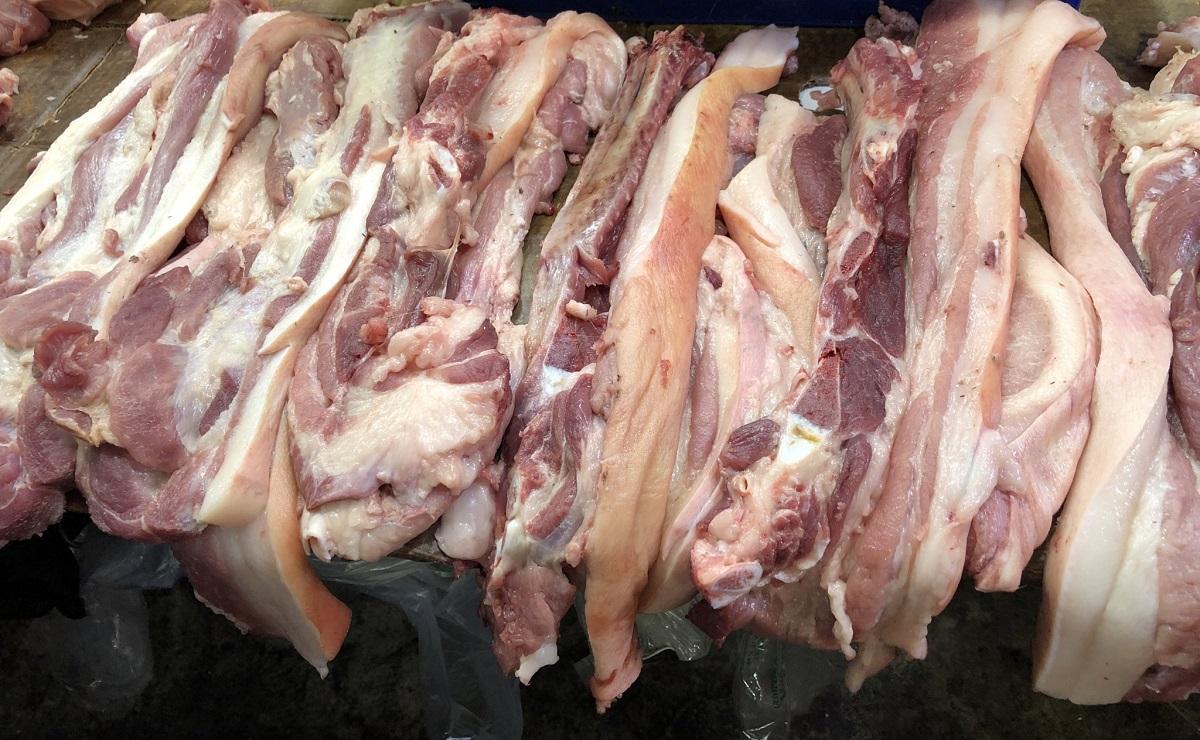
According to the Pork Producers Federation of the Philippines, the current farm-gate price (price when pork leaves the farm) of around P190 per kilo might climb to P230 per kilo. This could push the retail price in wet markets to P350 per kilo or even higher.
Eric Harina, president of the federation, explained in an interview on Super Radyo dzBB that when the ‘ber’ months arrive, more people start buying pork again — which naturally causes prices to go up.
However, Harina also pointed out a serious problem: even though farm prices are still low, the retail price in markets is already high, ranging from P330 to P380 per kilo.
Why the gap? Harina said it’s partly due to “weak production” caused by two major issues:
-
African Swine Fever (ASF) – This deadly pig disease continues to hurt local pig farms. There is still no widely available vaccine to stop it.
-
Rainy season sickness – Pigs often get sick during the rainy months of July and August, making production even lower.
Last year (2024), the total number of pigs was around 8.7 million. This year, it’s only 8.8 million, which Harina described as a “barely 100,000 increase” — too small to meet the rising demand.
Another burden on local hog raisers is the competition from imported pork, which is cheaper. Imported pork currently sells at around P240 to P300 per kilo, making it hard for local pork to compete.
“Napansin namin na matumal ang benta ng local pork dahil mas mura ang imported,” Harina said.
To help the situation, Harina suggested removing the middleman and improving the direct farm-to-market system so that pork can be sold more efficiently — and hopefully at lower prices for consumers.
In short, the coming months could see a price squeeze on both Filipino families and local pig farmers, unless stronger measures are taken to support local production and protect consumers.