
The Philippine peso opened January 8, 2026 facing a familiar challenge—
a strong U.S. dollar and mixed movements across the world’s major currencies.
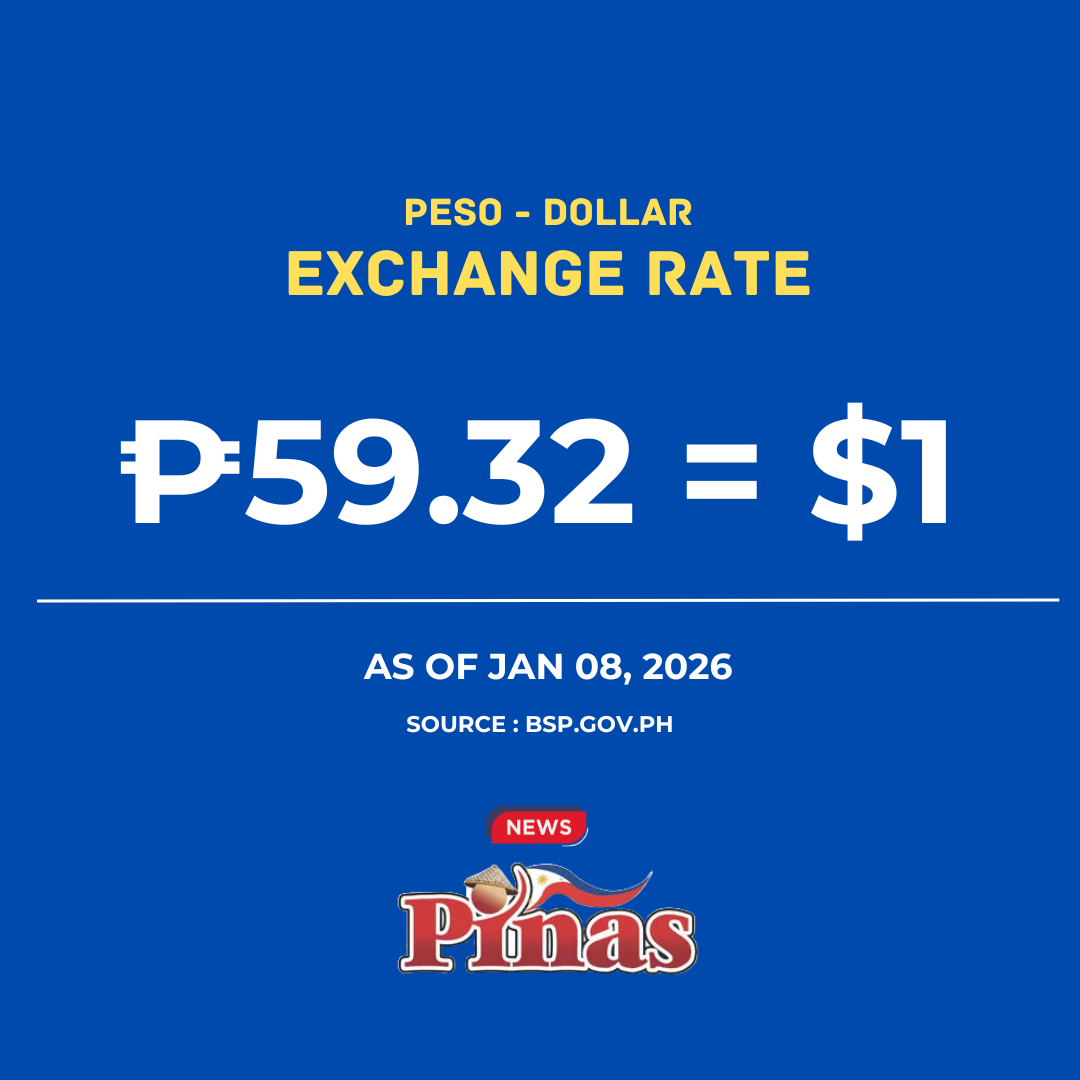
Based on the Bangko Sentral ng Pilipinas (BSP) Reference Exchange Rate Bulletin, the peso continues to trade near the ₱59 level against the U.S. dollar, a range that reflects both global uncertainty and strong demand for safe-haven currencies.
Here’s a clear, simple breakdown of what’s happening to the top 15 currencies today, seen through the lens that matters most to Filipinos:
PHP vs the world.
💵 US Dollar (USD): ₱59.33
The dollar remains king.
At ₱59.3290, the peso stays weak against the greenback, pressured by global demand for U.S. assets and higher interest rates abroad. This continues to affect fuel prices, imports, and overseas remittances.
💴 Japanese Yen (JPY): ₱0.38
The yen remains soft.
At just ₱0.3785 per yen, Japan’s currency reflects ongoing economic stimulus and low interest rates—making Japanese goods more attractive to import.
💷 British Pound (GBP): ₱79.85
Still one of the strongest currencies globally, the pound trades near ₱80, showing resilience despite economic headwinds in Europe.
🇭🇰 Hong Kong Dollar (HKD): ₱7.62
Closely tied to the U.S. dollar, the HKD stays stable at ₱7.6191, mirroring movements in the greenback.
🇨🇭 Swiss Franc (CHF): ₱74.37
A classic safe haven, the franc remains strong at ₱74.3658, signaling investor caution amid global risks.
🇨🇦 Canadian Dollar (CAD): ₱42.80
The loonie trades at ₱42.8028, influenced by oil prices and North American economic trends.
🇸🇬 Singapore Dollar (SGD): ₱46.29
A regional benchmark, the SGD remains solid at ₱46.2857, reflecting Singapore’s stable economy and strong financial sector.
🇦🇺 Australian Dollar (AUD): ₱39.87
The Aussie dollar sits at ₱39.8691, weighed down by commodity price fluctuations and slowing global demand.
🇧🇭 Bahrain Dinar (BHD): ₱157.44
One of the strongest currencies worldwide, the dinar towers over the peso at ₱157.4382, backed by oil-linked stability.
🇸🇦 Saudi Riyal (SAR): ₱15.82
At ₱15.8211, the riyal remains steady, benefiting from strong energy revenues and its peg to the U.S. dollar.
🇧🇳 Brunei Dollar (BND): ₱46.11
Closely aligned with the Singapore dollar, the BND trades at ₱46.1059, reflecting regional monetary stability.
🇮🇩 Indonesian Rupiah (IDR): ₱0.0036
Like the peso, the rupiah remains under pressure, trading at ₱0.0036, highlighting challenges faced by emerging markets.
🇹🇭 Thai Baht (THB): ₱1.89
The baht stands at ₱1.8940, supported by tourism recovery but still sensitive to global market shifts.
🇦🇪 UAE Dirham (AED): ₱16.15
At ₱16.1536, the dirham stays firm, reflecting its dollar peg and the UAE’s strong economic footing.
🇪🇺 Euro (EUR): ₱69.27
Though technically outside the top 15 list, the euro remains a key reference—trading at ₱69.2666, pressured by slower growth in the eurozone.
📊 Peso Snapshot (January 8, 2026)
-
BSP Reference Rate: ₱59.350
-
Buying Rate: ₱59.10
-
Selling Rate: ₱59.60
-
PDS Closing (Jan 7): ₱59.355
💬 What This Means for Filipinos
A weaker peso means higher import costs—from fuel to food—but also stronger remittances for families relying on OFWs abroad. For now, the peso continues to move cautiously, caught between global uncertainty and domestic resilience.
One thing is clear:
Every centavo movement matters—and the world is watching.