The value of money changes every day.
Sometimes slowly… sometimes suddenly.
On March 16, 2026, the Bangko Sentral ng Pilipinas (BSP) released its latest reference exchange rates, showing how the Philippine peso compares against the world’s major currencies.
And right now, the numbers reveal something important.
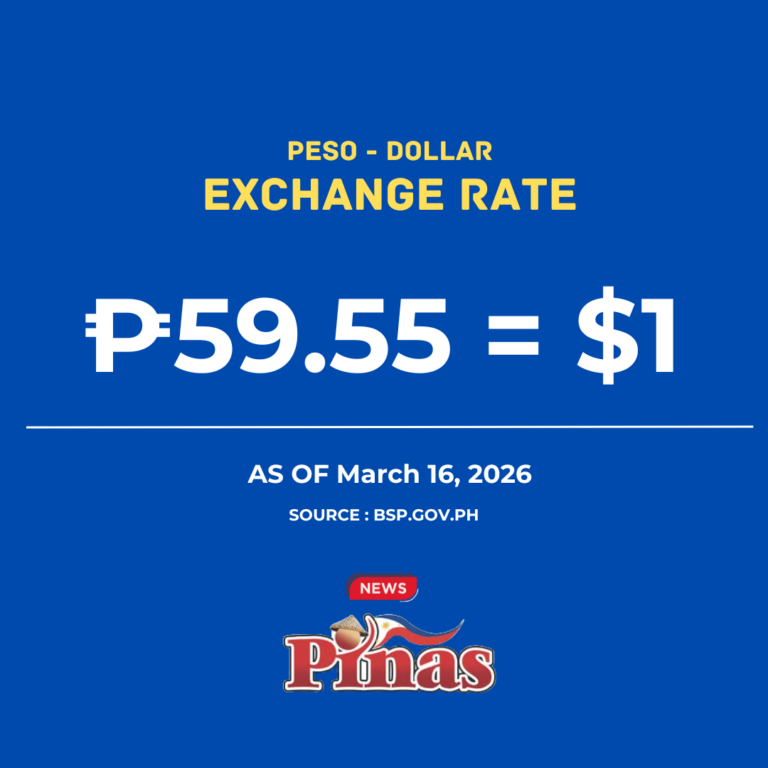
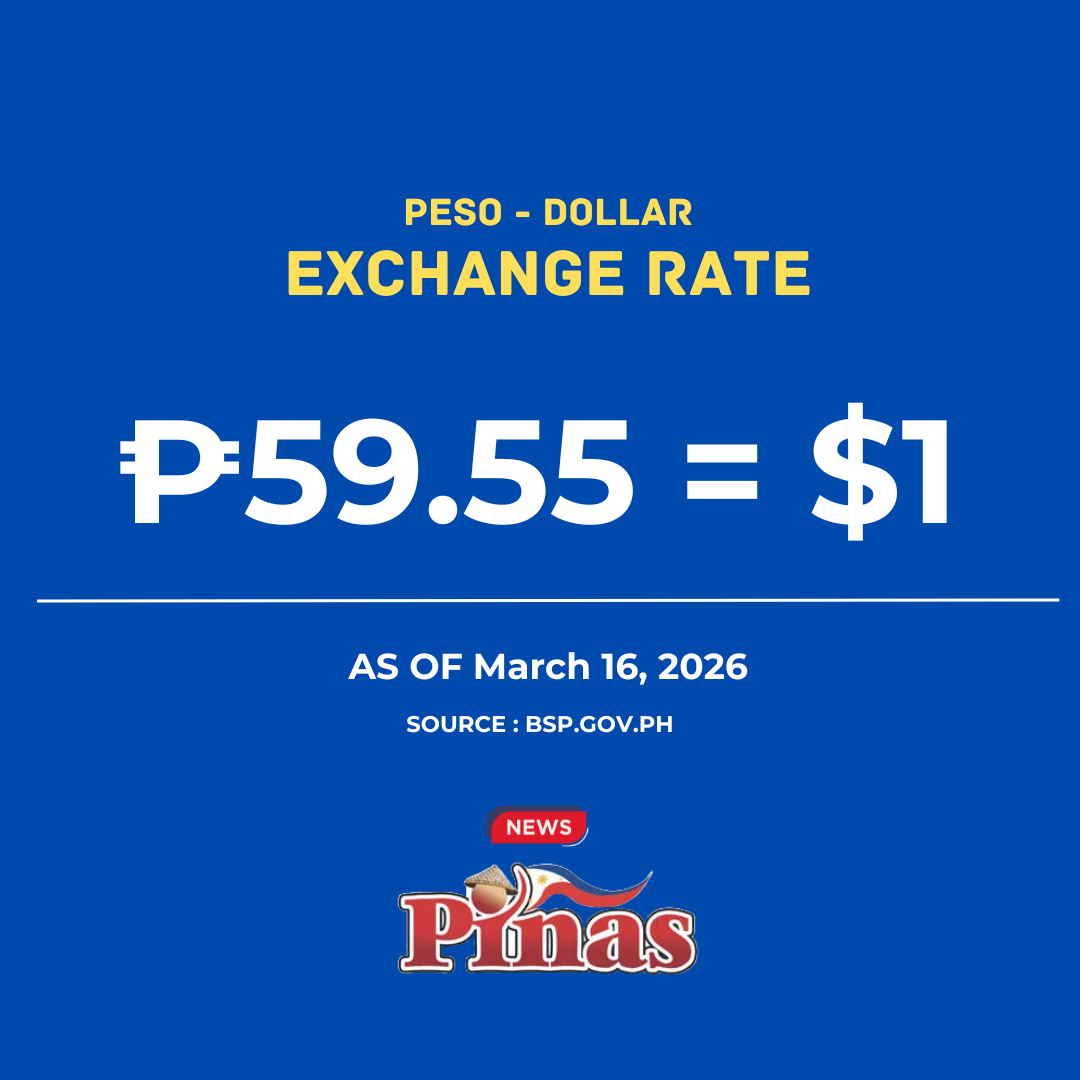
The U.S. dollar remains strong, with ₱59.554 for every $1, reflecting the continuing pressure on the Philippine peso in global markets.
But the story doesn’t stop there.
From the British pound to the Japanese yen, from the Singapore dollar to the Saudi riyal, each currency tells a story about global trade, travel, and economic power.
Let’s break it down in simple terms.
Philippine Peso vs Top 15 Global Currencies
(BSP Reference Rates – March 16, 2026)
🇺🇸 United States Dollar (USD)
$1 = ₱59.554
The U.S. dollar continues to dominate global trade and finance.
For OFWs sending money home and businesses importing goods, this rate plays a huge role in everyday costs.
🇬🇧 British Pound (GBP)
£1 = ₱78.891
The British pound remains one of the strongest currencies globally.
That means travel, education, or imports from the UK remain expensive for Filipinos.
🇨🇭 Swiss Franc (CHF)
1 CHF = ₱75.356
Switzerland’s currency is known as a “safe-haven” currency during global uncertainty.
Investors often move money here during economic instability.
🇪🇺 Euro (EUR)
€1 = ₱68.082
Used by much of Europe, the euro remains one of the world’s most influential currencies.
Trade with the EU continues to affect Philippine import and export prices.
🇸🇬 Singapore Dollar (SGD)
1 SGD = ₱46.439
Singapore remains a major financial hub in Asia.
For many Filipino workers there, this exchange rate determines how much money their families receive back home.
🇨🇦 Canadian Dollar (CAD)
1 CAD = ₱43.397
Canada continues to attract thousands of Filipino migrants.
The peso’s value against the Canadian dollar affects remittances sent to families in the Philippines.
🇦🇺 Australian Dollar (AUD)
1 AUD = ₱41.664
Australia is another major destination for Filipino workers and students.
Exchange rates directly impact tuition costs, living expenses, and remittances.
🇭🇰 Hong Kong Dollar (HKD)
1 HKD = ₱7.6089
Hong Kong remains one of the largest employers of Filipino domestic workers.
Even small changes in this rate can affect monthly remittances.
🇸🇦 Saudi Riyal (SAR)
1 SAR = ₱15.8726
Millions of Filipinos have worked in Saudi Arabia over the years.
This exchange rate is closely watched by families relying on remittances.
🇦🇪 UAE Dirham (AED)
1 AED = ₱16.2144
Dubai and Abu Dhabi continue to host a large Filipino workforce.
A stronger dirham means bigger peso value when OFWs send money home.
🇯🇵 Japanese Yen (JPY)
¥1 = ₱0.3733
Japan’s yen is one of Asia’s major currencies.
Even though the number looks small, Japan remains a major trade partner of the Philippines.
🇨🇳 Chinese Yuan (CNY)
1 CNY = ₱8.6256
China is one of the Philippines’ largest trading partners.
This exchange rate influences the cost of many imported products.
🇹🇭 Thai Baht (THB)
1 THB = ₱1.8364
Thailand competes with the Philippines in tourism and exports.
Currency movements often affect regional trade and travel.
🇲🇾 Malaysian Ringgit (MYR)
1 MYR = ₱15.1306
Malaysia remains a key ASEAN trading partner.
Businesses importing goods from Malaysia closely watch this rate.
🇮🇳 Indian Rupee (INR)
1 INR = ₱0.6438
India’s rapidly growing economy is becoming more influential globally, and trade ties with Southeast Asia continue to expand.
What These Numbers Mean for Filipinos
Exchange rates are not just numbers on a screen.
They affect everyday life.
They influence:
• the price of imported goods
• airline tickets and travel expenses
• overseas remittances
• tuition abroad
• business trade costs
When the peso weakens, imported goods often become more expensive.
But there’s another side.
A weaker peso can also mean higher remittance value for families receiving money from abroad.
BSP Market Reference
According to BSP market data:
-
BSP Buying Rate: ₱59.500 per dollar
-
BSP Selling Rate: ₱60.000 per dollar
-
BSP Reference Rate: ₱59.750
The interbank market closing rate was around ₱59.735 per dollar, reflecting daily trading activity among banks.
The Bigger Picture
Currencies rise and fall every day.
Sometimes because of interest rates.
Sometimes because of global conflicts or economic shifts.
And sometimes because investors move money across borders.
For Filipinos watching the exchange rate board…
each movement of the peso tells a story about the Philippine economy and the global financial world.