The global currency market moves every single day.
And for Filipinos — whether you are an OFW, a traveler, a business owner, or simply sending money abroad — every peso matters.
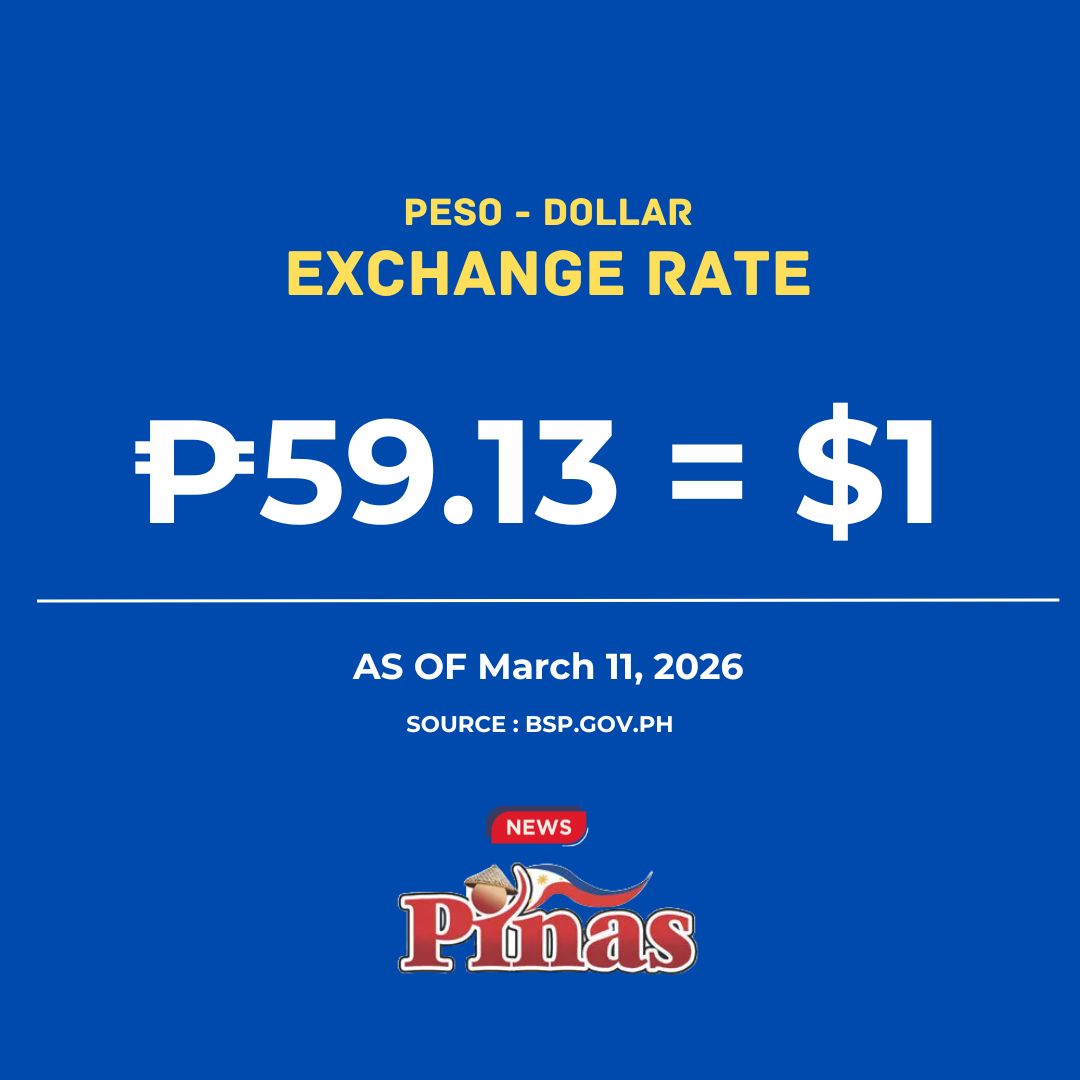
On March 11, 2026, the Bangko Sentral ng Pilipinas (BSP) released its latest Reference Exchange Rate Bulletin, showing how the Philippine Peso (PHP) compares with the world’s most powerful currencies.
At the center of global trade is the U.S. Dollar — and today, the numbers show the peso still facing pressure.
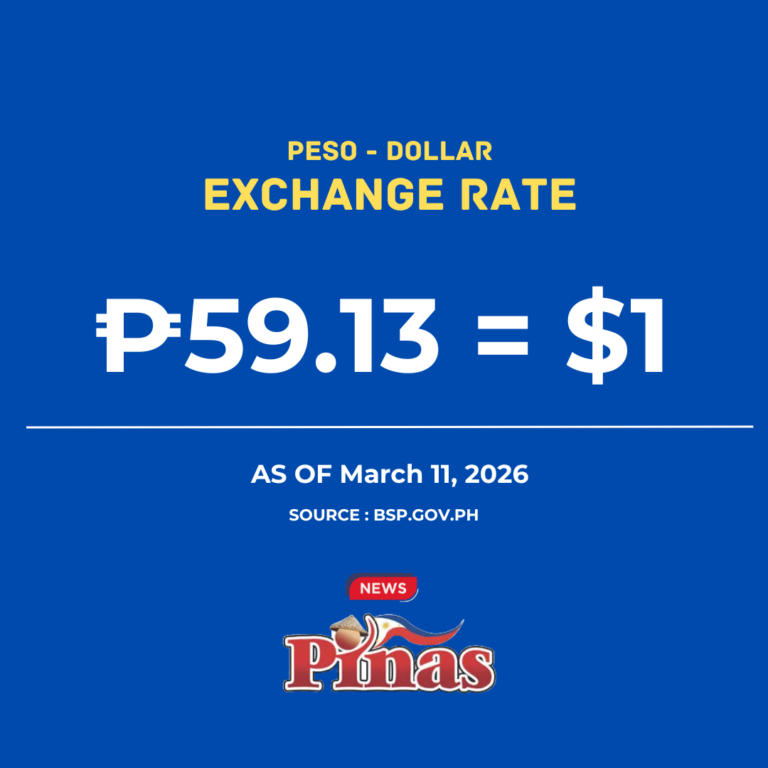
1 U.S. Dollar = ₱59.139 based on the BSP reference rate.
That means it now takes more than 59 pesos to buy one dollar, a level closely watched by markets, businesses, and overseas Filipino workers.
But the story doesn’t stop with the dollar.
Let’s take a closer look at how the Philippine Peso is performing against the world’s top currencies.
PHP vs the World’s Top 15 Currencies
(BSP Reference Exchange Rate – March 11, 2026)
🇺🇸 US Dollar (USD)
₱59.139 = $1
The dollar remains the most influential currency in global trade. When the dollar strengthens, countries like the Philippines often feel the pressure through higher import costs and fuel prices.
🇬🇧 British Pound (GBP)
₱79.388 = £1
The pound remains one of the strongest currencies globally.
For Filipinos working in the UK, this means remittances can convert into more pesos.
🇪🇺 Euro (EUR)
₱68.672 = €1
The euro continues to be a major currency in Europe.
For travelers and businesses dealing with the EU, the peso’s value here determines purchasing power abroad.
🇨🇭 Swiss Franc (CHF)
₱75.984 = 1 CHF
Known as a safe-haven currency, the Swiss franc tends to strengthen during global uncertainty.
🇸🇬 Singapore Dollar (SGD)
₱46.449 = 1 SGD
Singapore’s strong economy keeps the SGD stable — making it one of the most important currencies for OFWs in Southeast Asia.
🇨🇦 Canadian Dollar (CAD)
₱43.558 = 1 CAD
With thousands of Filipinos living and working in Canada, the CAD remains a key remittance currency.
🇦🇺 Australian Dollar (AUD)
₱42.083 = 1 AUD
Australia continues to attract Filipino workers and students, making the AUD another currency closely watched by many families.
🇭🇰 Hong Kong Dollar (HKD)
₱7.559 = 1 HKD
Hong Kong remains a major hub for Filipino workers, and even small movements in this rate can impact remittances.
🇨🇳 Chinese Yuan (CNY)
₱8.604 = 1 CNY
China is one of the Philippines’ biggest trading partners.
Changes in this rate influence imports, exports, and business transactions.
🇯🇵 Japanese Yen (JPY)
₱0.374 = ¥1
Japan’s yen remains one of Asia’s most traded currencies.
While weaker than before, it still plays a major role in regional trade.
🇦🇪 UAE Dirham (AED)
₱16.101 = 1 AED
With thousands of Filipinos working in the UAE, the dirham is a crucial currency for OFW remittances to the Philippines.
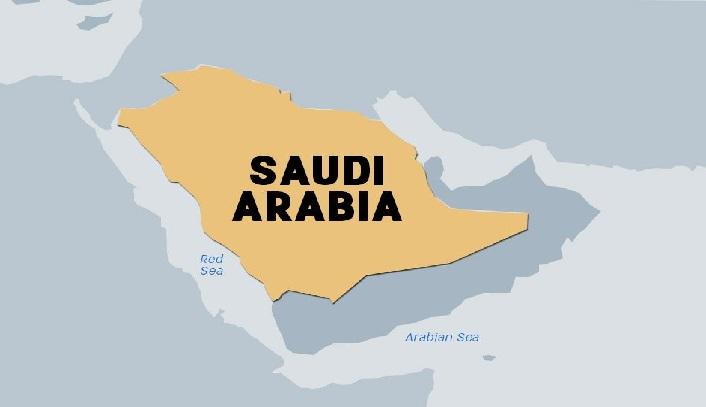
🇸🇦 Saudi Riyal (SAR)
₱15.759 = 1 SAR
Saudi Arabia remains home to a huge Filipino workforce.
The value of the riyal directly affects the money sent home to families.
🇧🇭 Bahrain Dinar (BHD)
₱156.721 = 1 BHD
The Bahraini dinar is one of the strongest currencies in the world, which means OFWs there often convert their earnings into higher peso values.
🇹🇭 Thai Baht (THB)
₱1.872 = 1 THB
A key Southeast Asian currency used in tourism and trade across the region.
🇮🇩 Indonesian Rupiah (IDR)
₱0.0035 = 1 IDR
Though small in value per unit, Indonesia’s currency is important due to its large economy in Southeast Asia.
What These Numbers Mean for Filipinos
Exchange rates affect daily life more than many people realize.
They influence:
• Fuel prices
• Imported goods
• Travel costs
• OFW remittances
• International business transactions
When the peso weakens against the dollar and other currencies, imports become more expensive. But at the same time, OFW remittances may convert into more pesos for families back home.
BSP Rates and Market Snapshot
Additional key BSP figures include:
-
BSP Buying Rate: ₱58.650
-
BSP Selling Rate: ₱59.150
-
BSP Reference Rate: ₱58.900
-
PDS Closing Rate (Mar 10, 2026): ₱58.896
Precious metals are also seeing strong values:
-
Gold: $5,190.60
-
Silver: $88.10
These assets often rise during times of global uncertainty.
The Bigger Picture
Currencies move because of global economics, interest rates, trade flows, and geopolitics.
And in today’s interconnected world, what happens in one country — from oil prices to global conflicts — can quickly affect currencies everywhere.
For the Philippines, watching the peso versus the dollar and other major currencies remains essential.
Because behind every number in the exchange rate table…
is a real impact on businesses, workers, and families across the country.