


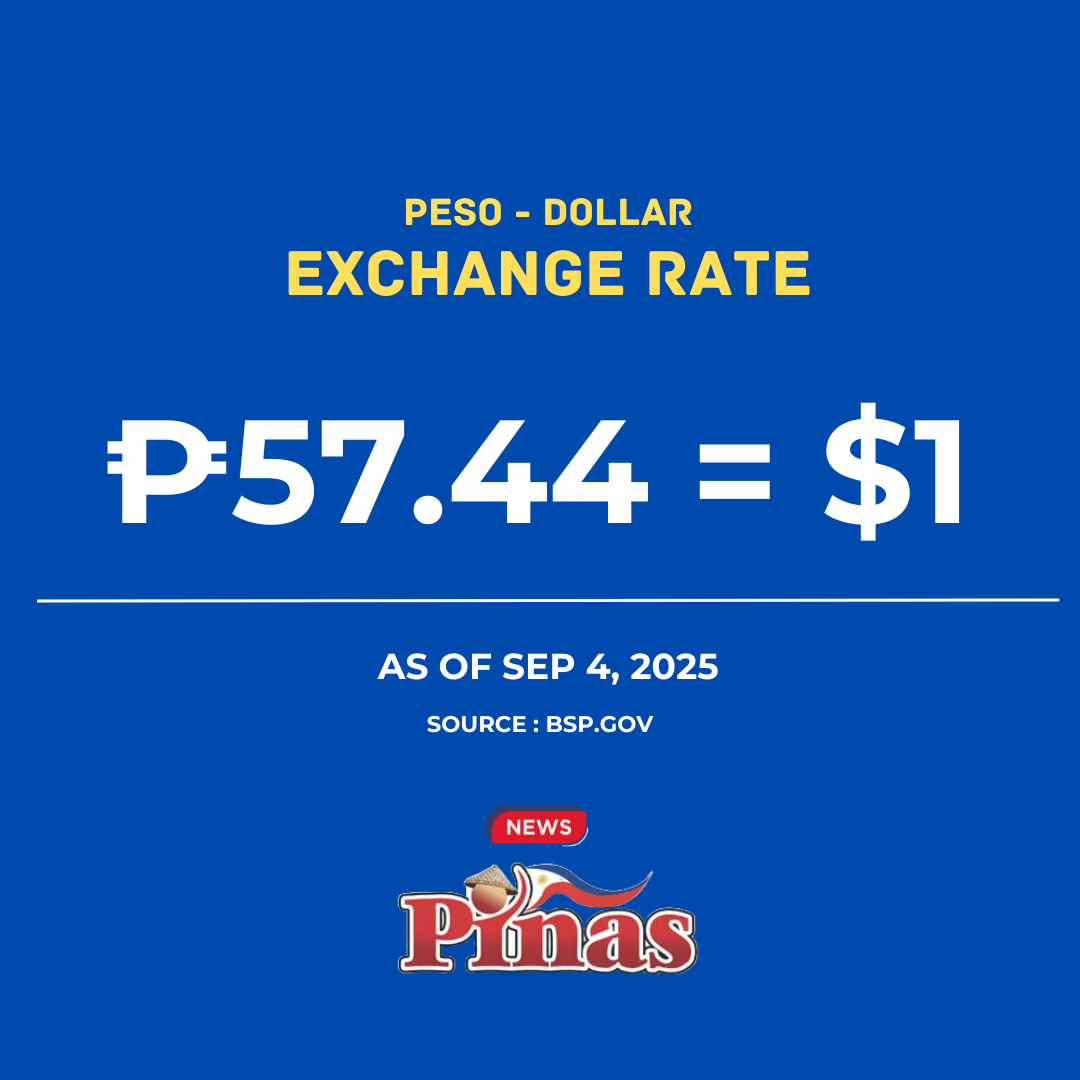
The Bangko Sentral ng Pilipinas (BSP) has released its Reference Exchange Rate Bulletin for September 4, 2025, and it gives Filipinos a clear picture of how the peso is moving against the world’s biggest currencies.
At the center of it all, the U.S. dollar remains king, standing at ₱57.45. This strong greenback continues to put pressure on emerging market currencies, including the peso.
Here’s a closer look at the top 15 currencies and what they mean for Filipinos:
-
US Dollar (USD – ₱57.45): The peso stays soft against the dollar, keeping imports more expensive but boosting remittance values for OFWs.
-
Japanese Yen (JPY – ₱0.39): The yen remains weak, making travel to Japan cheaper for Filipinos but squeezing Japan’s exporters.
-
British Pound (GBP – ₱77.25): The pound is one of the strongest currencies, a sign of economic resilience in the UK despite global headwinds.
-
Hong Kong Dollar (HKD – ₱7.37): Stable and steady, reflecting Hong Kong’s currency peg to the U.S. dollar.
-
Swiss Franc (CHF – ₱71.43): Another strong safe-haven currency, showing investor demand for stability.
-
Canadian Dollar (CAD – ₱41.66): Still firm, supported by oil and natural resource exports.
-
Singapore Dollar (SGD – ₱44.60): A solid performer, reflecting Singapore’s strong financial standing.
-
Australian Dollar (AUD – ₱37.58): Weaker due to global commodity price fluctuations, but still stable compared to regional peers.
-
Bahrain Dinar (BHD – ₱152.43): One of the world’s highest-valued currencies, driven by its oil-backed economy.
-
Kuwaiti Dinar (KWD – N/A): Data unavailable, but typically the strongest currency in the world.
-
Saudi Riyal (SAR – ₱15.31): Firm as always, tied to the dollar and vital for OFWs in the Middle East.
-
Brunei Dollar (BND – ₱44.43): Moves in tandem with the Singapore dollar, reflecting regional stability.
-
Indonesian Rupiah (IDR – ₱0.0035): Very weak compared to the peso, but Indonesia’s economy remains large and growing.
-
Thai Baht (THB – ₱1.78): Slightly stronger, a sign of Thailand’s steady tourism and trade recovery.
-
UAE Dirham (AED – ₱15.64): Important for millions of OFWs, still strong as it’s pegged to the U.S. dollar.
The Euro (₱67.00) also continues to be a heavyweight, trading firmly against the peso and showing strength in the European Monetary Union.
Meanwhile, the BSP buying rate is set at ₱57.05, while the selling rate is ₱57.55, reflecting the peso’s narrow trading range.
On the commodities side, gold remains high at $3,557.60 per ounce, while silver trades at $41.05, showing investors are still seeking safe havens amid global uncertainty.
For Filipinos, these numbers mean mixed news:
-
OFWs and families receiving remittances benefit from a stronger dollar, pound, and dirham.
-
Importers and consumers face pricier goods as the peso weakens.
-
Travelers may find trips to Japan and other weaker-currency countries more affordable.
The peso’s journey remains a balancing act—caught between global economic pressures and local resilience.