


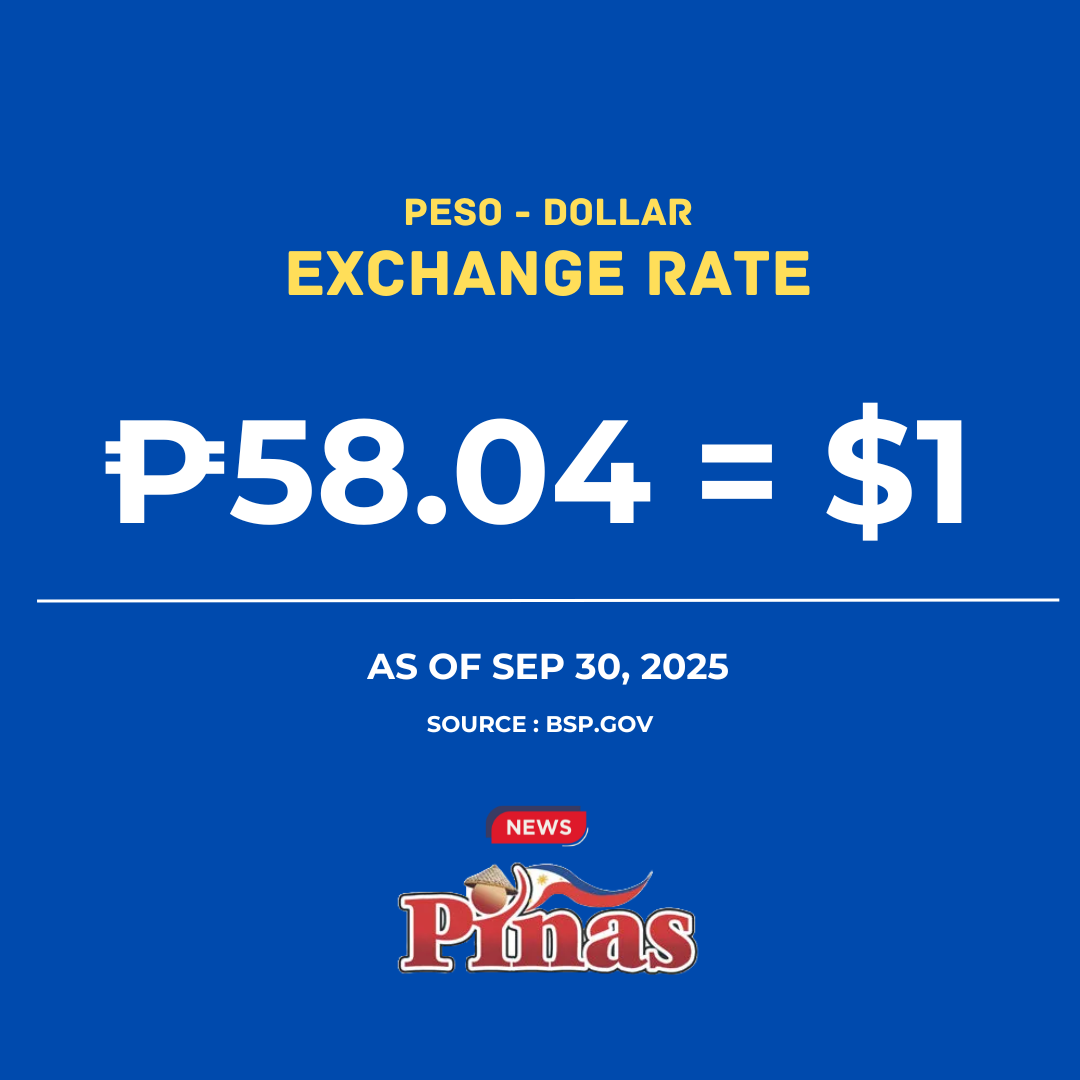
The Philippine peso opened the week weaker at ₱58.04 against the US dollar, according to the latest reference bulletin from the Bangko Sentral ng Pilipinas (BSP). This comes as global markets remain volatile, with currencies around the world reacting to economic shifts, oil prices, and interest rate movements.
Here’s a quick look at the top 15 currencies and how they stack up against the peso:
-
US Dollar (USD) – ₱58.04
The dollar remains strong as investors continue to treat it as a safe haven. This makes imports pricier for the Philippines. -
Japanese Yen (JPY) – ₱0.39
The yen stays weak, dragged down by Japan’s slow growth and low interest rates. For Filipinos, travel to Japan just got a little cheaper. -
British Pound (GBP) – ₱77.97
The pound remains one of the highest-valued currencies, showing the UK’s resilience despite inflation and political challenges. -
Hong Kong Dollar (HKD) – ₱7.45
Still closely tied to the US dollar, the HKD stays stable, which is good news for OFWs and businesses in Hong Kong. -
Swiss Franc (CHF) – ₱72.78
Known as a “safe currency,” the franc is holding strong. Investors continue to rely on Switzerland during times of uncertainty. -
Canadian Dollar (CAD) – ₱41.70
The loonie slipped slightly as oil prices waver, showing how dependent Canada’s economy is on energy exports. -
Singapore Dollar (SGD) – ₱45.01
A steady performer in Asia, the Singapore dollar remains firm, reflecting the city-state’s strong financial sector. -
Australian Dollar (AUD) – ₱38.15
The Aussie dollar is weaker as demand for commodities cools. Still, it remains important for trade in the Asia-Pacific region. -
Bahraini Dinar (BHD) – ₱153.93
The strongest among the top 15, the Bahraini dinar is highly valued thanks to the country’s oil-backed economy. -
Kuwaiti Dinar (KWD) – N/A
No updated conversion data today, but historically, the Kuwaiti dinar is the world’s highest-valued currency. -
Saudi Riyal (SAR) – ₱15.47
A crucial currency for millions of OFWs, the riyal holds steady, backed by Saudi Arabia’s oil-driven economy. -
Brunei Dollar (BND) – ₱44.83
Moves closely with the Singapore dollar, reflecting Brunei’s strong financial and energy reserves. -
Indonesian Rupiah (IDR) – ₱0.0035
The rupiah is among the weakest in the region. It takes hundreds of rupiah just to equal one peso. -
Thai Baht (THB) – ₱1.80
The baht remains fairly stable, supported by Thailand’s tourism recovery and strong exports. -
UAE Dirham (AED) – ₱15.80
Another key currency for OFWs, especially in Dubai and Abu Dhabi, the dirham remains strong and steady.
What This Means for Filipinos
-
OFWs in countries like Saudi Arabia, UAE, Hong Kong, and Singapore can expect steady remittances as their host currencies remain firm.
-
Importers and travelers face higher costs due to the strong US dollar and British pound.
-
Exporters may benefit from the weaker peso as Philippine products become cheaper for foreign buyers.
The BSP continues to monitor global developments as the peso trades within the ₱58 range, balancing local economic conditions with international market pressures.