


September 3, 2025 – Bangko Sentral ng Pilipinas (BSP) Reference Exchange Rate Bulletin
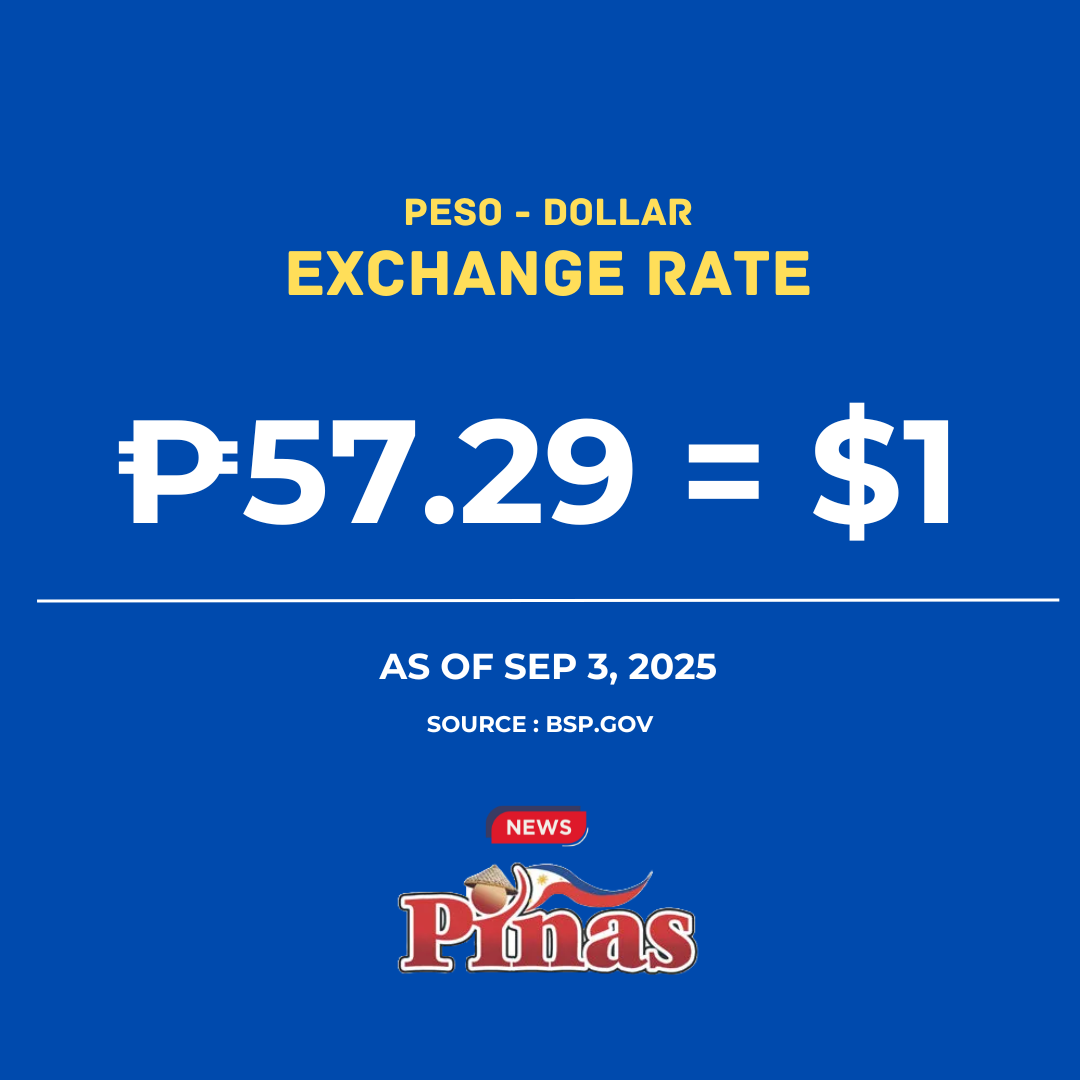
The Philippine peso opened today at ₱57.29 against the US dollar, based on BSP’s reference exchange rates. This figure reflects how much one US dollar costs in peso terms, and it sets the tone for trading and consumer confidence.
Here’s a closer look at how the top 15 global currencies are moving against the peso—and what it means:
1. US Dollar (USD) – ₱57.29
The peso continues to hover in the mid-₱57 range, showing slight stability after recent market jitters. This remains the benchmark currency for global trade.
2. Japanese Yen (JPY) – ₱0.39
The yen stays weak, trading below 40 centavos per yen. This benefits Filipinos sending money from Japan, as remittances stretch further in pesos.
3. British Pound (GBP) – ₱76.76
The pound remains one of the strongest currencies, reflecting the UK’s resilient market despite global uncertainties.
4. Hong Kong Dollar (HKD) – ₱7.34
Stable and closely tied to the US dollar, the HKD continues to serve as a safe haven for overseas Filipino workers (OFWs) in Hong Kong.
5. Swiss Franc (CHF) – ₱71.24
Known as a “safe currency,” the franc remains strong, reflecting global investors’ flight to stability.
6. Canadian Dollar (CAD) – ₱41.59
Canada’s currency stays firm above ₱40, buoyed by steady commodity exports.
7. Singapore Dollar (SGD) – ₱44.47
The Singapore dollar continues to show strength, a reflection of its stable financial hub status.
8. Australian Dollar (AUD) – ₱37.34
The Aussie dollar remains moderate, balancing pressures from commodity exports and global demand.
9. Bahraini Dinar (BHD) – ₱152.03
One of the strongest currencies in the world, the Bahraini dinar reflects the country’s oil-backed economy.
10. Kuwaiti Dinar (KWD) – Data Unavailable
Traditionally the world’s strongest currency, but no updated equivalent was released in today’s BSP bulletin.
11. Saudi Riyal (SAR) – ₱15.27
A vital currency for OFWs in Saudi Arabia, the riyal’s strength ensures remittances remain valuable for families back home.
12. Brunei Dollar (BND) – ₱44.30
Closely tied to the Singapore dollar, the Brunei dollar mirrors its stability.
13. Indonesian Rupiah (IDR) – ₱0.0035
Still one of the weakest major currencies in the region, showing how Indonesia balances growth with inflationary pressure.
14. Thai Baht (THB) – ₱1.77
The baht remains stable, supporting Thailand’s tourism-driven recovery.
15. UAE Dirham (AED) – ₱15.60
Another crucial currency for OFWs, especially in Dubai and Abu Dhabi. Its steady strength ensures remittances continue to have strong peso value.
Bigger Picture
The euro trades at ₱66.71, while other Asian currencies like the Korean won and Chinese yuan remain weaker against the peso. Meanwhile, gold prices soared to $3,529.75 per ounce—a clear sign investors are seeking safe-haven assets amid global uncertainties.
With the peso still in the mid-₱57 range against the dollar, the BSP is keeping close watch. For Filipinos, this means imports could cost more, but OFWs and exporters may benefit from stronger exchange values.
👉 In today’s financial world, every movement in these currencies isn’t just numbers—it directly affects prices, remittances, and the daily lives of millions of Filipinos.