
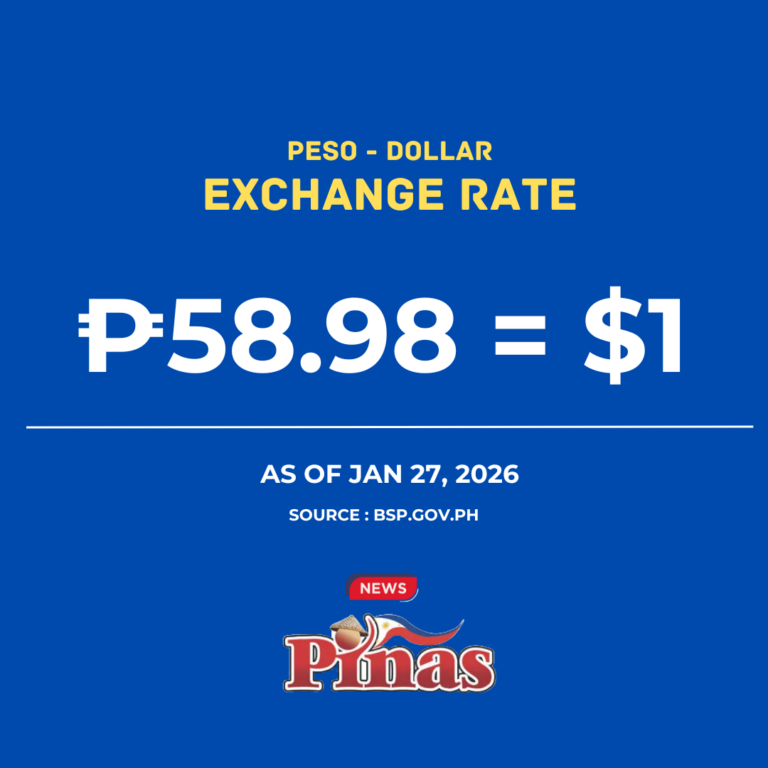

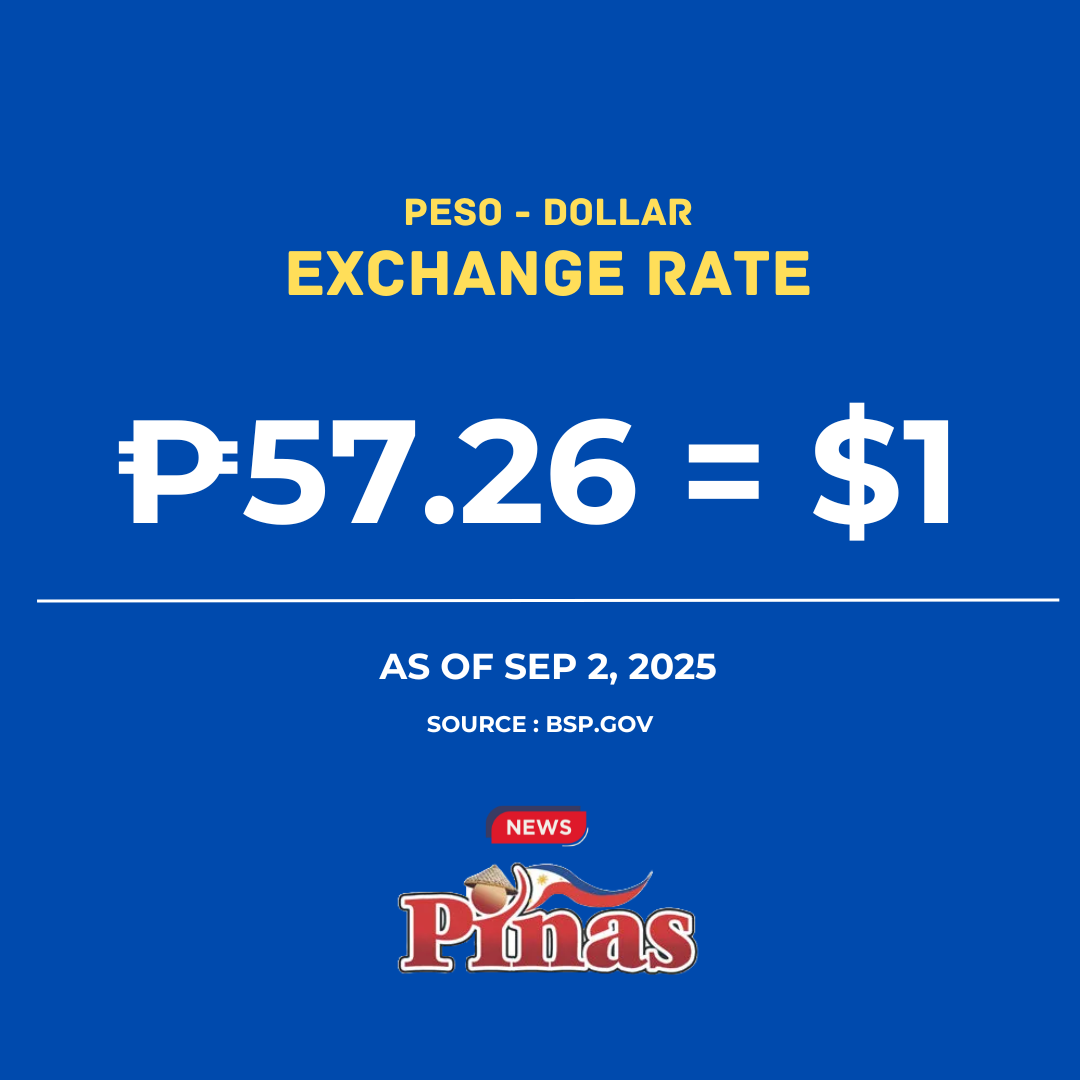
MANILA – The Philippine peso opened the week weaker at ₱57.26 against the US dollar, according to the Bangko Sentral ng Pilipinas (BSP) Reference Exchange Rate Bulletin on September 2, 2025.
The movement reflects global shifts as the world’s top currencies continue to adjust in response to trade flows, inflation pressures, and geopolitical uncertainty. Let’s take a look at where the top 15 currencies stand today and what they mean for Filipinos.
1. US Dollar (USD) – ₱57.26
The greenback remains strong, holding steady as the global safe-haven currency. For overseas Filipinos sending remittances, this means more pesos per dollar. But for importers and businesses relying on dollar-priced goods, it spells higher costs.
2. Japanese Yen (JPY) – ₱0.39
The yen stays weak, reflecting Japan’s ongoing struggle with deflation and slow growth. Travelers to Japan will find their pesos stretch farther, but OFWs earning yen are hit by lower conversions.
3. British Pound (GBP) – ₱77.58
The pound is among the strongest currencies, showing the UK’s resilience post-Brexit. Filipinos in the UK enjoy a strong exchange, but imported UK goods come at a premium.
4. Hong Kong Dollar (HKD) – ₱7.34
The HK dollar remains stable, closely pegged to the US dollar. Many OFWs in Hong Kong benefit from a solid conversion rate.
5. Swiss Franc (CHF) – ₱71.54
Switzerland’s currency shows its usual strength. Known as a “safe” currency in global finance, the franc continues to reflect stability amid global uncertainty.
6. Canadian Dollar (CAD) – ₱41.65
The loonie trades moderately strong, influenced by global oil prices since Canada is a major exporter. OFWs in Canada enjoy a decent peso conversion.
7. Singapore Dollar (SGD) – ₱44.62
The Singapore dollar remains firm, reflecting the country’s strong financial position. OFWs here continue to send home remittances at favorable rates.
8. Australian Dollar (AUD) – ₱37.53
The Aussie dollar is slightly weaker compared to last year, mainly due to slower commodity demand. Still, it remains solid for OFWs down under.
9. Bahraini Dinar (BHD) – ₱151.91
One of the strongest currencies in the world, the dinar brings big peso value for Filipinos working in Bahrain.
10. Kuwaiti Dinar (KWD) – N/A
While data isn’t available in this bulletin, the Kuwaiti dinar usually tops global rankings as the single strongest currency against the peso and the dollar.
11. Saudi Riyal (SAR) – ₱15.26
With thousands of OFWs in Saudi Arabia, the stable riyal continues to be a lifeline for many Filipino families.
12. Brunei Dollar (BND) – ₱44.45
Closely tied to the Singapore dollar, the Brunei dollar is also strong, ensuring good conversion rates for workers stationed there.
13. Indonesian Rupiah (IDR) – ₱0.0035
The rupiah remains one of the weakest currencies in Asia. For Filipinos, this means cheaper travel to Indonesia, but not much value for conversions.
14. Thai Baht (THB) – ₱1.77
The baht stays relatively strong in the region, supported by Thailand’s tourism rebound. It’s better valued than most Southeast Asian neighbors.
15. UAE Dirham (AED) – ₱15.59
The dirham, pegged to the US dollar, remains very strong. With hundreds of thousands of Filipinos in Dubai and Abu Dhabi, this is a steady source of strong remittances.
The Bigger Picture
The peso’s current weakness against the dollar reflects global uncertainty, higher oil prices, and the strong pull of the US economy. For many Filipinos, this has two faces: stronger remittances from abroad, but more expensive imports and potentially higher prices of goods at home.
The BSP’s bulletin also reported gold at $3,481 per ounce and silver at $40.60 per ounce, both showing global investors’ flight to safe-haven assets.
In today’s interconnected world, every shift in currency values touches Filipino lives—from the price of groceries and fuel to the money families receive from loved ones abroad.