


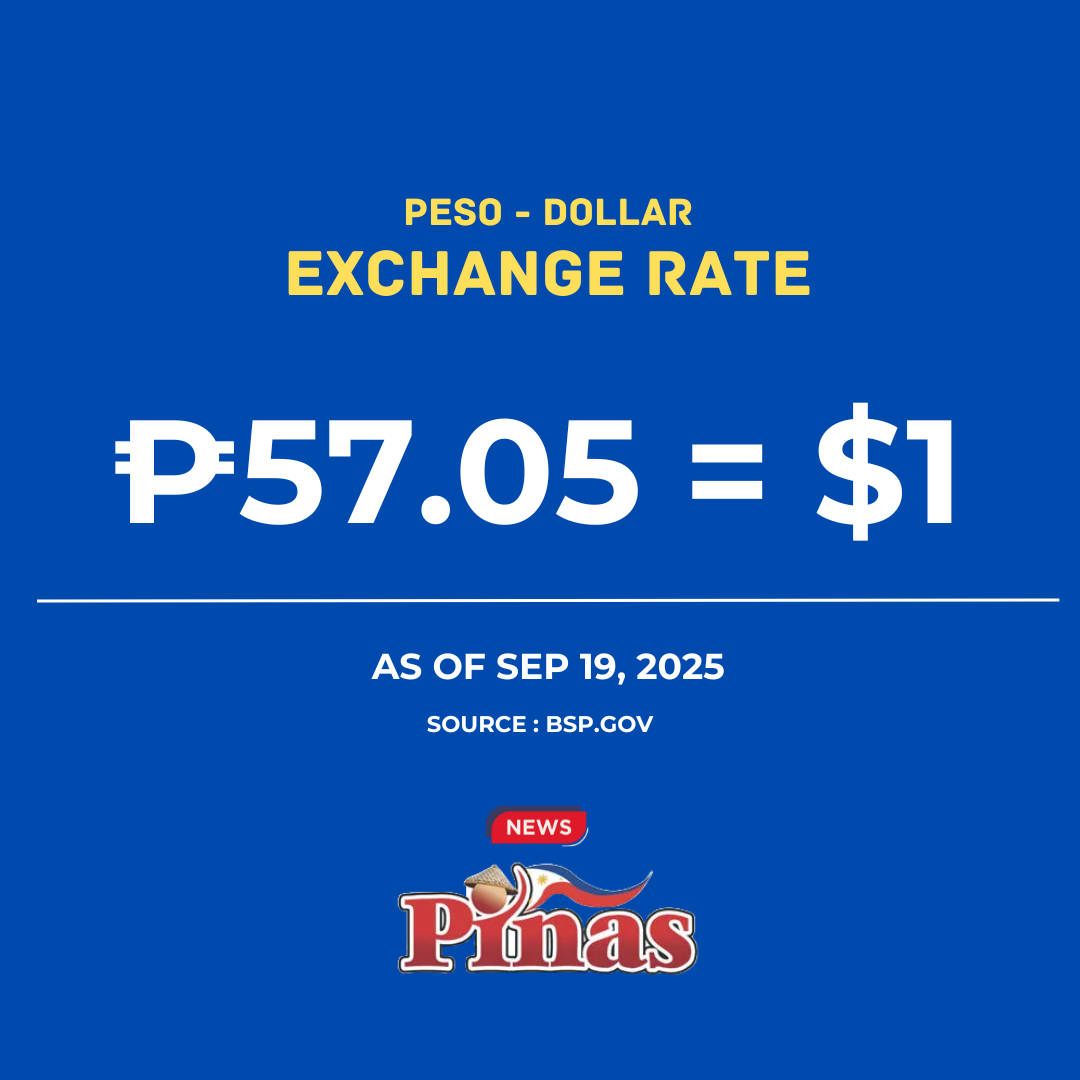
The Bangko Sentral ng Pilipinas (BSP) released its Reference Exchange Rate Bulletin on September 19, 2025 — and it shows the Philippine peso trading at ₱57.05 per US dollar.
That slight dip may not seem like much, but when the dollar moves, it shakes the whole global market. Let’s break down the top 15 currencies and what they mean for the peso, for businesses, and for ordinary Filipinos.
1. United States Dollar (USD) – ₱57.05
The king of currencies remains strong. Every global movement—oil, imports, exports—still hinges on the dollar. For OFWs in the US, this is good news: more pesos for every dollar remitted home.
2. Japanese Yen (JPY) – ₱0.39
The yen stays weak against the peso, reflecting Japan’s ongoing struggle with low inflation and slow growth. Good for Filipino tourists in Tokyo, not so great for exporters.
3. British Pound (GBP) – ₱77.37
The pound is powerful. Anyone with remittances from the UK is smiling, but imports from London will hit wallets harder.
4. Hong Kong Dollar (HKD) – ₱7.34
Tied closely to the US dollar, the HKD remains steady. OFWs in Hong Kong continue to enjoy solid remittance strength.
5. Swiss Franc (CHF) – ₱72.03
Known as the “safe haven” currency, the franc remains expensive. It signals global investors are still cautious amid conflict and economic uncertainty.
6. Canadian Dollar (CAD) – ₱41.35
The Canadian dollar is weaker compared to the US. Still, OFWs in Canada are sending home decent value, especially with stable oil exports backing their economy.
7. Singapore Dollar (SGD) – ₱44.51
A regional heavyweight, the Singapore dollar shows strength. Filipinos working in Singapore continue to enjoy strong remittance values.
8. Australian Dollar (AUD) – ₱37.73
The Aussie dollar is on the softer side. That makes studying or traveling to Australia slightly cheaper but reduces the peso value of OFW remittances.
9. Bahraini Dinar (BHD) – ₱151.32
One of the world’s strongest currencies. OFWs in Bahrain send home big pesos for every dinar earned.
10. Kuwaiti Dinar (KWD) – N/A
Still regarded as the highest-valued currency globally, though no official peso equivalent is listed in this bulletin.
11. Saudi Riyal (SAR) – ₱15.21
With hundreds of thousands of OFWs in Saudi Arabia, the riyal’s stability is crucial. It remains a reliable source of remittance strength.
12. Brunei Dollar (BND) – ₱44.34
Almost identical to the Singapore dollar, and equally strong. Good news for OFWs in Brunei.
13. Indonesian Rupiah (IDR) – ₱0.0035
The rupiah is weak, reflecting Indonesia’s inflation struggles. For Filipinos, this means the peso stretches further when traveling there.
14. Thai Baht (THB) – ₱1.79
The baht stays moderate, but tourism-driven growth in Thailand continues to keep it steady against regional peers.
15. UAE Dirham (AED) – ₱15.54
Dubai’s dirham remains strong, tied to the US dollar. Another win for OFWs working in the Middle East.
Where Does This Leave the Peso?
The peso sits at ₱57.05 per dollar, close to its selling rate of ₱57.30. While not a collapse, it shows the peso remains pressured by global oil prices, US interest rates, and regional uncertainty.
Gold is trading high at $3,639.70, showing that investors worldwide are seeking safety in precious metals. Silver is at $41.70, reflecting similar caution.
The Bottom Line
The peso may not have crashed, but it’s still fragile in a world shaken by wars, inflation, and rising US interest rates. For OFWs, this means higher peso values for remittances. For importers, it means higher costs.
In short: the dollar still rules, and the peso is hanging on.