


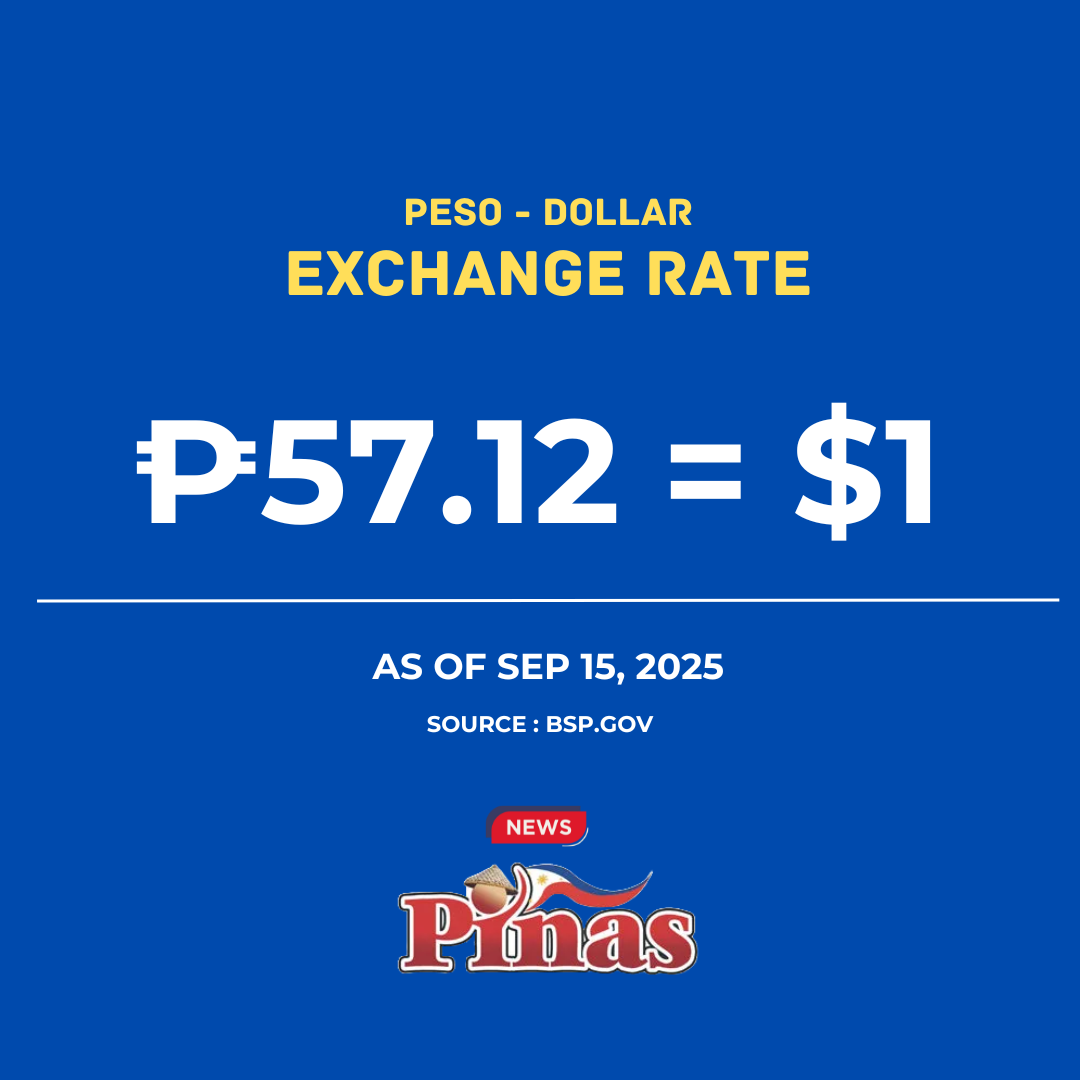
The Bangko Sentral ng Pilipinas (BSP) released its official reference exchange rates for September 15, 2025, giving Filipinos a snapshot of how the peso is holding up against the world’s biggest currencies.
At ₱57.12 per US dollar, the peso remains stable compared to last week’s closing rate of ₱57.10. This small movement shows that the Philippine currency is steady, but global shifts are always something to watch.
Let’s break down what’s happening with the top 15 currencies that matter most to Filipinos—from remittances, imports, travel, to global trade.
1. US Dollar (USD – ₱57.12)
The dollar remains the world’s strongest currency and the main benchmark. Every small move here affects everything from gas prices to grocery imports in the Philippines.
2. Japanese Yen (JPY – ₱0.39)
The yen stays weak, meaning Filipinos traveling or importing from Japan get more value. But for Japan, this makes exports cheaper abroad.
3. British Pound (GBP – ₱77.53)
The pound continues to climb. For OFWs in the UK, this is good news—every pound sent home means more pesos for their families.
4. Hong Kong Dollar (HKD – ₱7.34)
The HK dollar is steady, crucial for thousands of Filipinos working in Hong Kong. It remains closely tied to the US dollar.
5. Swiss Franc (CHF – ₱71.77)
The franc remains one of the strongest and safest currencies in the world. Investors treat it as a “safe haven” during global uncertainties.
6. Canadian Dollar (CAD – ₱41.27)
A little weaker than before, but still stable. For Filipinos in Canada, remittances remain strong and competitive.
7. Singapore Dollar (SGD – ₱44.53)
The Singapore dollar continues to rise. Good news for OFWs in Singapore sending money back home.
8. Australian Dollar (AUD – ₱37.92)
The Aussie dollar has softened. This benefits Filipino students and families in Australia, but exporters to the Philippines may feel the pinch.
9. Bahraini Dinar (BHD – ₱151.52)
The strongest currency on the list. One Bahraini dinar equals over ₱151—a big boost for OFWs in Bahrain.
10. Kuwaiti Dinar (KWD – Data Not Available)
Often the most valuable currency in the world, but today’s BSP bulletin shows no updated figure.
11. Saudi Riyal (SAR – ₱15.23)
The Saudi riyal remains stable, crucial for millions of OFWs in the Middle East. Every riyal stretches further when sent to the Philippines.
12. Brunei Dollar (BND – ₱44.36)
Almost equal to the Singapore dollar. Another strong Asian currency, reflecting Brunei’s oil-rich economy.
13. Indonesian Rupiah (IDR – ₱0.0035)
Extremely low value per unit, but Indonesia’s economy relies on volume. A reminder that not all big economies have high-valued currencies.
14. Thai Baht (THB – ₱1.80)
The baht stays firm. A common travel currency for Filipinos, especially with Thailand being a favorite holiday destination.
15. UAE Dirham (AED – ₱15.55)
One of the most important for OFWs. Millions in Dubai and Abu Dhabi send home dirhams that translate into strong peso remittances.
What It Means for Filipinos
-
OFWs (Overseas Filipino Workers): Those working in Europe, the Middle East, and the UK benefit most as their currencies convert into higher peso values.
-
Importers & Businesses: A strong dollar means higher costs for imported goods like fuel and electronics.
-
Travelers: Japan and Australia are cheaper for Filipino tourists right now, while Europe and the UK are more expensive.
The BSP set its reference rate at ₱57.10, with the peso’s buying rate at ₱56.85 and selling rate at ₱57.35.
Meanwhile, gold prices are at $3,641.00, showing investors are still seeking safe havens amid global uncertainty.