


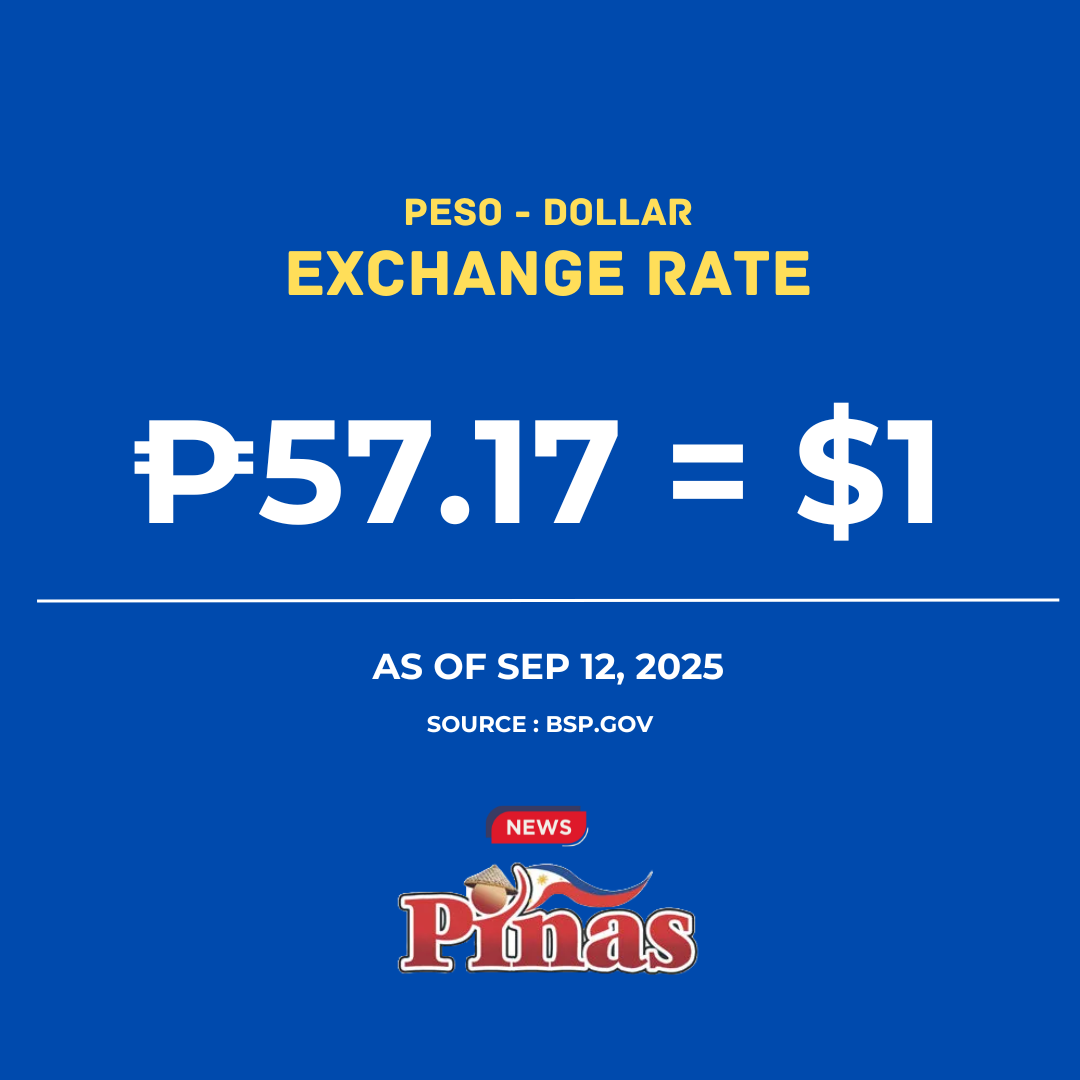
MANILA — The Philippine peso opened Friday steady but still under pressure as the Bangko Sentral ng Pilipinas (BSP) released its latest Reference Exchange Rate Bulletin for September 12, 2025. The peso is trading at ₱57.17 to $1, with the BSP’s official reference rate set at ₱57.20.
This snapshot of the foreign exchange market gives us a clear view of how the peso is moving against the world’s top currencies. Let’s break down the highlights:
1. US Dollar (USD)
-
₱57.17 per $1
The peso continues to hover above the ₱57 mark, reflecting global dollar strength as investors stay cautious over US economic policy.
2. Japanese Yen (JPY)
-
₱0.39 per ¥1
The yen remains weak, making Japanese goods and travel more affordable for Filipinos but posing challenges for Japan’s exporters.
3. British Pound (GBP)
-
₱77.63 per £1
The pound stays strong, climbing above ₱77. This is one of the most expensive currencies for overseas Filipino workers (OFWs) in the UK to send home.
4. Hong Kong Dollar (HKD)
-
₱7.34 per HK$1
Still stable, the HK dollar continues to serve as a reliable currency for OFWs in Hong Kong.
5. Swiss Franc (CHF)
-
₱71.84 per CHF 1
A traditional “safe haven,” the franc is holding firm as global investors look for stability.
6. Canadian Dollar (CAD)
-
₱41.33 per C$1
The loonie gained slightly, with oil prices helping to lift Canada’s currency.
7. Singapore Dollar (SGD)
-
₱44.62 per S$1
Stronger than the peso, the Singapore dollar reflects the country’s stable economy and continues to favor OFWs working there.
8. Australian Dollar (AUD)
-
₱38.07 per A$1
The Aussie dollar stays modest, attractive for students and migrants in Australia who rely on peso conversions.
9. Bahraini Dinar (BHD)
-
₱151.65 per BHD 1
The strongest currency in the top 15. This means bigger remittance values for Filipinos working in Bahrain.
10. Kuwaiti Dinar (KWD)
-
Data not available
Traditionally the world’s highest-valued currency, but no official peso conversion was provided in today’s BSP bulletin.
11. Saudi Riyal (SAR)
-
₱15.24 per SAR 1
Important for millions of OFWs in Saudi Arabia, the riyal remains steady.
12. Brunei Dollar (BND)
-
₱44.45 per BND 1
At nearly the same level as Singapore’s dollar, showing both countries’ currency strength in the ASEAN region.
13. Indonesian Rupiah (IDR)
-
₱0.0035 per Rp 1
Still very low compared to the peso, but Indonesia’s large economy keeps the rupiah influential in Southeast Asia.
14. Thai Baht (THB)
-
₱1.80 per ฿1
The baht remains one of the more stable ASEAN currencies, a reflection of Thailand’s strong tourism and trade.
15. UAE Dirham (AED)
-
₱15.56 per AED 1
The dirham continues to provide solid remittance values for Filipinos working in Dubai and Abu Dhabi.
📌 What This Means for Filipinos
-
OFWs: Stronger Middle Eastern currencies like the Bahraini dinar, Saudi riyal, and UAE dirham mean higher remittances for families back home.
-
Travelers & Importers: The strong dollar and pound make travel and imported goods pricier, while weaker currencies like the yen and rupiah make travel to Japan or Indonesia cheaper.
-
Investors: The franc and dollar remain “safe havens,” but volatility in global markets keeps all eyes on the BSP’s next moves.
💡 Bottom line: The peso remains stable but slightly weaker against the US dollar. Strong Middle Eastern currencies benefit OFWs, while travelers may find Asia more affordable. All eyes are now on how global economic shifts—and the BSP’s policies—will affect the peso in the coming weeks.