


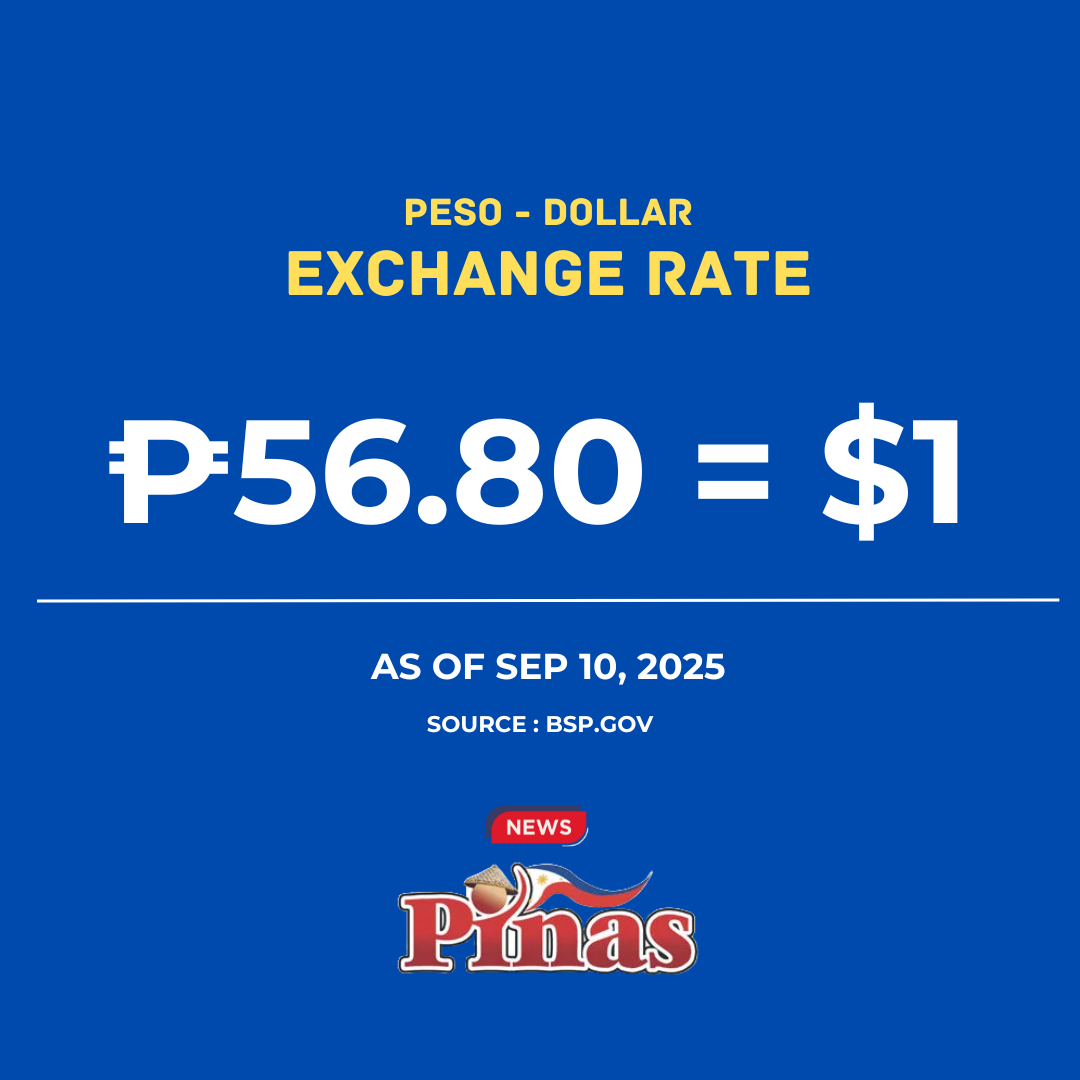
The Bangko Sentral ng Pilipinas (BSP) released its latest reference exchange rates for September 10, 2025, giving Filipinos a clear snapshot of how the peso stacks up against the world’s strongest currencies.
The peso opened the day at ₱57.00 per US dollar, slightly weaker than yesterday’s ₱56.98 closing, showing the peso is still under pressure as global markets remain volatile.
Let’s break down the movement of the Top 15 currencies most relevant to Filipinos—from remittances, trade, travel, and investments.
1. US Dollar (USD) – ₱56.80
The greenback remains king. A stronger dollar means higher remittance value for OFWs, but pricier imports and travel for Filipinos.
2. Japanese Yen (JPY) – ₱0.39
The yen stays weak, trading below half a peso. Great news for travelers to Japan, but not as attractive for exporters.
3. British Pound (GBP) – ₱76.86
The pound holds firm as one of the strongest currencies. Filipinos in the UK will see higher peso returns for their remittances.
4. Hong Kong Dollar (HKD) – ₱7.29
A favorite for OFWs in Hong Kong, the HK dollar remains stable, giving consistent value to remittances sent home.
5. Swiss Franc (CHF) – ₱71.31
Known as a “safe-haven” currency, the franc remains strong. Investors keeping money in francs enjoy stability amid global uncertainty.
6. Canadian Dollar (CAD) – ₱41.04
The loonie gained strength, a win for OFWs in Canada. But higher rates may impact students paying tuition fees there.
7. Singapore Dollar (SGD) – ₱44.30
Singapore’s currency remains robust. With many Filipinos working there, stronger remittances are expected.
8. Australian Dollar (AUD) – ₱37.36
The Aussie dollar shows steady gains. OFWs and students in Australia benefit as every remittance stretches further in pesos.
9. Bahraini Dinar (BHD) – ₱150.67
The strongest currency in the list. Filipinos in Bahrain get high peso returns for every dinar they send home.
10. Kuwaiti Dinar (KWD) – N/A
Data was not available today, but the Kuwaiti dinar usually holds the title of the world’s strongest currency.
11. Saudi Riyal (SAR) – ₱15.14
With over a million Filipinos in Saudi Arabia, the stable riyal remains one of the most important currencies for the Philippine economy.
12. Brunei Dollar (BND) – ₱44.13
At par with Singapore’s currency, the Brunei dollar provides steady peso value for OFWs in Brunei.
13. Indonesian Rupiah (IDR) – ₱0.0035
Still one of the weakest currencies, making the peso stronger against it. This benefits Filipino businesses importing from Indonesia.
14. Thai Baht (THB) – ₱1.79
The baht remains stable. For tourists and businesses dealing with Thailand, prices remain manageable.
15. UAE Dirham (AED) – ₱15.46
Another key remittance currency, especially from OFWs in Dubai and Abu Dhabi. The dirham’s strength ensures solid peso value.
The Bigger Picture
The euro is at ₱66.52, the Chinese yuan at ₱7.97, and the Korean won at just ₱0.04. Gold prices climbed to $3,630.70, reflecting continued global demand for safe-haven assets.
The peso’s current trading range—₱56.75 buying, ₱57.25 selling—shows it remains sensitive to international market movements, oil prices, and geopolitical developments.
For millions of Filipinos abroad, this means remittances remain a lifeline as foreign earnings translate into stronger pesos at home. For businesses, however, a weaker peso can raise the cost of imports and put pressure on inflation.