
The Bangko Sentral ng Pilipinas (BSP) released its official exchange rate bulletin for August 27, 2025. The numbers reveal how the Philippine Peso is moving against the world’s most important currencies — a snapshot of global money flows that affect everything from OFW remittances to imported goods.
Here’s what’s happening with the top 15 currencies:
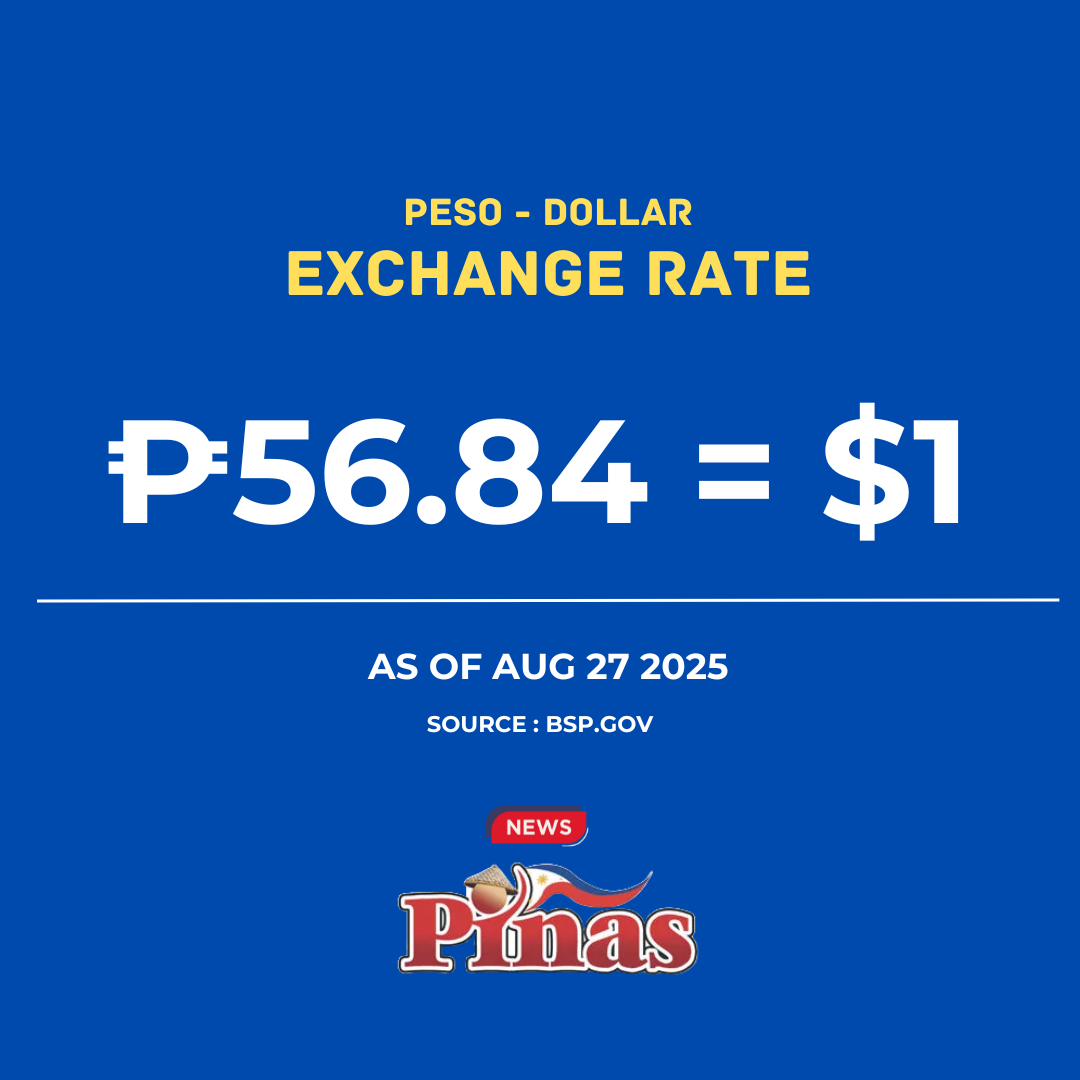
1. United States Dollar (USD) – ₱56.84
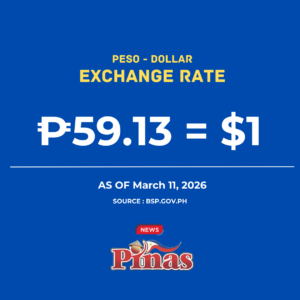
The peso is steady at ₱56.84 per $1. A strong dollar means pricier imports but higher peso value for OFWs sending money home.
2. Japanese Yen (JPY) – ₱0.38
The yen stays weak, trading at less than 40 centavos per ¥1. Good for travelers to Japan, but tough for Japanese investors repatriating earnings.
3. British Pound (GBP) – ₱76.67
The pound remains powerful at nearly ₱77. This is welcome news for Filipinos in the UK, whose remittances stretch further in pesos.
4. Hong Kong Dollar (HKD) – ₱7.29
At ₱7.29 per HK$1, the HK dollar stays strong. OFWs in Hong Kong benefit from this favorable rate.
5. Swiss Franc (CHF) – ₱70.76
The franc continues to be one of the world’s hardest currencies. At over ₱70 per CHF, it signals global investors’ trust in Switzerland.
6. Canadian Dollar (CAD) – ₱41.08
At ₱41 per C$1, the loonie remains stable. Filipino migrants in Canada continue to see solid peso value for their remittances.
7. Singapore Dollar (SGD) – ₱44.24
The Singapore dollar trades at ₱44.24. With Singapore’s strong economy, OFWs there enjoy favorable conversions.
8. Australian Dollar (AUD) – ₱36.90
The Aussie dollar stands at ₱36.90. This is steady, giving relief to Filipinos in Australia sending money back home.
9. Bahraini Dinar (BHD) – ₱150.77
The Bahraini dinar remains one of the strongest currencies globally. At ₱150 per BHD, it’s nearly triple the value of a dollar.
10. Kuwaiti Dinar (KWD) – N/A
No official rate posted, but historically the Kuwaiti dinar is the world’s strongest currency. Expect it to trade well above the peso.
11. Saudi Riyal (SAR) – ₱15.15
The riyal stays firm at ₱15.15. With millions of Filipinos in Saudi, this rate is crucial for household remittances.
12. Brunei Dollar (BND) – ₱44.07
Similar to the Singapore dollar, the Brunei dollar trades at ₱44.07. Strong and reliable, reflecting stable oil-rich economies.
13. Indonesian Rupiah (IDR) – ₱0.0035
The rupiah remains one of Asia’s weakest, with ₱1 equal to nearly Rp 300. Cheap for tourists, but weak globally.
14. Thai Baht (THB) – ₱1.75
The baht is stable at ₱1.75. This shows resilience despite regional economic shifts.
15. UAE Dirham (AED) – ₱15.47
The dirham trades at ₱15.47, strong as always. Vital for Filipinos in Dubai and Abu Dhabi sending remittances.
Bigger Picture
The euro remains at ₱66.20, while China’s yuan trades at ₱7.94. The peso’s reference rate sits at ₱57.05.
Gold continues to rise, with BSP’s buying rate at $3,391.35 per ounce, while silver trades at $38.65.
Why It Matters
These numbers may look like plain statistics, but they touch millions of lives. For OFWs, every centavo in the exchange rate changes how much their families receive. For businesses, it shapes the price of imported goods. And for ordinary Filipinos, it quietly influences the cost of fuel, food, and even gadgets.
The peso’s stability at ₱56–₱57 per dollar shows resilience — but the stronger the foreign currency, the bigger the lifeline for families depending on loved ones abroad.