
Which Currencies Are Winning or Struggling Against the Peso?
Have you ever wondered why some countries’ money is super strong while others are worth just a few centavos when exchanged for Philippine pesos? The Bangko Sentral ng Pilipinas (BSP) just released its exchange rate bulletin for August 20, 2025, and the numbers tell an interesting story. Let’s break down what’s happening with the top 15 currencies.
🌎 The Top 15 Currencies Explained
-
US Dollar (USD) – 💵
-
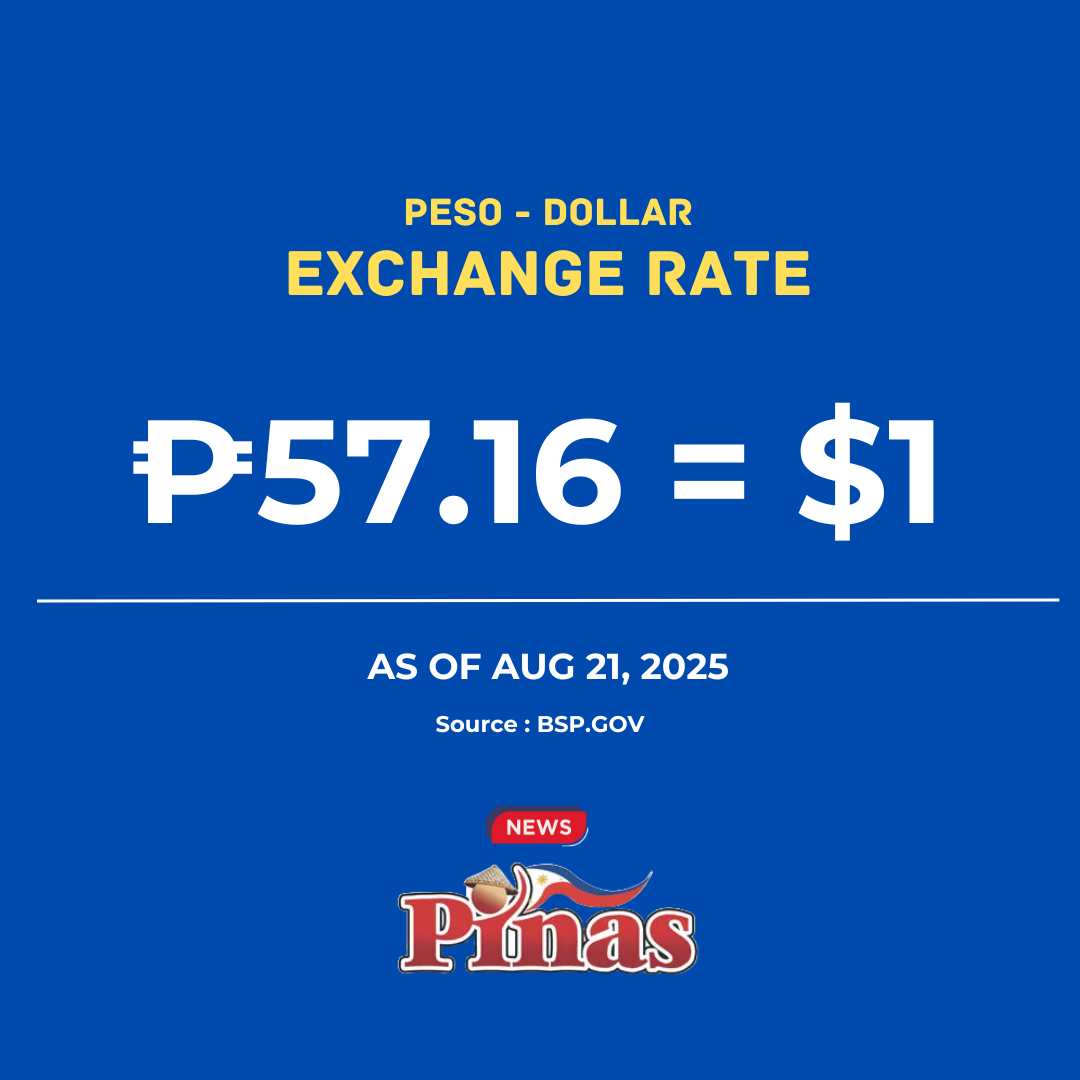
1 USD = ₱57.10
-
The U.S. dollar remains the king of currencies, still the standard used for trade and global pricing. Every rise or fall affects almost every country, including the Philippines.
-
-
Japanese Yen (JPY) – 💴
-
1 JPY = ₱0.39
-
The yen is weak compared to the peso. This makes Japan’s products cheaper for Filipinos but also means Japan is battling its own currency struggles.
-
-
British Pound (GBP) – 💷
-
1 GBP = ₱77.05
-
The pound is very strong! This makes goods from the UK expensive for Filipinos, but it shows Britain’s currency still has global power.
-
-
Hong Kong Dollar (HKD) – 💲
-
1 HKD = ₱7.32
-
Hong Kong’s money is stable, tied closely to the US dollar. It’s not as strong as Western currencies but still stronger than most Asian ones.
-
-
Swiss Franc (CHF) – 🇨🇭
-
1 CHF = ₱70.70
-
Switzerland’s money is known as one of the safest currencies in the world. When there’s global trouble, people invest in francs.
-
-
Canadian Dollar (CAD) – 🍁
-
1 CAD = ₱41.19
-
Canada’s currency is strong but not as high as the US dollar. Its strength usually depends on oil and natural resources prices.
-
-
Singapore Dollar (SGD) – 🏝
-
1 SGD = ₱44.46
-
Singapore’s money is solid and very stable, reflecting its strong economy and financial system.
-
-
Australian Dollar (AUD) – 🦘
-
1 AUD = ₱36.85
-
Australia’s dollar is weaker than Canada’s or Singapore’s, but still much stronger than most Asian currencies.
-
-
Bahraini Dinar (BHD) – 🏦
-
1 BHD = ₱151.47
-
This is one of the strongest currencies in the world! It’s backed by Bahrain’s oil wealth, making it worth almost 3x the US dollar.
-
-
Kuwaiti Dinar (KWD) – 🛢
-
Value not listed here, but it’s historically the world’s strongest currency. Like Bahrain, it’s powered by oil exports.
-
Saudi Riyal (SAR) – 🕋
-
1 SAR = ₱15.22
-
Saudi’s currency is tied to the dollar. Many OFWs send money in riyals, so this directly affects Filipino families.
-
Brunei Dollar (BND) – 🌴
-
1 BND = ₱44.29
-
Brunei’s money is almost equal to Singapore’s. Both are strong currencies in Southeast Asia.
-
Indonesian Rupiah (IDR) – 🇮🇩
-
1 IDR = ₱0.0035
-
Very weak compared to the peso. You need thousands of rupiah just to buy something small.
-
Thai Baht (THB) – 🇹🇭
-
1 THB = ₱1.75
-
Thailand’s baht is stronger than Indonesia’s rupiah, but still much weaker than the peso, dollar, or euro.
-
UAE Dirham (AED) – 🏙
-
1 AED = ₱15.55
-
Strong and stable, the dirham matters a lot for OFWs in Dubai and Abu Dhabi.
⚖️ What Does This Mean for Filipinos?
-
Stronger currencies like the pound, euro, dinar, and franc = more expensive imports, but OFWs earn more when sending money home.
-
Weaker currencies like yen, rupiah, or baht = cheaper travel and goods from those countries, but Filipinos working there might send home less value.
-
The peso at ₱57.10 per dollar shows it’s weaker compared to past years, which affects prices of oil, food, and imports in the Philippines.
💡 Big Picture
The exchange rate isn’t just numbers—it affects the price of food, the money OFWs send home, travel costs, and even business investments. The question now is:
👉 Can the peso stay stable in a world where currencies keep rising and falling like a rollercoaster?