
The Philippine peso continues to move against major global currencies as international markets shift and investors react to economic signals around the world.
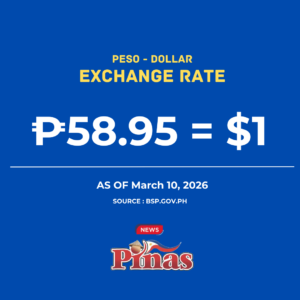
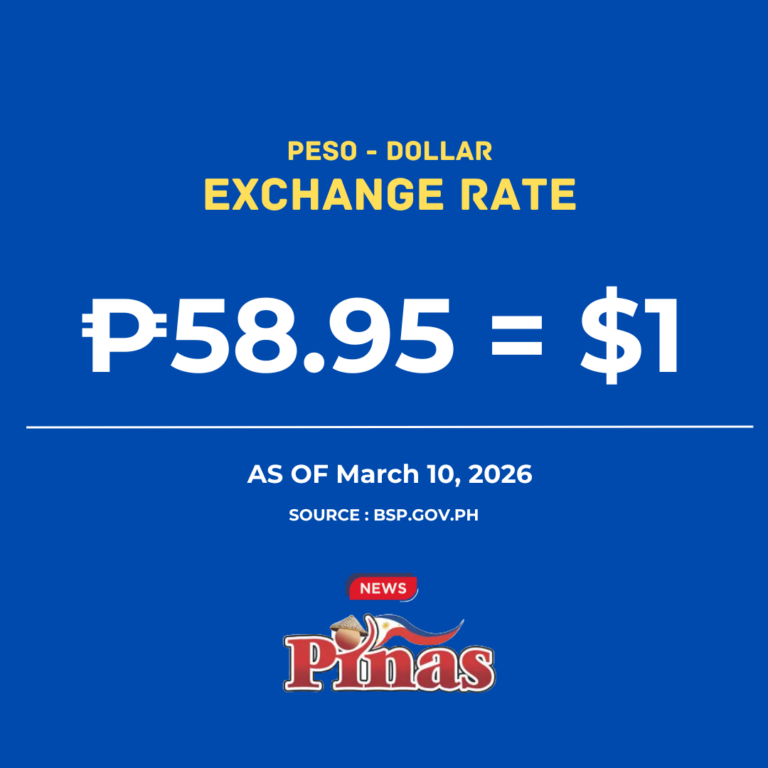
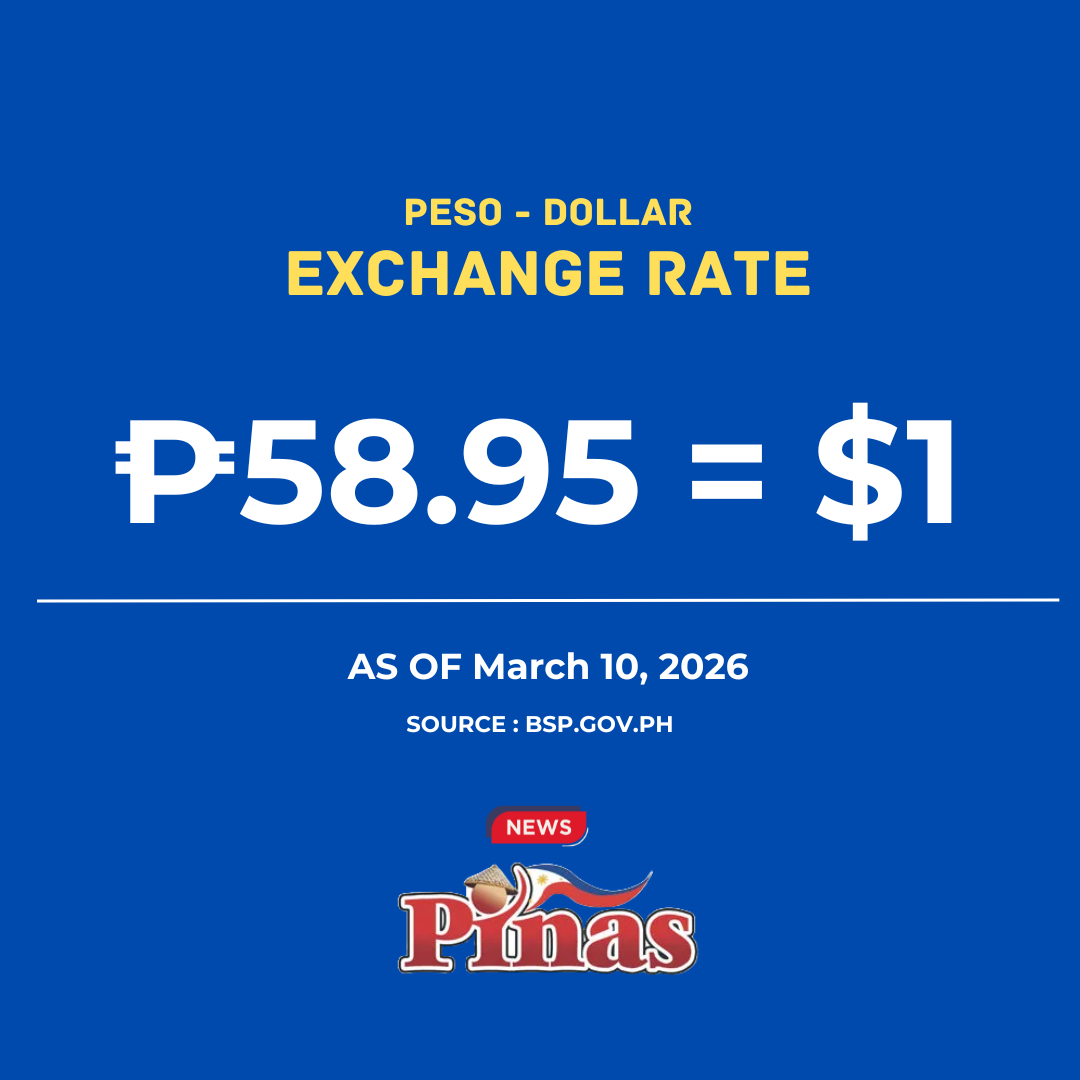
As of March 11, 2026, the US Dollar remains the strongest reference currency, with the peso trading at ₱58.55 to ₱59.05 per US dollar.
For many Filipinos—especially overseas workers, importers, travelers, and businesses—these exchange rates are more than numbers. They reflect the changing strength of the Philippine peso in the global economy.
Here’s a closer look at how the peso compares with the world’s top currencies today.
🇺🇸 Philippine Peso vs US Dollar (USD)
The US Dollar continues to dominate global markets, with the peso trading between ₱58.55 and ₱59.05 per dollar.
This rate affects everything from fuel prices and imported goods to remittances sent by overseas Filipinos.
🇪🇺 Peso vs Euro (EUR)
The Euro, one of the most powerful currencies in Europe, currently trades at ₱67.79 to ₱69.46.
A stronger euro often means higher costs for European imports but also bigger peso value for remittances from Europe.
🇬🇧 Peso vs British Pound (GBP)
The British Pound Sterling remains one of the strongest currencies globally, exchanging at ₱77.96 to ₱80.27.
For Filipinos working in the UK, this means every pound sent home converts to a significant amount of pesos.
🇦🇺 Peso vs Australian Dollar (AUD)
The Australian Dollar trades at ₱40.82 to ₱42.27, reflecting steady economic activity between the Philippines and Australia, especially among overseas Filipino workers.
🇨🇦 Peso vs Canadian Dollar (CAD)
The Canadian Dollar stands at ₱42.43 to ₱43.91.
Canada remains a top destination for Filipino migrants, making this exchange rate important for families receiving remittances.
🇨🇭 Peso vs Swiss Franc (CHF)
The Swiss Franc, often considered a safe-haven currency, is currently valued at ₱74.14 to ₱76.77.
🇨🇳 Peso vs Chinese Yuan (CNY)
China remains one of the Philippines’ biggest trading partners.
The Chinese Yuan trades at ₱7.90 to ₱8.64, making it one of the lower-value currencies compared with the peso.
🇯🇵 Peso vs Japanese Yen (JPY)
The Japanese Yen sits at ₱0.3658 to ₱0.3786.
Although the yen appears small in value, Japan remains a major economic power and a key trading partner of the Philippines.
🇰🇷 Peso vs Korean Won (KRW)
The South Korean Won trades at ₱0.0358 to ₱0.0412.
South Korea continues to play a major role in tourism, technology, and cultural exchange with the Philippines.
🇸🇬 Peso vs Singapore Dollar (SGD)
The Singapore Dollar remains strong, currently valued at ₱45.22 to ₱46.81.
Singapore’s powerful financial sector keeps its currency among Asia’s most stable.
🇹🇭 Peso vs Thai Baht (THB)
The Thai Baht trades at ₱1.69 to ₱1.88, reflecting close economic ties among Southeast Asian nations.
🇹🇼 Peso vs New Taiwan Dollar (TWD)
The New Taiwan Dollar exchanges between ₱1.60 and ₱1.88, an important rate for trade and electronics manufacturing.
🇮🇩 Peso vs Indonesian Rupiah (IDR)
The Indonesian Rupiah trades at about ₱0.0030 to ₱0.0035, reflecting its smaller denomination compared to other currencies.
🇸🇦 Peso vs Saudi Riyal (SAR)
The Saudi Riyal stands at ₱13.56 to ₱15.83.
This rate is particularly important for thousands of Filipino workers in Saudi Arabia sending money back home.
🇦🇪 Peso vs UAE Dirham (AED)
The UAE Dirham trades at ₱13.63 to ₱16.19, another key currency for OFWs working in the Middle East.
🇧🇭 Peso vs Bahraini Dinar (BHD)
Among the strongest currencies globally, the Bahraini Dinar trades at ₱131.85 to ₱158.53—one of the highest exchange values against the peso.
What This Means for Filipinos
Exchange rates affect everyday life in ways many people don’t immediately notice.
They influence:
• Remittances sent by OFWs
• Prices of imported goods and fuel
• Travel costs abroad
• International business and trade
For now, the peso continues to move within a competitive range against major currencies, while global economic developments—from interest rates to geopolitical tensions—continue to shape the foreign exchange market.
And as markets shift day by day, these numbers tell a bigger story.
A story of how the Philippine peso stands in the global financial arena.