


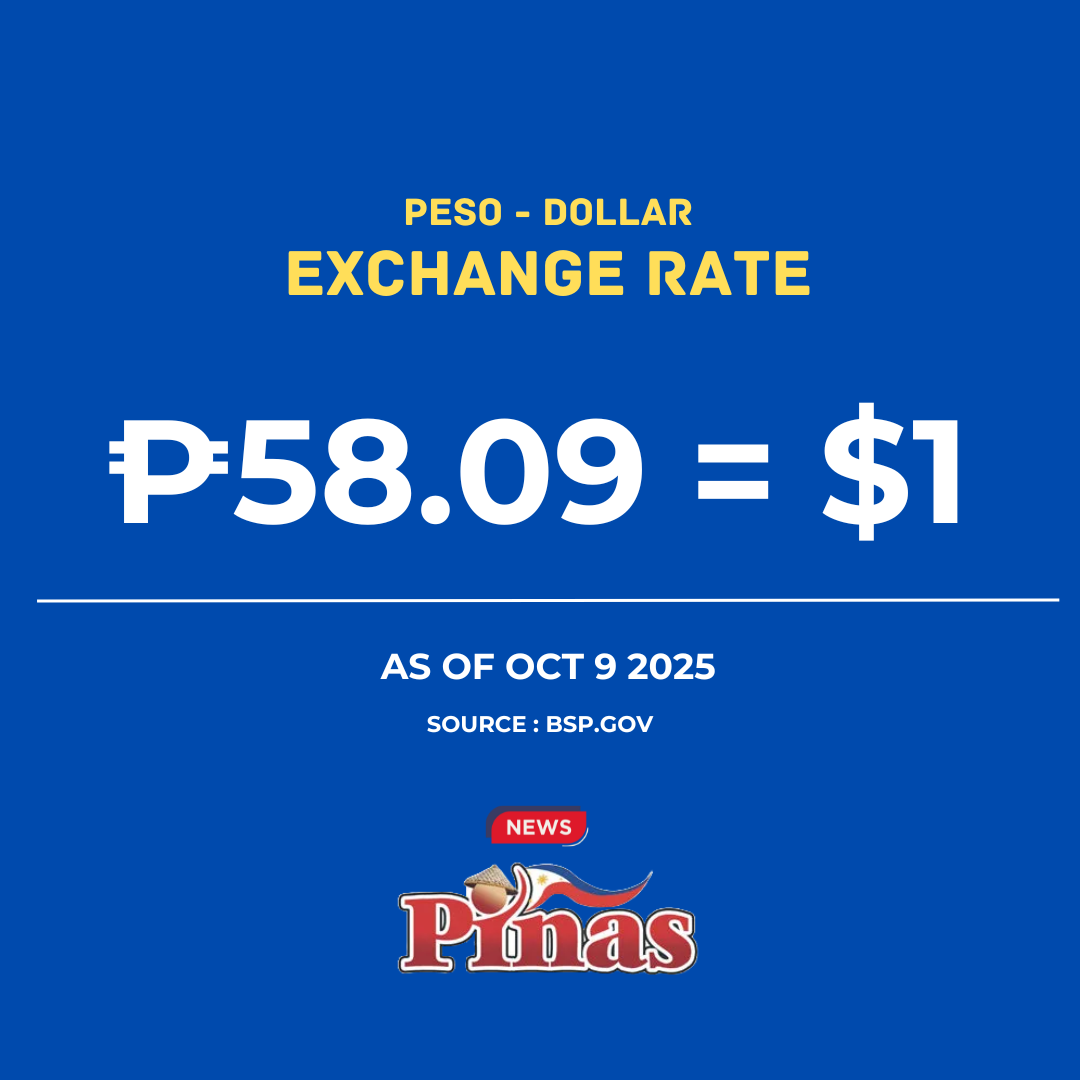
MANILA — The Philippine peso weakened slightly on Wednesday, October 9, 2025, closing at ₱58.09 against the US dollar, according to the Bangko Sentral ng Pilipinas (BSP).
The peso’s struggle continues as global currencies shift with changing oil prices, US inflation worries, and Middle East tensions. BSP’s reference exchange rate bulletin showed how the world’s top currencies stack up against the peso.
Here’s what’s happening with the top 15 currencies today:
-
US Dollar (USD) – ₱58.09
The dollar remains strong, keeping the peso under pressure. This means imports become costlier for Filipinos, especially oil and goods priced in USD. -
Japanese Yen (JPY) – ₱0.38
The yen stays weak. Good news for Filipinos buying Japanese products, but tough for overseas workers in Japan sending money home. -
British Pound (GBP) – ₱77.90
The pound is one of the strongest major currencies. This shows how expensive studying or traveling in the UK can be for Filipinos. -
Hong Kong Dollar (HKD) – ₱7.47
A steady currency, widely used by Filipino workers in Hong Kong. Their remittances remain stable in peso terms. -
Swiss Franc (CHF) – ₱72.47
Switzerland’s currency is rock solid. It reflects global investors’ “safe haven” mood amid ongoing global conflicts. -
Canadian Dollar (CAD) – ₱41.65
The loonie is weaker compared to the pound or franc, but still steady. Migrant workers in Canada see decent peso returns. -
Singapore Dollar (SGD) – ₱44.87
Always a strong Asian currency, backed by Singapore’s financial hub status. OFWs in Singapore benefit from the exchange. -
Australian Dollar (AUD) – ₱38.25
Slightly weaker, but Australia remains a top destination for Filipino workers and students. Their money still converts well to pesos. -
Bahraini Dinar (BHD) – ₱154.10
The strongest among the top 15. Filipinos in Bahrain send home hefty peso amounts per dinar earned. -
Kuwaiti Dinar (KWD) – N/A
Data not listed today, but historically this is the world’s strongest currency. -
Saudi Riyal (SAR) – ₱15.49
With thousands of OFWs in Saudi, the riyal remains crucial. Stable rates mean stable remittances for families back home. -
Brunei Dollar (BND) – ₱44.70
Similar to Singapore’s dollar, strong and steady. Beneficial for Filipinos working in Brunei. -
Indonesian Rupiah (IDR) – ₱0.0035
Still one of the weakest currencies. It highlights the economic struggles in Southeast Asia’s largest economy. -
Thai Baht (THB) – ₱1.79
Stronger than the rupiah but weaker compared to the peso. Tourism and regional trade affect its strength. -
UAE Dirham (AED) – ₱15.82
A major currency for millions of OFWs in Dubai and Abu Dhabi. Dirham’s strength ensures good remittance value.
What This Means for Filipinos
-
OFWs: Those working in strong-currency countries like the UK, Switzerland, Bahrain, and the UAE will send home more valuable remittances.
-
Consumers: A stronger dollar means higher costs for imported fuel and goods.
-
Investors: Safe-haven currencies (like the franc) and oil-based currencies (like the riyal and dinar) reflect global uncertainty.
The BSP also reported the buying rate at ₱57.70 and selling rate at ₱58.20. Meanwhile, gold stood at $4,011 per ounce and silver at $48.75.
For everyday Filipinos, the peso’s slide versus the dollar serves as a reminder: global tensions and economic shifts abroad directly hit wallets at home.